Gorilla trekking presents an unusual conservation paradox. Mountain gorillas need tourism. Revenue generated by gorilla permits, accommodation, guiding and other safari services creates powerful economic incentives for governments and communities to protect gorillas and their forest habitat. Yet mountain gorillas also need protection from tourism itself.
Too much human contact could increase disturbance, disease risk and pressure on the forests where gorillas live. This raises an important question as gorilla trekking becomes increasingly famous around the world: Can gorilla tourism become too popular? Yes—if visitor demand is allowed to override conservation.
Introduction
The success of mountain gorilla tourism therefore depends on maintaining a careful gorilla tourism conservation balance in which tourism generates enough value to support protection without overwhelming the animals visitors have traveled to see.
Why Gorilla Tourism Exists
Mountain gorilla tourism is based on a simple but powerful conservation idea. A living gorilla in a protected forest can create substantial long-term economic value. Travelers purchase trekking permits. They stay in lodges. They employ safari guides and porters.
They eat in restaurants and buy local products. Tourism companies build businesses around gorilla trekking. Governments receive tourism revenue. Communities gain employment opportunities. This makes protecting gorillas economically important as well as environmentally important.
Tourism Helps Pay for Conservation
Protecting gorillas is expensive. National parks require rangers, trackers, management systems, monitoring programs, infrastructure and community engagement. Tourism revenue contributes to this broader conservation system. The relationship is mutually reinforcing. Gorillas attract visitors.
Visitors generate revenue. Revenue helps protect gorillas. Protected gorillas continue attracting visitors. When managed responsibly, this can create one of wildlife tourism’s strongest conservation cycles.
The Problem With Unlimited Growth
The difficulty begins when tourism success is measured only by visitor numbers. In many tourism destinations, growth means bringing in more people. More hotel rooms. More tickets. More visitors.
More revenue. Wildlife tourism cannot always operate according to that model. Mountain gorillas are not a theme park attraction whose capacity can simply be expanded. Only a limited number of habituated families exist. Each family can tolerate only a controlled amount of human presence.
The forest itself also has ecological limits.
More Tourists Mean More Human Exposure
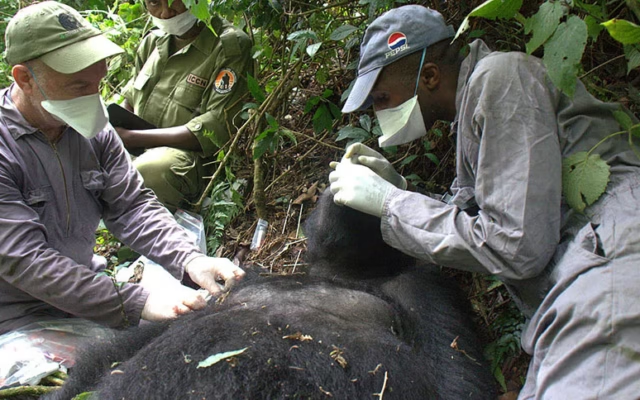
Every additional visitor creates another potential point of contact between people and gorillas. Humans and gorillas share enough biological similarity that some infectious diseases can potentially move between us. A traveler may arrive carrying a respiratory infection. Another may become sick during the trip. Some people can transmit infections before realizing they are unwell.
Limiting group sizes and observation periods helps reduce cumulative exposure. If tourism became completely unrestricted, disease risk could increase.
Gorillas Need Time Without Tourists
Habituated gorillas tolerate controlled human presence. That does not mean they should be surrounded by visitors from sunrise to sunset. Mountain gorillas spend their days feeding, resting, traveling, grooming and interacting socially. Tourism should occupy only a small part of that natural routine. Observation time limits give gorilla families predictable periods without tourists nearby.
This distinction is essential. Habituation means tolerance. It does not mean permanent access.
Permit Limits Are a Conservation Tool
Visitors sometimes become frustrated when gorilla permits sell out. But scarcity is partly intentional. Authorities could theoretically generate more short-term revenue by dramatically increasing visitor numbers. Doing so might undermine the long-term sustainability of the experience. Permit limits control how many tourists enter gorilla habitat and how many people visit each habituated family.
They therefore function as conservation tools as well as ticketing systems.
Higher Prices Can Reduce Pressure
Gorilla trekking is relatively expensive compared with many wildlife activities. From a conservation perspective, a high-value, low-volume model can make sense. If a smaller number of visitors generate substantial revenue, authorities do not need enormous crowds to make gorilla tourism economically significant. This differs from mass tourism models that depend on maximizing visitor volume. The objective should be enough tourism—not unlimited tourism.
Tourism Pressure Extends Beyond the Gorillas
Visitor growth affects more than direct gorilla encounters. More tourists can mean more vehicles, accommodation, waste, water demand and construction around protected areas. Roads and infrastructure may expand. Land values can change. Local communities can experience both benefits and pressures.
Sustainable gorilla tourism therefore requires planning across the entire destination, not simply regulating the one hour tourists spend near gorillas.
Lodges Can Be Part of the Solution
Accommodation is necessary for gorilla tourism, but lodge development should be environmentally responsible. Properties near gorilla parks can reduce impacts through thoughtful waste management, water use, energy choices and local sourcing. Employing nearby residents helps ensure tourism benefits reach communities. Responsible lodge development can strengthen conservation.
Poorly planned development can place additional pressure on fragile landscapes.
Communities Must Benefit
One of the strongest arguments for gorilla tourism is that it can create local economic value. But that argument weakens if benefits are concentrated far from the people living beside gorilla habitat. Communities around protected areas experience conservation directly. They may face restrictions on natural resource use and occasionally deal with wildlife-related challenges.
Employment, revenue-sharing initiatives, local procurement, porter work, guiding and community tourism can help connect conservation with tangible benefits. The stronger this connection becomes, the more sustainable gorilla protection can be.
Tourists Influence the Balance
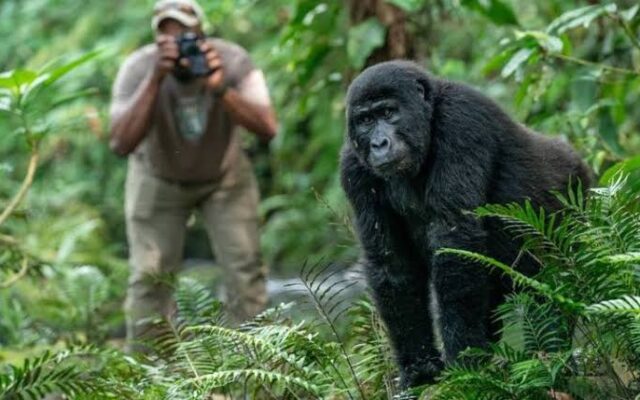
Conservation regulations are only effective when visitors respect them. A tourist who pressures a guide to move closer for a photograph undermines responsible tourism. So does someone who hides symptoms of illness because they do not want to miss their trek. Responsible travelers understand that access to endangered wildlife comes with limitations. The goal is not to obtain the closest photograph possible.
The goal is to experience gorillas without compromising their welfare.
Social Media Can Create New Pressure
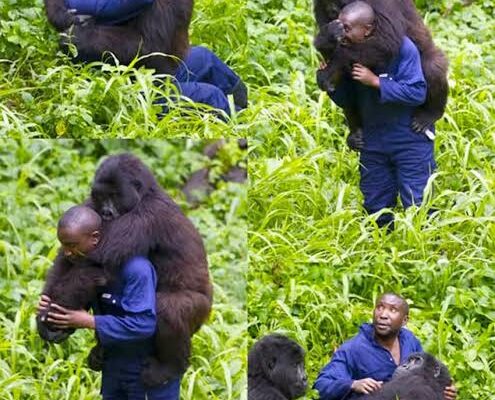
Gorilla photographs perform extremely well on social media. A photograph showing a gorilla only a meter away can receive enormous attention. The problem is that such images may create unrealistic expectations. Future travelers may assume close physical proximity is normal or desirable. Sometimes gorillas themselves approach tourists, creating legitimately close encounters.
But visitors should never deliberately move closer to reproduce an image they saw online. Responsible storytelling should emphasize that distance and ranger instructions matter.
Tourism Success Should Be Measured Differently
Instead of asking only, “How many tourists visited?”, gorilla tourism should also ask: Did gorilla populations remain healthy? Did the forest remain protected? Did communities receive meaningful benefits? Were tourism regulations respected? Did conservation revenue increase? Were visitors satisfied without increasing wildlife pressure? These are more useful indicators of sustainable success.
Can More Gorilla Families Simply Be Habituated?
Habituating additional families can increase tourism capacity, but it is not an unlimited solution. Habituation itself creates increased human contact. Some gorillas should remain unhabituated. Wildlife populations should not exist entirely for tourism. Decisions about habituating new families therefore need to be based on conservation science and management priorities rather than visitor demand alone.
Climate and Habitat Pressures Also Matter
Tourism is only one factor affecting mountain gorillas. Habitat quality, climate change, human population growth around protected areas and regional ecological pressures all influence long-term conservation. A successful tourism model should therefore generate resources that strengthen resilience against multiple threats. Protecting forests may become increasingly important as climate conditions change.
What Happens When Tourism Falls Too Low?
Interestingly, too little tourism can also create problems. When visitor numbers collapse, lodges lose income. Guides lose work. Porters lose opportunities. Government conservation revenue may decline.
Communities can see fewer economic benefits from protected areas. This demonstrates why the ideal situation is not “no tourism.” It is controlled, resilient and responsible tourism.
Tourism Diversification Helps
Gorilla destinations can reduce excessive dependence on one activity by encouraging travelers to stay longer and enjoy other experiences. Around southwestern Uganda, these may include birding, nature walks, cultural encounters, Lake Bunyonyi, golden monkey tracking and wider Uganda safari circuits. A visitor who stays several nights generates more local economic value without necessarily requiring additional gorilla encounters.
This can increase tourism benefits while limiting direct pressure on gorillas.
Combining Gorillas With Other Parks
Travelers can also combine gorilla trekking with Queen Elizabeth National Park, Kibale National Park, Murchison Falls National Park or Lake Mburo National Park. This spreads tourism spending geographically. A longer Uganda safari supports more accommodation providers, guides and communities while allowing gorilla trekking itself to remain tightly controlled.
Technology Can Improve Management
Advance permit systems, visitor records and monitoring data help authorities manage tourism capacity. Scientific monitoring can identify behavioral or health concerns. Digital communication can help travelers understand regulations before arrival. As tourism grows, good data becomes increasingly important. Management should respond to evidence rather than simply increasing capacity whenever demand rises.
Tour Operators Have Responsibilities
Safari companies are important intermediaries between travelers and conservation authorities. Responsible operators should explain why permits are limited, why illness matters and why distance regulations must be respected. They should not promise guaranteed close photographs. They should avoid encouraging behavior that puts customer satisfaction above conservation. Tourism companies benefit financially from healthy gorilla populations.
They therefore have a direct interest in protecting them.
The Best Model Is High Value, Carefully Controlled Tourism
Gorilla trekking works best when exclusivity is treated as a conservation advantage rather than a problem. Small groups. Limited permits. Controlled observation periods. Strict health rules.
Professional ranger supervision. Meaningful local economic benefits. These characteristics make the experience expensive and sometimes difficult to book, but they also make it sustainable.
Travelers Should Welcome the Restrictions
It may seem strange to pay a significant amount of money for an experience surrounded by rules. But those rules are part of what you are paying for. You are paying for an encounter that has been designed around wildlife protection. If everyone could freely walk into Bwindi, approach any gorilla family and remain there all day, the experience might be cheaper—but it would not remain sustainable for long.
So, Can Gorilla Tourism Become Too Popular?
Absolutely. Any wildlife experience can become damaging when visitor demand exceeds ecological and management limits. The answer, however, is not to stop gorilla tourism. Tourism has become one of the strongest economic forces supporting mountain gorilla conservation. The solution is to protect the gorilla tourism conservation balance.
Tourism should remain valuable enough to fund conservation, create jobs and give communities strong reasons to support protected forests. At the same time, visitor numbers, group sizes, health precautions and observation periods must remain controlled. The ultimate measure of success is not whether everyone who wants a gorilla permit can obtain one.
Success is whether mountain gorillas remain healthy and wild while tourism continues producing enough economic value to protect them. If achieving that requires waiting for a permit, paying a premium price, keeping your distance and leaving the gorillas after a limited observation period, those are small sacrifices. The forest belongs to the gorillas. Tourism succeeds only when visitors remember they are temporary guests.
 Read