
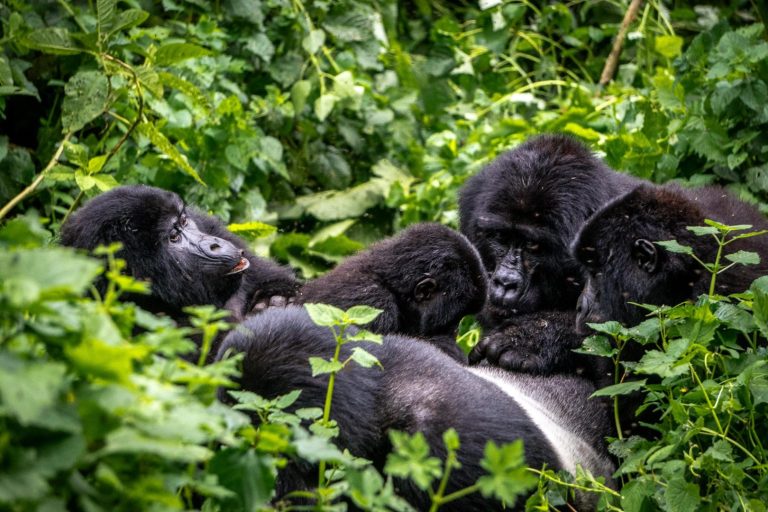
The Rushegura Gorilla Family is one of the best-known habituated mountain gorilla groups associated with the Buhoma sector of Bwindi Impenetrable National Park. Its history is closely connected with the Habinyanja Gorilla Family, from which Rushegura formed after a natural split in 2002.
Over the years, Rushegura has become particularly interesting to visitors because of its relationship with the wider Buhoma area. The group has sometimes ranged relatively close to the park headquarters and nearby community or lodge areas, illustrating how mountain gorillas move through a landscape where protected forest borders human settlement.
Introduction
This does not mean Rushegura is always easy to find. Like every mountain gorilla family, it remains wild and free to move according to food availability, social relationships and environmental conditions.
Where Is Rushegura?
Rushegura is associated with the Buhoma Sector in northern Bwindi Impenetrable National Park. Buhoma is one of the four official gorilla trekking sectors alongside Ruhija, Rushaga and Nkuringo.
The sector has a particularly well-developed tourism infrastructure, including accommodation at several budget levels and convenient access from Queen Elizabeth National Park.
How Was Rushegura Formed?
Rushegura formed following a split from the Habinyanja Gorilla Family. The International Gorilla Conservation Programme records that Rushegura was created in February 2002 after part of Habinyanja separated. The breakaway group was historically associated with the silverback Mwirima.
This split is one of the best-known examples of natural gorilla family reorganisation in Bwindi.
Why Did Habinyanja Split?
Historical accounts describe different ranging preferences among the adult males. Rwansigazi tended to lead the wider Habinyanja family across a larger home range. Mwirima preferred a more restricted range.
Eventually, the family separated rather than continuing under competing leadership styles. The result was two distinct groups:
- Habinyanja
- and Rushegura
This kind of group division is a natural part of gorilla social dynamics.
Where Does the Name Rushegura Come From?
IGCP states that the family was named after Ebishegura, a tree species associated with the area where the group formed. This is similar to several Bwindi gorilla group names that reflect locations, vegetation or events connected with their history.
Rushegura's Early Leadership
Mwirima became the central silverback associated with Rushegura's early years. He provided leadership after the group separated from Habinyanja and helped establish it as an independent family. Over time, as with every gorilla group, leadership and membership changed.
Visitors should not assume that an individual described in an older safari article is still alive or dominant today.
Current Leadership and Group Size
The International Gorilla Conservation Programme listed 16 members in its January 2024 update and recorded silverback Kabukojo as the group leader at that time. IGCP's breakdown included multiple silverbacks, adult females, blackbacks, sub-adults and infants. These figures should be treated as a dated snapshot.
Gorilla group composition changes continuously. For the latest information, ask the rangers and guides when you travel.
Why Group Numbers Change
Rushegura may gain or lose individuals through:
- births
- deaths
- female transfers
- male dispersal
- immigration
- group competition
- and natural social reorganisation
This is why publishing an old headcount as though it were permanent can mislead travelers. A more useful way to understand the family is through its history and current ranger information.
Rushegura's Home Range
Rushegura is particularly known for sometimes ranging close to the Buhoma tourism area. IGCP notes that the group has been known to forage near Bwindi's headquarters and sometimes visit community gardens around its home range.
This characteristic has helped make Rushegura one of the most recognised groups among Buhoma visitors. However, it does not mean trekkers should expect to find the family beside the lodge. The group can move substantially.
Is Rushegura an Easy Trek?
Sometimes the group's position may result in a relatively shorter hike. But this is never guaranteed. No gorilla family should be marketed as a permanently easy trek.
The gorillas choose where they feed and rest. A family seen close to Buhoma one afternoon may move deeper into the forest before the following morning. UWA states that tracking can take approximately two to seven hours depending on gorilla location.
Gorilla Trekking Day
Visitors begin early in Buhoma. After the park briefing, trekkers enter the forest accompanied by trained guides and rangers. Tracking involves searching for evidence such as:
- feeding signs
- nesting areas
- footprints
- vegetation disturbance
- and information from monitoring teams
Once Rushegura is located, visitors follow the standard controlled observation procedures.
What Can You See?
The group's behavior changes from one encounter to another. You might observe:
- a silverback feeding
- females caring for infants
- juveniles climbing vegetation
- younger gorillas wrestling
- adults grooming
- or the whole family moving through the forest
The presence of several age classes can make a gorilla family encounter particularly rewarding.
Photography
Rushegura can be encountered in thick forest or sometimes in slightly more open vegetation. Conditions still tend to involve low light. Visitors should prepare cameras for:
- high ISO
- dark subjects
- uneven backgrounds
- moving gorillas
- and sudden changes in exposure
Flash should not be used. Protect your equipment from rain.
Staying in Buhoma
Travelers assigned to Rushegura should normally stay within the Buhoma tourism area. Accommodation options range from:
- budget
- mid-range
- boutique
- to luxury
Buhoma has some of Bwindi's strongest lodge choices. This makes it useful for honeymooners and travelers who value a comfortable forest stay.
Buhoma and Queen Elizabeth National Park
Buhoma connects naturally with Queen Elizabeth National Park. UWA identifies the Queen Elizabeth–Kihihi–Buhoma route as one of the principal approaches to northern Bwindi. A strong itinerary can therefore combine:
Queen Elizabeth National Park → Ishasha → Buhoma → Rushegura-area gorilla trekking subject to actual family allocation.
Flying to Buhoma
Fly-in travelers can use Kihihi as the regional air gateway and continue to Buhoma by road. This is ideal for visitors who:
- have limited time
- want luxury accommodation
- are on honeymoon
- or prefer to avoid a long road journey from Entebbe
Best Time to Trek Rushegura
The family can be visited throughout the year subject to permits and park operations. Relatively drier periods may provide less muddy trails. However, Bwindi is a rainforest. Rain is possible in any month. Pack good boots and waterproof clothing regardless of season.
What to Wear
Recommended items include:
- sturdy hiking boots
- long trousers
- long-sleeved trekking shirt
- lightweight rain jacket
- gloves
- comfortable socks
- and optional gaiters
Carry water and camera gear in a small daypack.
Hire a Porter
Hiring a porter is highly recommended. Porters can carry:
- water
- packed food
- camera equipment
- rain protection
- and personal belongings
They may also assist on difficult terrain. Porter income is one of the direct ways local residents benefit from gorilla tourism.
Rushegura and Conservation
The family's habituation allows limited, regulated tourism. This helps generate revenue that supports protected-area management and local community initiatives.
UWA's formal revenue-sharing program distributes part of park revenues to communities neighbouring Uganda's national parks and includes an additional Bwindi-specific contribution linked to gorilla tracking permits. Responsible visitors therefore contribute to a broader conservation system.
Health Precautions
Mountain gorillas can be vulnerable to human infections. Visitors must follow ranger guidance concerning:
- illness
- coughing or sneezing
- distance
- food
- movement
- and general behavior around the family
If you become seriously unwell before trekking, notify your safari operator or park staff.
Can Rushegura Enter Lodge Areas?
The family has historically been known to forage relatively close to the Buhoma tourism area, and accounts have described occasional appearances near lodges or community land. IGCP confirms its tendency to range close to the park headquarters and nearby community gardens.
If gorillas appear near accommodation, visitors should never approach them independently. Follow lodge and park guidance.
Can You Request Rushegura?
You can communicate interest, but family allocation is subject to current park management. Do not construct an entire safari around the assumption that one family will definitely be assigned. The key requirement is a valid permit for the appropriate sector.
Rushegura for Families
Eligible teenagers can participate in trekking according to Uganda's standard age rules. Families with younger children need alternative arrangements during trekking day. Buhoma's range of accommodation can make this easier to organise.
Rushegura for Honeymooners
Buhoma is one of the strongest places in Bwindi for honeymoon accommodation. Couples can combine:
- gorilla trekking
- luxury forest lodges
- private safari transportation
- community experiences
- and Queen Elizabeth National Park
A fly-in return through Kihihi can reduce long driving days.
How Many Nights?
At least two nights are recommended: Night 1: Arrive Buhoma Day 2: Gorilla trekking Night 2: Stay after trekking Day 3: Continue safari Three nights allow for birding, a community visit or relaxation.
Frequently Asked Questions
Where is the Rushegura Gorilla Family?
Rushegura is associated with the Buhoma sector of Bwindi Impenetrable National Park.
Where did Rushegura come from?
The group formed after a split from Habinyanja in February 2002.
What does Rushegura mean?
The name is linked to the Ebishegura tree species found in the area where the group formed.
Who leads Rushegura?
IGCP listed Kabukojo as the leader in its January 2024 update.
How many gorillas are in the family?
IGCP listed 16 in January 2024, but group size changes naturally.
Is Rushegura an easy trek?
It can sometimes range closer to Buhoma, but there is no guaranteed easy trek.
Trekking the Rushegura Gorilla Family
The Rushegura Gorilla Family is one of Bwindi's most interesting groups because its story connects directly with another famous family, Habinyanja. Its formation demonstrates how mountain gorilla groups naturally change when leadership, ranging preferences and social relationships shift.
Its later history shows the same pattern: leaders change, infants are born and family composition evolves. For travelers, that means Rushegura is not compelling because of a fixed list of named gorillas. It is compelling because it is a living family.
If you are fortunate enough to be allocated to Rushegura, you will be seeing the latest stage of a story that began with a natural split more than two decades ago and continues to unfold every day in the forests surrounding Buhoma.