
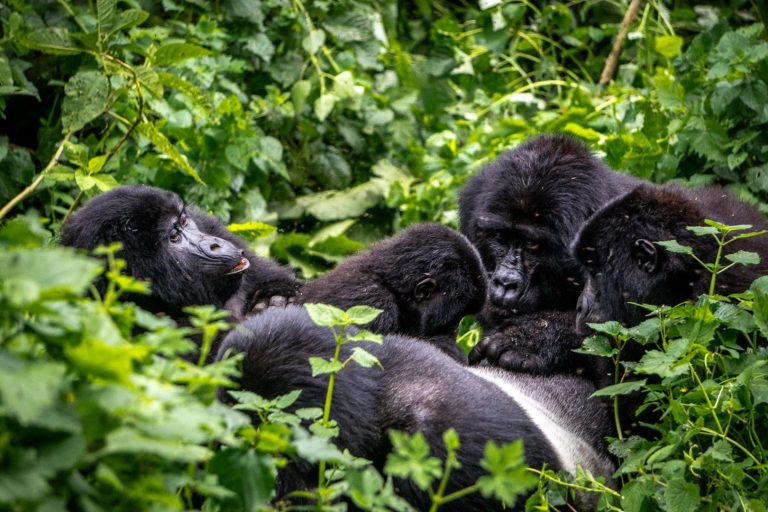
The Amahoro Gorilla Family is one of the well-known habituated mountain gorilla groups associated with Rwanda's Volcanoes National Park. The name "Amahoro" means peace in Kinyarwanda, an appropriate name for a gorilla family that has traditionally been described as relatively calm and composed in its social behavior.
For travelers planning gorilla trekking in Rwanda, Amahoro is one of several habituated families that may be allocated to visitors on the morning of the trek. Although travelers sometimes request particular gorilla groups, allocation depends on the location of the animals, trekking conditions, visitor fitness and the operational decisions of park authorities.
Introduction
The Amahoro family's history, mountain habitat and social dynamics make it an interesting group for anyone wanting to understand more about mountain gorillas before entering the forests of Volcanoes National Park.
Where Does the Amahoro Gorilla Family Live?
The Amahoro family is associated with the mountainous forest of Volcanoes National Park in northwestern Rwanda. The park forms part of the Virunga Massif, a transboundary conservation landscape shared by Rwanda, Uganda and the Democratic Republic of Congo.
This region contains a chain of volcanic mountains covered by bamboo forest, montane vegetation and high-altitude ecosystems that provide important habitat for mountain gorillas.
Amahoro has historically ranged in areas that can require a moderate to challenging trek depending on the family's location on a particular day.
Mountain gorillas move continuously while searching for food, resting areas and suitable nesting sites. Therefore, there is no permanent path leading directly to the Amahoro family. Trackers locate the gorillas each day, and trekking routes are adjusted accordingly.
Why Is the Group Called Amahoro?
"Amahoro" means peace. The name is often linked to the character traditionally associated with the family and particularly with its historical leadership.
Mountain gorilla groups are generally led by a dominant silverback responsible for protecting family members, resolving conflicts and making many decisions about movement. Some dominant males are especially assertive, while others are known for maintaining stability through less confrontational behavior.
The peaceful character associated with Amahoro has helped make the group one of the memorable families in Rwanda's gorilla trekking story. However, gorillas remain wild animals, and their behavior can change depending on circumstances.
Visitors should always follow guide instructions regardless of the reputation of a particular group.
Mountain Gorilla Family Structure
Understanding mountain gorilla society helps visitors appreciate an encounter with the Amahoro family. A typical group may contain one or more silverbacks, adult females, blackbacks, juveniles and infants. The dominant silverback is usually the central figure.
He protects the group and often determines when and where it travels. Adult females spend much of their time feeding and caring for infants. Young gorillas are frequently the most active members of the family and may climb vegetation, play, wrestle and interact with one another.
Blackbacks are younger adult males that have not yet developed the full silver saddle characteristic of mature males. The composition of every family changes over time through births, deaths, transfers and dispersal.
For this reason, exact member counts should always be understood as temporary snapshots rather than permanent figures.
What Is an Amahoro Gorilla Trek Like?
A trek to the Amahoro Gorilla Family begins like other gorilla trekking experiences in Volcanoes National Park. Visitors wake early, have breakfast and travel to the park headquarters in Kinigi.
After registration and briefing, trekkers are divided into small groups and assigned to one of the habituated gorilla families available that day. Once allocation is complete, visitors travel with their safari guide toward the appropriate starting point. The walk then begins with professional park guides and trackers.
Depending on the location of the gorillas, the trek may involve slopes, muddy paths, bamboo vegetation and dense forest. The duration cannot be guaranteed. Some treks are relatively short, while others involve several hours of walking.
How Difficult Is Trekking the Amahoro Family?
Amahoro has historically been associated with areas where trekkers may need to climb into the volcanic landscape. Visitors should therefore prepare for a genuine mountain trek.
Difficulty depends on several factors, including rainfall, terrain, vegetation and the distance traveled by the gorillas since the previous day. Reasonable fitness is helpful, but travelers do not need to be professional hikers. Walking regularly before the safari can make the experience more comfortable.
Hill walking, stair climbing and general cardiovascular exercise can be particularly useful preparation. Anyone with physical concerns should inform their tour operator before travel.
The Gorilla Encounter
Once the family is located, the atmosphere changes dramatically. The effort of climbing through the forest is replaced by the extraordinary experience of watching mountain gorillas at close range under controlled conditions. You may see adults feeding quietly while juveniles chase one another through vegetation.
An infant might remain close to its mother while a silverback rests nearby. Mountain gorillas spend much of their day eating because their diet is dominated by vegetation. This means many encounters are peaceful and observational rather than dramatic.
The subtle behavior is often what makes the experience unforgettable. Watching a mother groom her infant or seeing a juvenile imitate an older animal can reveal remarkable similarities between gorillas and humans.
Photography During the Trek
Amahoro can provide excellent wildlife photography opportunities. However, the forest creates difficult lighting conditions. Vegetation can block the view, and gorillas may move between bright openings and deep shade.
Travelers using cameras should understand basic settings before entering the forest. High ISO settings and relatively fast shutter speeds can be useful when photographing moving juveniles. Flash photography should not be used.
Visitors should also avoid spending the entire encounter behind a camera. Taking time to watch the gorillas directly often produces the most memorable moments.
What to Wear
Proper clothing can make a major difference. Wear long trousers and a long-sleeved shirt to protect against vegetation. Sturdy waterproof hiking boots with good grip are highly recommended.
A lightweight rain jacket should always be carried because weather can change quickly. Gardening gloves are useful for holding vegetation when climbing. Gaiters can help prevent mud and insects from entering boots. A warm layer may also be useful during cool mornings in the Virunga Mountains.
Hire a Porter
Hiring a porter is strongly recommended for an Amahoro trek. Porters can carry your backpack, water, camera equipment and rain gear. They can also provide assistance on steep or slippery sections.
Even fit travelers often appreciate having both hands free while moving through thick vegetation. Porter employment is also one of the ways gorilla tourism creates direct economic benefits for communities surrounding Volcanoes National Park.
Can You Request the Amahoro Family?
Travelers can express a preference, but assignment to Amahoro cannot normally be guaranteed. Park authorities allocate groups according to several considerations. The family's current location may be one factor.
Visitor fitness can also be relevant when some gorilla families are considerably farther away than others. The best approach is to remain flexible. Every habituated mountain gorilla group offers a special encounter. The experience of seeing wild gorillas is more important than the specific name of the family.
Best Time to Trek Amahoro
The Amahoro family can potentially be visited throughout the year when included in tourism allocations. Rwanda has wetter and relatively drier seasons. Drier periods may make forest trails somewhat easier.
During wetter months, conditions can be muddy and slippery. However, rain is possible throughout the year because Volcanoes National Park is a high-altitude tropical environment. Visitors should therefore carry rain protection regardless of travel month.
How Many Nights Should You Stay?
Two nights near Volcanoes National Park are generally sufficient for one gorilla trek. A typical itinerary involves arriving from Kigali on the first day, trekking on the second day and leaving on the third. Three nights are preferable if you want a more relaxed itinerary.
An additional day allows activities such as golden monkey tracking, cultural visits or conservation-focused experiences around Musanze.
Combining Amahoro Trekking with Other Parks
Volcanoes National Park can be included in a larger Rwanda safari. Travelers can combine gorillas with wildlife viewing in Akagera National Park or chimpanzee trekking in Nyungwe National Park. Rwanda can also be combined with Uganda.
Bwindi Impenetrable National Park, Mgahinga Gorilla National Park, Queen Elizabeth National Park and Kibale National Park are all possible additions to longer itineraries. This makes it possible to create a comprehensive primate and wildlife safari.
Why the Amahoro Gorilla Family Is Special
The Amahoro Gorilla Family represents one of the many fascinating social groups that make Rwanda's mountain gorilla population so important.
Its name, meaning peace, reflects the character historically associated with the family, while its life in the volcanic forests demonstrates the complex social behavior of mountain gorillas.
For visitors fortunate enough to be allocated to Amahoro, the trek offers an unforgettable opportunity to observe wild mountain gorillas living freely in one of Africa's most dramatic landscapes.
The experience combines physical adventure, conservation and intimate wildlife observation, making it one of the highlights of any Rwanda safari.