
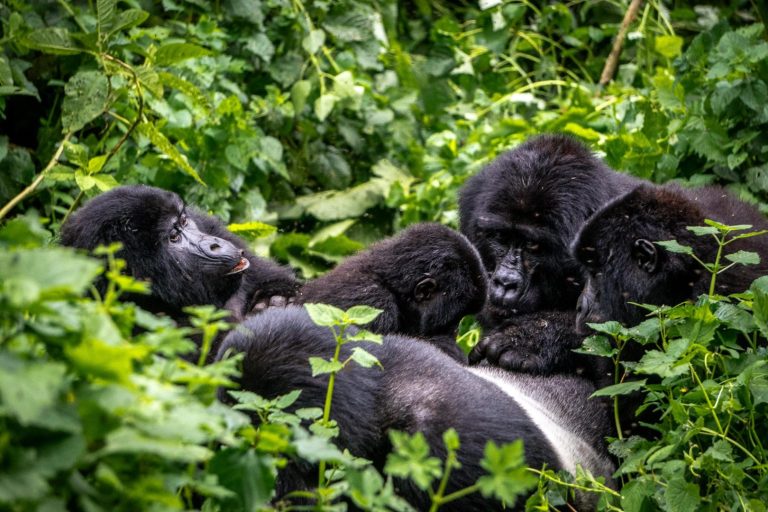
The trekking experience takes visitors on foot into cool montane forest and bamboo zones with professional guides and trackers. Rather than visiting gorillas in an enclosure, travelers search for a habituated family moving naturally through its mountain habitat.
Introduction
Once a gorilla family is located, visitors can observe its members feeding, resting, grooming and interacting under carefully regulated conditions. Rwanda currently limits each habituated gorilla group's tourist encounter to a maximum of one hour per day, with up to eight trekking permits issued per group.
Where Is Volcanoes National Park?
Volcanoes National Park is situated in northwestern Rwanda, close to Musanze. The park forms part of the greater Virunga ecosystem that stretches across Rwanda, Uganda and the Democratic Republic of Congo.
Why Trek Gorillas in Volcanoes National Park?
The main attraction is the opportunity to encounter mountain gorillas in their natural habitat. However, several additional factors make Rwanda appealing:
Mountain Gorillas of Volcanoes National Park
Volcanoes National Park protects several habituated mountain gorilla families.
Official Visit Rwanda information currently states that twelve gorilla families in the park are fully habituated for tourism, with additional groups habituated primarily for scientific research. Gorilla family composition is fluid, with groups normally containing at least one silverback together with females and younger gorillas.
Numbers within individual groups can change through births, deaths, transfers and changes in social structure. For this reason, travelers should avoid treating old online lists of family members as permanently accurate. Your guides provide current information during the morning briefing.
What Is Gorilla Habituation?
Habituation is a gradual conservation process through which a wild gorilla family becomes accustomed to limited human presence. Researchers and trackers spend considerable time around the animals while monitoring their reactions. The purpose is not to tame the gorillas.
They remain completely wild and continue deciding where they feed, sleep and move. Habituation simply allows carefully regulated tourism and research without causing excessive disturbance.
What Happens on Gorilla Trekking Day?
Your day begins early. Visit Rwanda currently advises trekkers to gather at the Volcanoes National Park headquarters in Kinigi at approximately 7:00 a.m., where visitors receive a briefing and are allocated to a gorilla family. The briefing covers:
- Gorilla behavior - Health precautions - Required viewing distance - Forest safety - Photography rules - What to do if a gorilla approaches - General trekking procedures
Your group then travels toward the relevant trailhead before entering the forest with guides and trackers.
How Are Gorilla Families Allocated?
Family allocation is generally completed on trekking morning. Factors can include gorilla locations, operational considerations and the fitness or mobility of participants. Travelers should therefore avoid assuming that purchasing a permit guarantees a particular named family.
Every habituated family offers a unique experience. The quality of your trek depends far more on natural behavior and conditions that day than on the name of the group.
How Trackers Find the Gorillas
Mountain gorillas move through the forest every day. They feed, rest and build new sleeping nests within their home ranges. Trackers monitor their movements and use signs including:
- Footprints - Broken vegetation - Feeding remains - Fresh dung - Nesting sites - Knowledge of previous locations
Visitors therefore participate in a genuine wildlife tracking experience. There is no permanent viewing platform where gorillas wait for tourists.
How Long Does Gorilla Trekking Take?
There is no fixed trekking duration. A family can sometimes be located after a relatively short walk. On another day, the trek may require several hours of climbing.
The Virunga landscape includes steep slopes, bamboo and dense vegetation. Rain can make trails slippery and muddy. Travelers should keep most of the day available and avoid scheduling another important activity immediately afterward.
How Difficult Is Gorilla Trekking?
The physical difficulty varies considerably. Altitude, weather and the location of your allocated gorilla family all influence the trek. You do not need to be a professional athlete, but reasonable fitness is beneficial.
Before your safari, regular walking can help. Hill walking and stair climbing are particularly useful preparation. Travelers concerned about mobility should discuss this with their operator before booking.
Hiring a Porter
Hiring a porter is strongly recommended.
- Carry your backpack - Assist on steep trails - Help when trails become slippery - Reduce fatigue - Allow you to concentrate on the surroundings
Using porter services also supports local livelihoods. For many visitors, the relatively small extra cost becomes one of the best practical decisions of the trekking day.
Encountering the Gorillas
When trackers locate the family, the ranger prepares visitors for the final approach. Noise is reduced. Visitors move forward carefully under instruction.
Your first gorilla may be partly hidden by bamboo or forest vegetation. Gradually, additional family members may become visible. A mature silverback can be extraordinarily impressive at close range. Yet many visitors become equally fascinated by mothers caring for infants or juveniles playing nearby.
Your One Hour With the Gorillas
Visit Rwanda states that tourists spend a strict maximum of one hour with the habituated family, helping keep visits intimate and minimize disturbance. During that hour, gorillas may:
- Feed - Rest - Groom - Play - Move slowly through vegetation - Interact with younger family members
Nothing is staged. The animals continue their normal routines while visitors observe.
What If a Gorilla Approaches?
Do not reach toward or touch the gorilla. Follow your ranger's instructions. A curious juvenile may occasionally move closer than the recommended distance. This does not mean visitors should initiate interaction. The gorilla is choosing its path; the visitor's responsibility is to behave calmly and predictably.
Gorilla Trekking Permit
A valid Rwanda gorilla permit is compulsory. Visit Rwanda currently lists the standard international tourist gorilla permit at US$1,500 per person per day, with special rates available for certain Rwandan, East African, African and resident categories subject to eligibility conditions.
Permits are limited and should be booked early. This is particularly important during popular travel periods.
Minimum Age
What to Wear
Visit Rwanda recommends sturdy walking shoes, waterproof clothing, long sleeves and gloves because trekking can involve thick vegetation and stinging nettles. A practical packing list includes:
- Waterproof hiking boots - Long trousers - Long-sleeved shirt - Lightweight rain jacket - Gaiters - Gardening gloves - Long socks - Warm fleece
Avoid shorts and open footwear.
What to Carry
Carry a small daypack containing:
- Drinking water - Camera - Spare batteries - Rain protection - Personal medication - Sunscreen - Insect repellent - Waterproof electronics bag - Packed food where arranged
Keep the pack light or give it to your porter.
Photography
Flash photography is not permitted around mountain gorillas. A camera with good low-light capability is useful because the forest can be dark. A moderate zoom lens offers flexibility.
Protect equipment from rain and moisture. Do not spend the entire hour looking through a screen. Taking several minutes simply to watch the family often becomes one of the strongest memories of the trek.
Best Time for Gorilla Trekking in Volcanoes National Park
Gorilla trekking operates throughout the year. The relatively drier periods, commonly around June to September and December to February, are popular because trails can be easier. The wetter periods around March to May and October to November can produce muddier conditions.
However, the gorillas remain in the park throughout the year. A rainy-season trek can be just as rewarding if you are properly equipped.
Where to Stay
Accommodation around Volcanoes National Park ranges from simple guesthouses to exceptional luxury lodges. Travelers can choose:
- Budget accommodation - Comfortable mid-range hotels - Boutique lodges - Luxury conservation lodges - Ultra-luxury properties
For trekking morning, staying in the Musanze or Kinigi region is far more practical than traveling all the way from Kigali.Getting There From Kigali
Most travelers reach Volcanoes National Park by road from Kigali. The transfer passes through attractive countryside and becomes increasingly mountainous. Although relatively convenient, it is better to travel the day before trekking.
This avoids very early departures and reduces the risk of traffic or other delays affecting your permit.
Combine Gorillas With Golden Monkeys
Golden monkey tracking is one of the best additional activities. The monkeys inhabit bamboo areas within the Virunga ecosystem and behave very differently from mountain gorillas. They are smaller, faster and more energetic.
A two- or three-night Volcanoes stay can therefore provide two contrasting primate experiences.
Combine Volcanoes With Mgahinga
Travelers can cross into Uganda and visit Mgahinga Gorilla National Park.
Current border and visa requirements should be confirmed before travel.
Combine Volcanoes With Bwindi
Conservation Importance
Gorilla permit revenue supports conservation and community initiatives associated with protecting mountain gorillas and their habitat. Visit Rwanda specifically notes that revenue from permits contributes to conservation projects and forest and habitat expansion.
Visitors therefore participate in a tightly managed tourism model designed to give endangered gorillas significant economic value as living wildlife.
Plan Your Gorilla Trekking in Volcanoes National Park
Gorilla trekking in Volcanoes National Park combines extraordinary wildlife, volcanic scenery and relatively convenient access from Kigali.