
# Uganda Wildlife Safaris
Uganda wildlife safaris offer an extraordinary combination of classic African game viewing, mountain gorilla trekking, chimpanzee encounters, birding and diverse landscapes. Uganda is particularly rewarding for travelers who want more than conventional savannah wildlife because a single itinerary can combine lions, elephants, giraffes and buffalo with some of the world’s most remarkable primate experiences.Introduction
The country contains tropical forests, open savannah, wetlands, lakes, rivers and mountainous environments. These different habitats support an impressive range of wildlife and make it possible to create highly varied private safari itineraries.
Why Choose Uganda for a Wildlife Safari?
Uganda’s greatest strength is diversity. In some African destinations, visitors spend most of their safari viewing wildlife from a vehicle across similar landscapes. Uganda allows travelers to change activity and ecosystem repeatedly.
You can track chimpanzees through tropical forest, watch elephants from a safari vehicle, take a boat trip surrounded by hippos and birds, and later hike through mountain forest searching for gorillas.
This variety makes Uganda especially attractive for first-time Africa visitors and experienced safari travelers looking for something different.
Queen Elizabeth National Park
Queen Elizabeth National Park is one of Uganda’s best-known wildlife destinations. The park contains savannah, wetlands, crater landscapes and forested areas. Game drives provide opportunities to search for elephants, buffalo, antelopes and predators.
The wider ecosystem is also internationally known for its birdlife. One of the park’s greatest advantages is the variety of activities possible within the same stay. Travelers can combine game drives with boat-based wildlife viewing and primate experiences in nearby forest areas.
Murchison Falls National Park
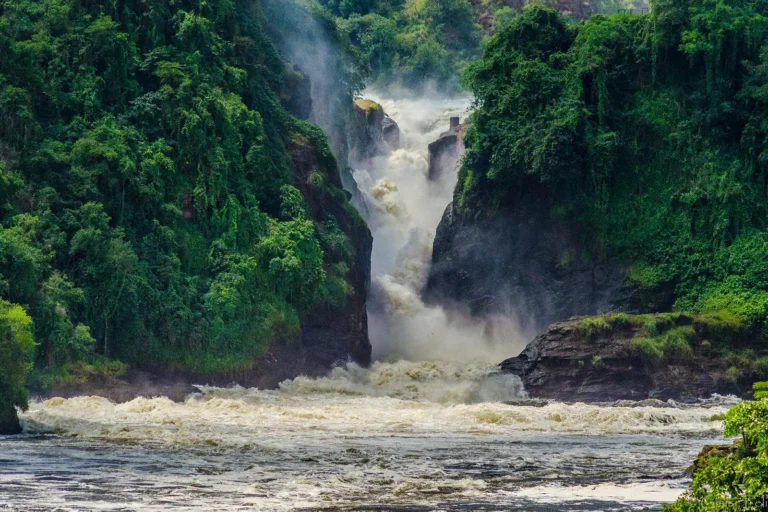
Murchison Falls National Park is another cornerstone of Uganda wildlife safaris. The Nile passes through the park and is forced through a narrow rocky section at Murchison Falls, creating one of Uganda’s most dramatic natural landmarks. The park also provides excellent opportunities for game drives and boat safaris.
Visitors may encounter giraffes, elephants, buffalo, antelopes and predators across the savannah. Along the river, hippos, crocodiles and numerous bird species can be observed.
Kidepo Valley National Park
Kidepo Valley National Park lies in northeastern Uganda and appeals particularly to travelers seeking remote landscapes and a less conventional safari experience. The journey to Kidepo is longer than to many western parks, but the isolation is part of its attraction.
Lake Mburo National Park
Lake Mburo National Park is a smaller protected area located conveniently on routes between central Uganda and the southwestern safari circuit. It can be an excellent first or final park on a longer journey.
Bwindi Impenetrable National Park
Bwindi is internationally famous for mountain gorillas. Although gorilla trekking is not a conventional vehicle-based wildlife safari, it is one of the greatest wildlife experiences available anywhere in Africa.
Mgahinga Gorilla National Park
Mgahinga offers another opportunity for mountain gorilla trekking in southwestern Uganda. The park lies within the Virunga landscape and provides impressive volcanic scenery. Visitors may also be interested in other primate and hiking experiences.
Kibale National Park
Kibale is Uganda’s premier chimpanzee trekking destination. The forest supports exceptional primate diversity and is one of the country’s essential wildlife areas for travelers interested in great apes. Chimpanzee trekking is active and unpredictable.
Big Mammals on Uganda Wildlife Safaris
Uganda protects a wide variety of large mammals. Depending on destination, visitors may see elephants, buffalo, giraffes, zebras, hippos and numerous antelope species. Predators can include lions, leopards and hyenas.
Wildlife distribution differs between parks. For this reason, visiting several protected areas greatly increases the variety of species and landscapes encountered. No individual national park should be expected to contain every species a traveler hopes to see.
Lions in Uganda
Lions are among the most sought-after predators on Uganda wildlife safaris. Queen Elizabeth and Murchison Falls are important destinations for lion viewing. The Ishasha region of Queen Elizabeth is particularly associated with lions that are sometimes observed resting in trees.
Wildlife behavior remains unpredictable, so tree-climbing sightings cannot be guaranteed. Visitors should approach every game drive as a search rather than a predetermined viewing schedule.
Leopards
Leopards are present in several Ugandan ecosystems but are naturally more elusive than many other large mammals. Early morning and evening game drives may provide opportunities depending on the park. An experienced guide can identify tracks, behavior of other animals and likely habitat.
Elephants and Buffalo
Elephants and buffalo are regularly associated with several major wildlife parks. They may be encountered on game drives or sometimes close to water during boat activities. Visitors should always observe large animals from an appropriate distance and follow the instructions of professional guides.
Wild animals must never be approached simply for a photograph.
Hippos and Crocodiles
Water-based activities provide excellent opportunities to see hippos and crocodiles. The Nile at Murchison Falls and waterways within the Queen Elizabeth ecosystem are particularly important. Boat safaris also allow travelers to observe wildlife from a completely different perspective.
Animals that appear distant from a game-drive road may be much easier to watch from the water.
Primates Beyond Gorillas and Chimpanzees
Uganda supports numerous monkey species in addition to its great apes. Forest destinations such as Kibale and Bwindi are particularly important, while primates can also be encountered in other protected areas. Dedicated naturalists may build an itinerary specifically around primate diversity.
Uganda Birding Safaris
Uganda is an exceptional birding destination because of its diverse habitats. Forest, savannah, wetlands, lakes and mountain environments support a remarkable range of species. Even travelers who are not dedicated birders often find themselves paying much more attention to birds during a Uganda safari.
Specialist birding itineraries can spend significantly more time in productive habitats and use guides with detailed identification knowledge.
Boat Safaris
Boat safaris are among Uganda’s greatest wildlife experiences. Instead of remaining inside a vehicle, visitors travel along rivers or channels where wildlife frequently gathers near the water. Boat trips can provide excellent opportunities for observing hippos, crocodiles, elephants and birds.
They also offer a more relaxed activity after several hours of game driving.
Game Drives
Game drives remain central to Uganda wildlife safaris. Early mornings and late afternoons are often productive periods because temperatures are cooler and many animals are active. A professional driver-guide understands local roads, habitats and wildlife behavior.
Travelers should remain flexible. Wildlife does not follow a fixed schedule, and one quiet period can be followed by an exceptional encounter only minutes later.
Walking and Active Safari Experiences
Uganda also offers opportunities to explore some wildlife areas on foot under appropriate guided conditions. These experiences can reveal tracks, plants, insects and smaller details that are often missed from vehicles. Walking should always take place where permitted and with qualified guides.
It provides an excellent contrast to traditional game drives.
Best Time for Uganda Wildlife Safaris
Uganda can be visited throughout the year. Relatively drier periods can make road conditions and wildlife activities more comfortable. However, wetter seasons produce lush scenery and can be rewarding for birding and photography.
Because the country lies in the tropics, weather can vary locally. The best time should be selected according to the complete itinerary rather than one park alone.
How Long Should a Uganda Wildlife Safari Be?
A short four- or five-day trip can focus on one or two destinations. However, seven to ten days allows much greater variety. Travelers wanting chimpanzees, savannah wildlife and gorillas should generally allocate enough time to connect Kibale, Queen Elizabeth and Bwindi comfortably.
Private Uganda Wildlife Safaris
Private safaris provide flexibility in departure times, photography stops and itinerary pacing. You travel with your own driver-guide and vehicle rather than joining a large scheduled group. This is especially valuable for couples, families and photographers.
A private safari can still be designed in budget, mid-range or luxury accommodation categories.
Accommodation
Uganda offers everything from simple camps and guesthouses to comfortable mid-range lodges and high-end safari properties. The best accommodation should combine comfort with practical access to activities.
A luxury property situated poorly for an early morning game drive may not be more useful than a well-positioned mid-range lodge. Location should always be part of the decision.
Plan Your Uganda Wildlife Safari
Uganda wildlife safaris can combine traditional big-game viewing with experiences that few destinations can match, including mountain gorillas and wild chimpanzees.
By coordinating wildlife activities, permits, accommodation and road transfers, a Uganda safari can provide an exceptionally diverse journey through forests, savannahs, wetlands and some of East Africa’s most memorable wildlife landscapes.