
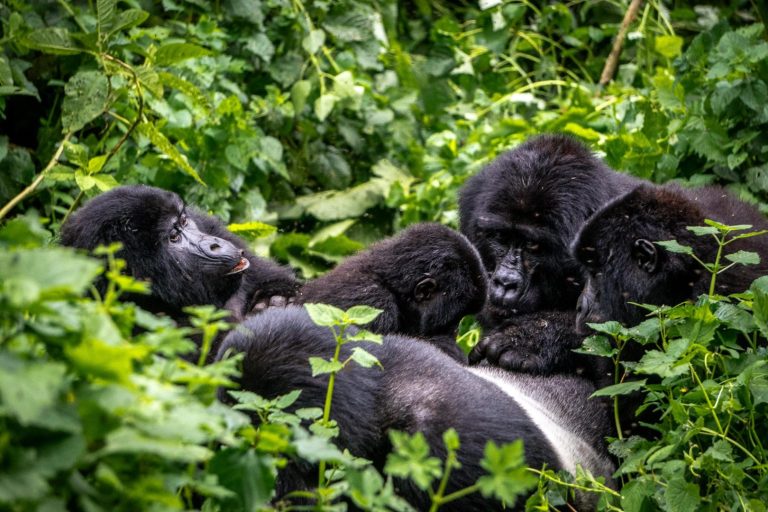
The Habinyanja Gorilla Family is one of the most historically significant habituated mountain gorilla groups associated with the Buhoma sector of Bwindi Impenetrable National Park. Its long history includes powerful silverbacks, major changes in group leadership and one of Bwindi's most famous family splits—the event that eventually created the Rushegura Gorilla Family.
For visitors, Habinyanja offers much more than a simple checklist opportunity to see mountain gorillas. Its history illustrates the complexity of gorilla social life.
Introduction
Leadership is not permanent. Families can divide. Females can transfer. Silverbacks compete for authority. Home ranges can change, and younger males eventually mature into potential leaders.
This evolving social structure means that any description of the family's exact membership should be treated as a snapshot in time rather than a permanent fact.
Where Is the Habinyanja Gorilla Family?
Habinyanja is associated with the Buhoma Sector on the northern side of Bwindi Impenetrable National Park. Buhoma is one of Bwindi's four official trekking sectors and one of Uganda's best-established gorilla tourism areas. Visitors trekking Habinyanja should therefore stay within practical reach of Buhoma.
Origin of the Name Habinyanja
The name Habinyanja is connected with the local word Nyanja, meaning a place or body of water. The International Gorilla Conservation Programme explains that the group was named after the watery or swampy area where it was first observed. This ties the family's identity directly to the forest landscape.
Habituation of Habinyanja
Habinyanja is one of Bwindi's long-established habituated gorilla groups. IGCP records that habituation began in 1996. Other long-standing tourism sources date the process to around 1997, with tourist visits beginning by 1999.
The slight differences in historical dating across sources reflect the fact that habituation is a process rather than a single moment. A group does not become fully accustomed to controlled human presence overnight.
The Early Habinyanja Family
The group's early history is associated with a dominant older silverback commonly recorded as Mukurusi or Mugurusi in different sources. At one point, Habinyanja was a very large gorilla family. After the old silverback's death, leadership became increasingly complex because several mature males were present.
This created the social conditions that eventually led to one of Bwindi's best-known group divisions.
Rwansigazi and Mwirima
Two important silverbacks in the Habinyanja story were Rwansigazi and Mwirima. The brothers differed in their ranging behavior. Historical accounts describe Rwansigazi as favouring longer movements and a larger home range, while Mwirima preferred a more restricted area.
Over time, the differing leadership styles contributed to the family separating.
The Split That Created Rushegura
In February 2002, Habinyanja divided. Mwirima moved away with part of the family, creating what became the Rushegura Gorilla Family, while the group remaining with Rwansigazi retained the Habinyanja name. IGCP confirms that the 2002 split led directly to the formation of Rushegura.
This is one of the most interesting examples of how gorilla family structures can change naturally over time.
Habinyanja Today
Exact family composition changes. IGCP listed Habinyanja at 13 members in its January 2024 update and recorded the group as being led by silverback Makara at that time. Other older tourism sources show different group sizes.
Gorilla families change because of:
- births
- deaths
- male maturation
- female transfers
- immigration
- dispersal
- and encounters with other groups
Visitors should rely on current ranger information rather than an old online headcount.
Habinyanja's Wide-Ranging Reputation
IGCP notes that Habinyanja is particularly known for ranging farther and colonising areas beyond its historically known home range around Buhoma. This history of broader movement is especially interesting given the group's earlier leadership dynamics.
For tourists, however, it means no one should assume the family will always remain close to the briefing area.
Is Habinyanja a Difficult Trek?
A group that ranges widely may sometimes require a substantial forest hike. However, this is not guaranteed every day. The gorillas' location changes. Visitors should prepare for:
- hills
- mud
- roots
- dense vegetation
- and several hours on foot
Uganda Wildlife Authority advises that gorilla trekking can take approximately two to seven hours depending on where the gorillas are found.
Trekking Day in Buhoma
The day begins early. Visitors report to the relevant Buhoma briefing area, receive instructions and are organised into trekking groups. Guides and rangers then lead visitors into the forest.
Trackers use knowledge from previous monitoring and current signs to help locate the gorillas. Once the family is found, visitors observe under strict conservation rules.
What Might You See?
Habinyanja's exact behavior is impossible to predict. A typical encounter might include:
- silverbacks feeding
- females resting
- infants climbing
- juveniles playing
- adults grooming
- and the group moving through vegetation
The forest environment can make sightings intimate and dramatic. A silverback appearing suddenly through dense leaves can be much more powerful than observing the same animal in an open setting.
Photography
Prepare for low light. Mountain gorilla fur is dark, and rainforest vegetation can create complicated exposure conditions. Useful preparation includes knowing how to adjust:
- ISO
- shutter speed
- autofocus
- exposure compensation
- and continuous shooting
Do not use flash. Protect the camera against rain even during drier months.
Hiring a Porter
A porter is highly recommended. Porters can carry:
- water
- packed food
- camera equipment
- rain jacket
- and personal belongings
They also provide physical assistance where the trail becomes steep or slippery. This allows visitors to focus more energy on the experience.
Where to Stay
Because Habinyanja is associated with Buhoma, visitors should normally stay in the Buhoma area. Accommodation includes:
- budget guesthouses
- mid-range lodges
- boutique properties
- and luxury forest lodges
Location matters. Staying near the trekking briefing point provides a much more relaxed morning.
Combining Habinyanja With Queen Elizabeth National Park
Buhoma is particularly convenient from the Ishasha region of Queen Elizabeth National Park. A strong itinerary may include: Queen Elizabeth National Park → Ishasha game drive → Buhoma → gorilla trekking before continuing to another destination. This creates an excellent savannah-to-rainforest transition.
Flying to Buhoma
Fly-in visitors can use Kihihi Airstrip as a regional gateway for northern Bwindi and continue to Buhoma by 4WD transfer. This is ideal for:
- luxury travelers
- honeymooners
- older visitors
- and short gorilla trips
Best Time to Trek Habinyanja
Habinyanja can be trekked throughout the year subject to current park operations and permit availability. Relatively drier periods may produce less muddy trails. Rain remains possible year-round.
- hiking boots
- waterproof jacket
- long trousers
- long-sleeved shirt
- gloves
- and camera protection
Health Rules
Visitors must respect health precautions. Mountain gorillas are vulnerable to human disease. Do not hide illness simply because you have paid for the safari. Follow ranger instructions concerning distance, coughing, sneezing and other health-related behavior.
Conservation Importance
Habinyanja's long habituation history means the group has contributed significantly to Uganda's gorilla tourism story. Controlled visits help create revenue for conservation and surrounding communities.
Uganda Wildlife Authority has a formal revenue-sharing system for communities bordering protected areas and allocates an additional amount from each Bwindi gorilla tracking permit to local revenue sharing. This illustrates why gorilla trekking has significance beyond the individual visitor.
Can You Request Habinyanja?
You may communicate preferences when planning, but family allocation should never be treated as guaranteed. Operational considerations can change. Your priority should be securing a valid Buhoma permit rather than arranging an entire trip around one historical group name.
Frequently Asked Questions
Where is Habinyanja?
Habinyanja is associated with the Buhoma sector of Bwindi Impenetrable National Park.
When was Habinyanja habituated?
Habituation began in the late 1990s, with IGCP recording a start in 1996.
What does Habinyanja mean?
The name is connected to “Nyanja,” referring to water or a watery place.
Did Habinyanja split?
Yes. A 2002 split created the Rushegura family.
Who leads Habinyanja?
Leadership changes over time. IGCP listed Makara as leader in its January 2024 update.
Is Habinyanja hard to trek?
It can involve a substantial hike, but difficulty varies daily.
Trekking the Habinyanja Gorilla Family
The Habinyanja Gorilla Family is particularly fascinating because its story captures the constantly changing nature of mountain gorilla society. Its history includes an aging patriarch, competing silverbacks, different ranging styles and the famous split that gave rise to Rushegura.
Yet the most important thing for a traveler is not memorising every historic member. It is recognising that the family encountered in the forest is alive and continually changing. When you finally locate Habinyanja among the dense vegetation of Buhoma, you are not simply seeing one of Bwindi's oldest tourism groups.
You are observing the latest chapter in a social history that has unfolded naturally in the forest for decades.