Most travelers who go gorilla trekking in Uganda meet park rangers during the morning briefing and then spend several hours walking with them through the forest. To visitors, the ranger may appear primarily to be a guide—someone who knows the trails, explains gorilla behavior and helps the group locate a mountain gorilla family. But guiding tourists is only one small part of a much bigger job.
Mountain gorilla rangers are part of a conservation system that operates every day of the year. Long before tourists arrive at Bwindi Impenetrable National Park or Mgahinga Gorilla National Park, teams are already working inside the forests. They monitor gorilla families, patrol protected areas, identify illegal activity, search for snares, collect information about wildlife and help manage the relationship between people and the parks.
Introduction
Understanding how rangers protect mountain gorillas reveals what really happens behind the scenes of a Uganda gorilla trek.
Gorilla Protection Starts Before Sunrise
A visitor’s trekking day may begin with breakfast at a lodge followed by a drive to park headquarters. For some trackers and rangers, however, the working day has already started. Teams may enter the forest early to locate habituated gorilla families. Because gorillas are wild animals, they do not remain in the same place overnight. A family can travel through valleys, climb slopes and feed across different parts of its home range.
Trackers therefore often begin from where the gorillas were last observed the previous day. From there, they examine the forest for signs showing where the group moved. The information they gather helps tourism rangers know where trekking groups should begin searching.
Rangers Learn to Read the Forest
Finding mountain gorillas in a dense rainforest requires exceptional tracking skills. Gorillas leave clues everywhere they travel, but many would be almost invisible to an inexperienced visitor. Trackers may examine broken stems, stripped vegetation, footprints, dung, nests and feeding remains. Freshness matters.
A branch broken a few hours earlier may look different from one broken several days ago. Fresh dung can indicate that a group passed relatively recently. Recently constructed nests can reveal where gorillas slept the previous night. By combining these signs, trackers build a picture of the gorillas’ movements. This knowledge is important for tourism, but it is equally valuable for conservation monitoring.
Monitoring Individual Gorilla Families
Habituated mountain gorilla families are closely monitored. Experienced trackers can recognize many individual gorillas. They may know the dominant silverback, adult females, blackbacks, juveniles and infants within a particular family. Regular observation allows teams to notice important changes. Has an infant been born?
Has a female transferred to another group? Has a young male disappeared? Is an individual limping? Does a gorilla appear unusually weak? Has the dominant silverback suffered an injury?
These details are recorded and communicated through the conservation system. Over time, such observations create detailed histories of individual gorillas and entire families.
Rangers Are the Eyes and Ears of Gorilla Conservation
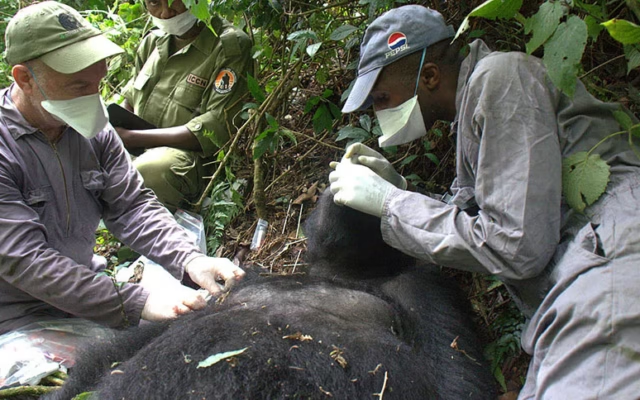
A veterinarian or researcher cannot remain beside every gorilla family every day. Rangers and trackers therefore become an essential early-warning system. Because they regularly observe gorillas, they may be among the first people to notice a health or behavioral problem. A swollen limb, persistent coughing, unusual inactivity or visible wound can be reported for further assessment.
Specialists can then decide whether the situation requires closer observation or veterinary attention. This daily monitoring is one reason habituated gorilla populations can be studied in extraordinary detail.
Anti-Poaching Patrols Protect the Forest
Mountain gorillas are not generally the intended target of most snares found in their habitat. However, wire snares set for other wildlife can still seriously injure gorillas. A gorilla may accidentally place a hand or foot into a snare while moving through vegetation. Young gorillas can be particularly vulnerable because of their curiosity and movement through the forest.
Ranger patrols therefore search for evidence of illegal hunting and remove snares when discovered. Patrol teams may also look for unauthorized entry, illegal resource extraction and other activities that threaten the protected area. Removing one snare may prevent the injury or death of an animal that was never the trapper’s intended target.
Protecting Gorillas Means Protecting Their Habitat
You cannot protect mountain gorillas while allowing their forest to disappear. Habitat protection is therefore one of the ranger’s most important responsibilities. Bwindi’s gorillas depend on a complex forest ecosystem providing food, shelter and space to move. Rangers help protect park boundaries and report activities that threaten forest integrity. Their work benefits far more than gorillas.
Bwindi supports an enormous variety of birds, mammals, butterflies, plants, reptiles and other organisms. By protecting gorilla habitat, rangers are effectively protecting an entire ecosystem.
Rangers Also Protect Tourists
Gorilla trekking takes place in real wilderness. Trails can be steep, slippery, muddy and overgrown. Conditions change depending on rainfall and the location of the gorilla family. Rangers guide visitors through this terrain safely. They determine where groups should walk, help manage difficult sections and communicate with trackers ahead.
Most importantly, they control the gorilla encounter. When visitors finally reach the family, the ranger explains where to stand, when to move and how to behave. If a gorilla approaches, the ranger provides instructions. If the family begins moving, the ranger decides whether visitors should reposition. This creates an encounter that is safer for both people and gorillas.
Managing Human Behavior Is Part of Conservation
One of the surprising aspects of ranger work is that protecting gorillas often involves managing tourists. Visitors are understandably excited. After traveling across the world and hiking through a rainforest, everyone wants the best possible photograph. But conservation rules must come before photography. Rangers remind trekkers to maintain appropriate distance whenever possible, avoid touching gorillas, control noise and follow health precautions. They also ensure visitors do not chase gorillas when the animals move away. These rules protect the animals from excessive disturbance and unnecessary human contact. Without enforcement, tourism could easily become intrusive.
Rangers Interpret Gorilla Behavior
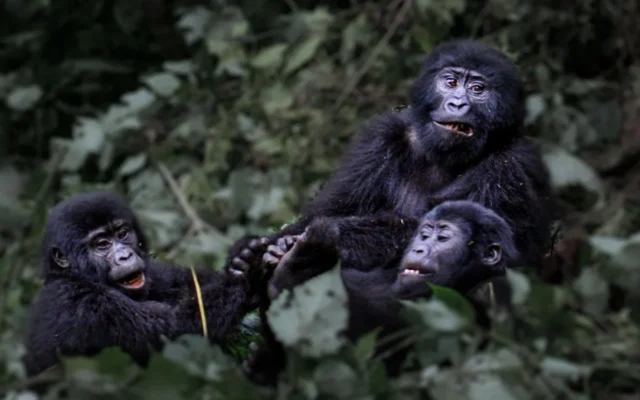
Mountain gorillas communicate through body posture, facial expressions, vocalizations, movement and displays. Experienced rangers develop a deep understanding of these behaviors. A visitor may interpret a silverback’s movement as threatening when it is simply repositioning. A chest beat may appear frightening but can serve several social or communicative purposes.
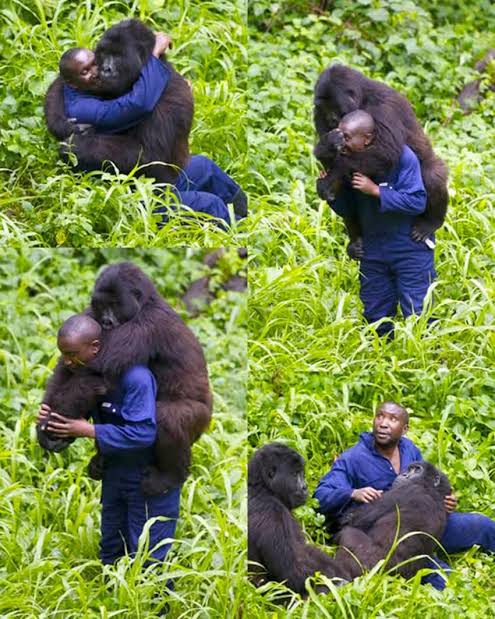
Juvenile gorillas may appear to invite interaction, but tourists must remember that they are wild animals. Rangers interpret these situations and help visitors respond appropriately. Their experience reduces both fear and inappropriate behavior.
What Happens When a Gorilla Comes Very Close?
Occasionally, a gorilla may approach visitors despite recommended distancing rules. The gorilla itself has not attended the morning briefing. A curious juvenile may walk closer. A silverback might cross a trail. A family may decide to move directly through the area where trekkers are standing. When this happens, visitors should remain calm and follow ranger instructions. Rangers may tell the group to crouch, remain still or slowly change position. The objective is to allow the gorilla to control its own movement without visitors panicking or attempting to touch it.
Rangers Help Enforce Time Limits
Standard gorilla trekking encounters involve a controlled observation period once the assigned family is located. The time limit is an important conservation measure. Without restrictions, a popular gorilla family could potentially be surrounded by tourists for much of the day. Rangers track the encounter time and eventually signal when the group must begin leaving. For travelers, that moment can feel far too soon. But respecting it ensures the family receives predictable periods without tourist groups nearby.
Daily Data Collection Matters
Conservation depends on information. Rangers and trackers may record details about gorilla locations, group composition, births, injuries and other observations. Repeated over months and years, this information becomes scientifically valuable. Researchers can examine population trends, social changes and habitat use.
The individual notes made by a ranger on an ordinary morning can therefore contribute to a much larger understanding of mountain gorilla ecology.
Rangers Work in Difficult Conditions
Tourists usually choose when they want to trek. Rangers do not get to choose ideal forest conditions every day. Conservation work continues through rain, mud, steep terrain and dense vegetation. Patrols may reach remote parts of protected areas where there are no comfortable tourist trails. Teams can spend long periods walking through challenging landscapes.
This physical commitment is easy to overlook when visitors see only the polished tourism experience. The fact that a gorilla family can be reliably monitored is the result of substantial fieldwork.
Communication Between Ranger Teams Is Essential
Gorilla protection requires cooperation. Trackers in the forest may communicate with tourism rangers. Rangers report concerns to senior park staff. Health issues may be passed to veterinary teams. Security concerns require coordination with other conservation personnel.
Researchers may depend on observations collected by monitoring teams. The system functions because information moves between different specialists. No single ranger protects mountain gorillas alone. Conservation is a coordinated effort involving many people.
Rangers and Local Communities
The relationship between protected areas and neighboring communities is critical. People living around Bwindi and Mgahinga interact with the conservation landscape continuously. Park authorities therefore need communication and cooperation with surrounding communities. Community conservation programs can help explain park regulations, address concerns and encourage participation in tourism-related opportunities.
Local residents may also provide valuable information about activities occurring near park boundaries. Strong community relationships can make conservation more effective.
Tourism Helps Support Ranger Work
Gorilla trekking provides an economic reason to maintain strong wildlife protection. Visitors purchase permits, stay in lodges, employ guides and spend money in communities surrounding the parks. This tourism industry depends completely on healthy gorilla populations and secure habitat. If gorillas disappeared, much of the specialized tourism economy surrounding them would disappear as well.
Ranger work therefore protects both wildlife and a significant tourism resource.
What Happens After Tourists Leave?
The work does not end when a trekking group returns to park headquarters. Trackers may continue monitoring gorillas. Patrol teams may remain in the forest. Observations need to be recorded and reported. Tomorrow’s tracking work may depend on knowing where a family ended its day.
Conservation is continuous. Visitors experience one carefully organized window into a system that operates whether tourists are present or not.
The Risks Rangers Face
Wildlife conservation work can involve genuine risks. Rangers operate in challenging wilderness terrain, encounter unpredictable weather and sometimes deal with illegal activities inside protected areas. Physical injuries are possible simply because of steep slopes, slippery trails and long hours in difficult environments. Yet their continued presence is essential for protecting endangered wildlife.
Recognizing the role of rangers means understanding that gorilla conservation is not abstract. It depends on people physically entering the forest every day.
What Travelers Can Do to Support Rangers
The best way visitors can support ranger-led conservation is to cooperate. Listen carefully during the briefing. Follow instructions even when they interfere with the photograph you hoped to take. Respect the observation time. Do not pressure guides to break conservation rules.
Avoid littering. Do not enter the forest when seriously ill. Hiring a porter can also support the wider community economy associated with gorilla tourism. And when the trek is over, remember that responsible gratuities can recognize excellent service where tipping is appropriate.
Rangers Make Gorilla Trekking Possible
When travelers talk about gorilla trekking, the gorillas naturally receive most of the attention. But every successful trek depends on people who know the forest. Someone has followed the gorilla family’s trail. Someone has monitored its composition. Someone has checked for illegal activity.
Someone has guided visitors safely through the terrain. Someone has ensured tourism rules are followed. That is how rangers protect mountain gorillas—through thousands of ordinary actions repeated day after day. The magnificent silverback you photograph during your Uganda gorilla safari is not protected by one dramatic conservation intervention.
He is protected through patient monitoring, forest patrols, careful visitor management, community cooperation and the accumulated knowledge of people who spend their working lives in his habitat. When you walk behind your ranger into the misty forests of Bwindi or Mgahinga, you are therefore following much more than a tour guide.
You are walking beside one of the people responsible for keeping one of the world’s most remarkable endangered animals safe.
 Read