Mountain gorillas live in dense forests where visibility can sometimes be limited to only a few meters. They move through steep mountains, build new sleeping nests regularly and are distributed across protected landscapes spanning international borders. Yet conservation organizations periodically publish population estimates for mountain gorillas.
That raises a fascinating question: How are mountain gorillas counted in the wild? Researchers cannot simply line the gorillas up and count them. Instead, estimating the mountain gorilla population requires extensive fieldwork combining direct monitoring, nest surveys, genetic sampling and careful scientific analysis. The process provides conservationists with one of the most important indicators of whether decades of protection are working.
Why Counting Mountain Gorillas Matters
Knowing approximately how many mountain gorillas exist is fundamental to conservation. Population information allows researchers and wildlife authorities to determine whether numbers appear to be increasing, stable or declining. It can also help conservation managers understand where gorillas are living and how populations are distributed across different parts of their range.
Without reliable population estimates, conservation decisions would depend largely on guesswork. A census provides a benchmark. Researchers can compare results with earlier surveys to identify long-term trends and assess whether conservation strategies appear to be succeeding.
Where Mountain Gorillas Live
Mountain gorillas survive in two main landscapes. One population occurs in the Bwindi-Sarambwe ecosystem, including Uganda’s Bwindi Impenetrable National Park and neighboring forest habitat. The other occurs across the Virunga Massif, a volcanic mountain landscape shared by Uganda, Rwanda and the Democratic Republic of Congo. These habitats are mountainous and heavily vegetated. That makes traditional wildlife counting techniques difficult.
You cannot easily conduct an aerial survey because the forest canopy hides the animals. Driving fixed transects is impossible across much of the terrain. Researchers therefore use evidence that gorillas leave behind.
Gorillas Build Sleeping Nests
One of the most useful pieces of evidence is the gorilla nest. Mountain gorillas construct nests for resting and sleeping, usually using surrounding vegetation. When researchers locate a fresh nest site, it provides evidence that a gorilla group recently spent time there. A group can leave multiple nests corresponding broadly to the number of individuals that slept at that location. But simply counting nests is not enough.
Researchers need to determine whether the same gorilla has been counted at different locations and distinguish between different individuals and groups. This is where genetic analysis becomes extremely useful.
Searching the Forest Systematically
A gorilla census involves teams moving systematically through forest areas searching for signs of gorilla presence. Field teams may look for: When fresh signs are found, teams can follow the trail toward recent nest sites. This can involve difficult hiking through dense vegetation and steep terrain. Unlike tourist trekking, census teams may need to cover remote sections of forest that receive little regular visitor traffic.
Nest Sites Are Valuable Evidence
Fresh nest sites provide a concentrated location where researchers can collect information. The number of nests can offer an initial indication of group size. Smaller nests may sometimes provide clues about younger individuals, while larger nests may have been constructed by adults. However, visual interpretation alone is not sufficiently precise for a modern population estimate. Two gorillas can produce similar-looking evidence. One individual may also be encountered at different locations during the survey period. Scientists therefore collect biological samples that can reveal genetic identity.
Genetic Sampling Changed Gorilla Census Methods
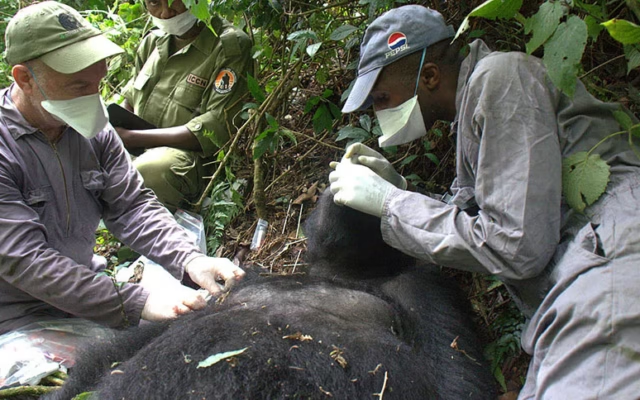
Genetic analysis has dramatically improved wildlife population surveys. Mountain gorillas leave DNA behind in biological material, particularly fecal samples. Researchers can collect samples from nest sites without needing to capture or physically handle the animals. Laboratory analysis can then identify genetic differences between individuals. In simplified terms, each gorilla has a genetic signature.
By comparing samples collected from different locations, researchers can determine whether they came from the same individual or different gorillas. This helps reduce the risk of double counting.
Why Multiple Samples May Be Collected
Field conditions are not perfect. A sample may degrade, become contaminated or fail to produce sufficient genetic information. For this reason, researchers may attempt to collect multiple samples associated with individuals or nest sites when possible. Repeating the sampling process increases confidence in the final results. Population estimation is therefore not based on one simple forest walk. It involves repeated field collection followed by detailed laboratory and statistical analysis.
Habituated Gorillas Are Easier to Identify
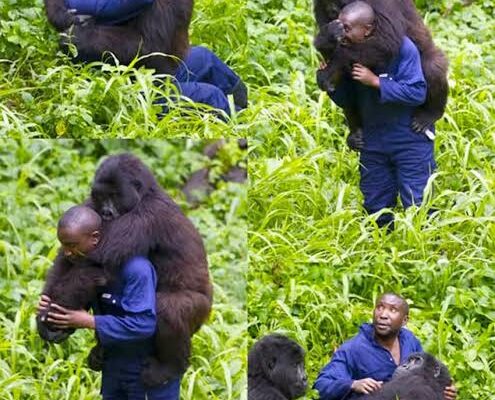
Some mountain gorillas belong to habituated families that are regularly monitored for tourism or research. These individuals are often known to trackers. Experienced monitoring teams may recognize individual gorillas through physical characteristics, facial features, body size, scars and other distinguishing traits. Group composition may already be documented. This provides valuable information for a census.
However, not every mountain gorilla is habituated. Some groups have little or no regular contact with people. Counting these unhabituated gorillas is one of the reasons systematic surveys and genetic methods remain essential.
What About Solitary Silverbacks?
Mountain gorilla society is dynamic. Although many gorillas live in family groups, adult males can sometimes travel alone. A solitary silverback creates an additional challenge for population surveys because he may move considerable distances and leave fewer concentrated signs than a large family. Genetic identification helps researchers determine whether evidence from different areas belongs to the same individual. This is another reason modern censuses cannot rely solely on visual sightings.
Avoiding Double Counting
Double counting is one of the biggest potential problems in any wildlife census. Suppose researchers discover one nest site and record eight gorillas. Several days later, another team discovers a second site containing eight nests. Are there sixteen gorillas? Possibly.
But it could also be the same family moving through the forest. DNA analysis can help answer that question. If samples from both locations match the same individuals, researchers know they have encountered evidence from one group rather than two. This significantly improves population estimates.
Census Teams Work Across Large Landscapes
Mountain gorillas do not recognize national borders. The Virunga population, for example, occupies an ecosystem extending across three countries. Effective conservation therefore requires international cooperation. Wildlife authorities, conservation organizations, scientists and field teams may collaborate across borders to survey the wider ecosystem.
This coordination is important because counting only one country’s gorillas would not provide a complete picture of a population moving within a shared landscape. Mountain gorilla conservation is consequently one of Africa’s notable examples of transboundary wildlife management.
Counting Gorillas Can Take Months
A census is not completed in a weekend. Field teams may spend weeks or months covering the target landscape. Researchers must allow enough time to locate gorilla signs across difficult terrain while also accounting for animal movement. Samples then need laboratory analysis. Data must be checked and compared.
Potential duplicates need to be identified. Results must undergo scientific review before population estimates are announced. This explains why official mountain gorilla population figures are not updated every few weeks. Reliable wildlife science takes time.
Population Estimates Are More Important Than Exact Daily Numbers
Wild animal populations constantly change. Infants are born. Older individuals die. Young males may leave groups. Families can split.
Individuals can transfer between groups. Consequently, there is no permanently fixed number of mountain gorillas. A published census result represents the best scientifically supported estimate for a particular survey period. The broader trend is often more important than an exact number on any single day. Are populations increasing over decades?
Are important habitats being maintained? Are births exceeding losses? These questions tell conservationists whether protection strategies are succeeding.
Daily Monitoring Complements Large Censuses
Formal population surveys are only part of the story. Habituated mountain gorilla groups can be monitored much more regularly. Trackers may record births, deaths, injuries, group transfers and other changes. This creates detailed long-term records for known families. When combined with periodic landscape-wide surveys, these observations provide conservationists with a much richer understanding of the population.
Daily monitoring offers depth. Censuses offer breadth. Together, they provide a stronger scientific picture.
What Researchers Learn Beyond Population Size
A mountain gorilla census can reveal more than simply the number of animals. Depending on the methodology and analysis, researchers may gain information about:
These findings can influence conservation planning. For example, discovering gorilla activity in a particular forest area may reinforce the importance of protecting that habitat.
Why Genetic Diversity Matters
Population size is not the only consideration when protecting an endangered species. Genetic diversity also matters. A small population with limited genetic variation may face long-term challenges. Genetic samples collected during surveys can therefore provide valuable information beyond individual identification. Scientists can examine relationships and broader genetic patterns within the population.
This contributes to understanding the long-term health and resilience of mountain gorillas.
Tourists Rarely See the Census Process
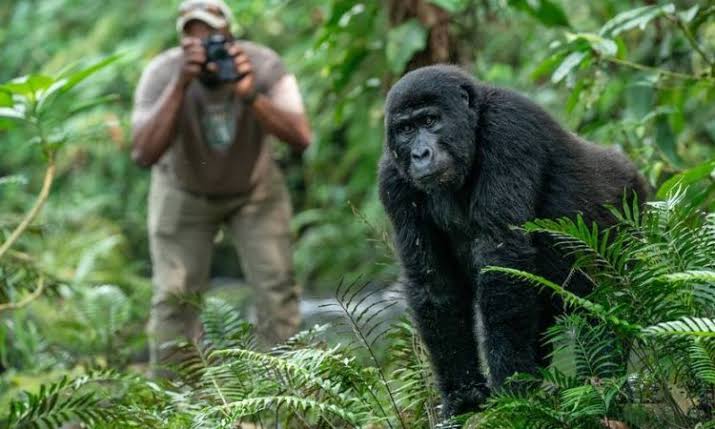
Most travelers visiting Bwindi experience only the tourism side of gorilla conservation. They arrive at park headquarters, attend a briefing and follow ranger guides into the forest. The scientific work happening behind the scenes is less visible. Yet the trackers who locate gorillas for tourists operate within a much broader culture of wildlife monitoring.
The knowledge accumulated through conservation work is one reason guides can provide such detailed information about individual gorillas and family histories. Your trekking experience is therefore connected to decades of scientific observation.
Can Tourists Help?
Visitors do not participate directly in formal gorilla censuses, but responsible tourism can support the environment in which this research occurs. Purchasing legitimate permits contributes to protected-area conservation. Following health and distance rules reduces unnecessary pressure on gorillas. Hiring local porters and using responsible tourism businesses can strengthen the economic benefits surrounding protected areas.
Travelers can also support reputable conservation organizations involved in research and habitat protection.
Why Every Gorilla Matters
When a species has a relatively small global population, individual animals become particularly significant. The birth of a new infant matters. The death of a breeding female matters. The survival of a silverback matters. The formation or breakup of a family can influence future reproduction and social structure.
This is why mountain gorillas receive such detailed attention. Researchers are not simply counting anonymous animals. Many habituated gorillas have individual identities and life histories known across decades.
From Footprints to DNA
The answer to how mountain gorillas are counted demonstrates how modern conservation combines traditional field skills with advanced science. Trackers still need to read the forest. They identify trails, feeding signs, nests and dung much as skilled wildlife trackers have done for generations. But those observations are now reinforced by genetic analysis and scientific data management.
A small biological sample collected beside a gorilla nest can help reveal whether researchers have discovered a previously unrecorded animal or encountered the same individual twice. That combination of boots-on-the-ground fieldwork and laboratory science makes modern gorilla population estimates increasingly robust.
Why the Count Gives Travelers Hope
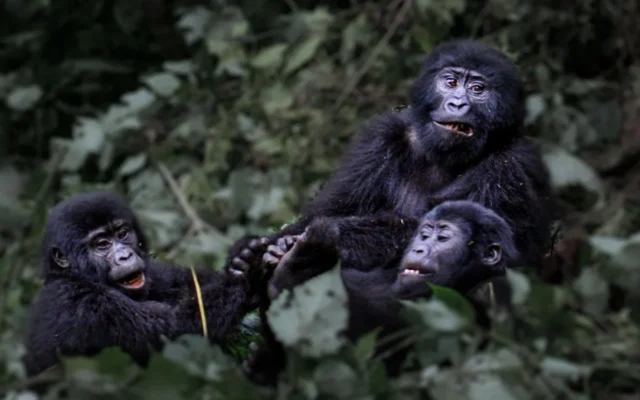
For visitors trekking in Uganda, population statistics can feel abstract until you finally meet a gorilla family. Suddenly, every individual becomes real. You may watch an infant climbing over its mother, a juvenile wrestling with another youngster or a silverback sitting quietly only meters away. Knowing that conservation teams have spent years monitoring and counting these animals gives the encounter additional meaning.
Mountain gorilla censuses are ultimately about more than numbers. They are one of the ways humanity measures whether its effort to protect an extraordinary species is succeeding. Every survey provides another chapter in that conservation story—and every living gorilla counted in the forests of Uganda and the wider mountain gorilla range represents a reason to keep protecting those forests.
 Read