
Gorilla Trekking Photography Guide
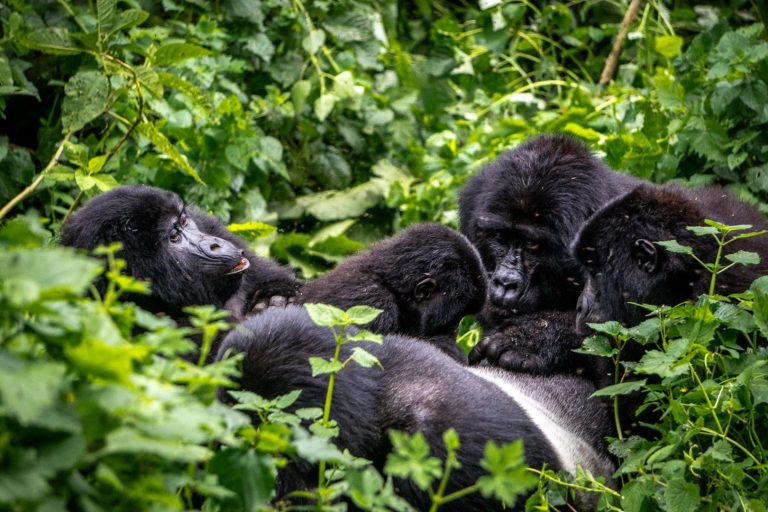
Gorilla trekking photography can produce some of the most powerful wildlife images of an African safari. Mountain gorillas have expressive faces, complex family relationships and remarkably human-like gestures, while the rainforest provides dramatic backgrounds of foliage, mist and filtered light.
Photography can also be technically challenging. Forest light is often limited. Gorillas may sit beneath thick vegetation. Young animals move quickly. Rain can begin unexpectedly. Viewing time is regulated.
These conditions reward preparation far more than carrying enormous amounts of equipment. A photographer who understands one camera and one versatile lens may produce better results than someone struggling with several unfamiliar bodies and heavy lenses.
Know Your Camera Before the Trek
Do not wait until a silverback is sitting in front of you to learn how to change ISO. Do not wait until a silverback is sitting in front of you to learn how to change ISO. Practice before travel.
You should be able to adjust key settings quickly without studying menus. Learn how your camera handles: Exposure compensation. The encounter passes quickly. Familiarity allows you to concentrate on composition and animal behavior.
No Flash Photography
Flash should not be used around mountain gorillas. Flash should not be used around mountain gorillas. Uganda's official published tracking rules specifically prohibit flash photography.
Disable automatic flash before entering the gorilla encounter. This is particularly important on smartphones and compact cameras that may activate flash automatically in low light. Available-light photography is the correct approach.
Low-Light Conditions
Rainforest photography frequently requires higher ISO settings. Rainforest photography frequently requires higher ISO settings. Do not be afraid of ISO.
A slightly noisy sharp image is usually preferable to a perfectly clean blurred image. Modern cameras can perform extremely well at elevated sensitivity. Test your camera before travel so you understand the level of noise you consider acceptable.
Shutter Speed
Gorillas sometimes sit quietly, allowing relatively modest shutter speeds. Gorillas sometimes sit quietly, allowing relatively modest shutter speeds. However, juveniles can move rapidly.
A feeding adult may also move its hands or head continuously. Increase shutter speed when photographing movement. If you are using a long lens, remember that camera shake can also affect sharpness. Image stabilization can help but does not freeze subject movement.
Aperture
Wide apertures can help gather light and separate the gorilla from the background. Wide apertures can help gather light and separate the gorilla from the background. However, very shallow depth of field can create problems when photographing more than one animal.
If a mother and infant are on slightly different planes, stopping down may provide better focus across both faces. Choose settings according to the scene rather than using one fixed formula.
Autofocus
Eye-detection autofocus can be extremely useful on modern cameras. Eye-detection autofocus can be extremely useful on modern cameras. However, dense vegetation may confuse autofocus systems.
Branches can pull focus away from the gorilla. Learn how to switch quickly between automatic subject detection and a smaller focus point. Practice this before travel.
Which Lens Is Best?
A moderate telephoto or versatile zoom is often ideal. A moderate telephoto or versatile zoom is often ideal. Gorillas can sometimes be relatively close, so extremely long safari lenses are not always necessary.
A zoom allows you to react quickly when a gorilla changes position. Something covering moderate to medium telephoto focal lengths often provides flexibility. The exact choice depends on your camera format and personal style. Avoid bringing equipment simply because you own it.
Do You Need a 600mm Lens?
Usually not as your primary gorilla lens. Usually not as your primary gorilla lens. Very long lenses are valuable for distant birds and savannah wildlife but can be awkward when gorillas are relatively close.
They are also heavy. A huge lens increases physical strain during the trek. If your safari includes birding or other wildlife, you may still bring one, but consider leaving it at the lodge on gorilla day unless you have a specific reason to carry it.
Prime Lens or Zoom?
A prime lens can provide excellent image quality and wide apertures. A prime lens can provide excellent image quality and wide apertures. A zoom provides flexibility.
Because visitor movement is restricted and you cannot simply step anywhere you want for composition, zoom lenses have practical advantages. You can change framing without moving closer to the gorillas. Photographers using primes should select focal lengths carefully.
Full Frame or Crop Sensor?
Full-frame cameras often provide strong low-light performance. Full-frame cameras often provide strong low-light performance. Crop-sensor cameras provide additional apparent reach with smaller lenses.
The best camera is the one you know how to use. Do not replace your entire system immediately before the trip solely because another photographer recommends different equipment.
Mirrorless or DSLR?
Both can produce outstanding images. Both can produce outstanding images. Mirrorless cameras may offer advanced eye autofocus and quieter operation. DSLRs remain highly capable and may provide excellent battery life. Familiarity matters more than format.
Smartphones
Modern smartphones can capture excellent gorilla images and video. Modern smartphones can capture excellent gorilla images and video. They are especially useful for travelers who do not want to carry heavy equipment.
Low-light performance varies. Clean the lens before the encounter. Use optical focal lengths rather than excessive digital zoom where possible. A smartphone allows you to spend more time observing and less time managing gear.
Video
Video can capture behavior that still photography misses. Video can capture behavior that still photography misses. Record short sequences rather than filming the entire encounter continuously.
Listen to the forest sounds. Juvenile play, feeding and family interaction can be wonderful on video. Respect ranger instructions and avoid blocking other visitors.
Shoot in RAW
Experienced photographers may prefer RAW files because they preserve greater editing flexibility. Experienced photographers may prefer RAW files because they preserve greater editing flexibility. Rainforest scenes can contain strong contrast and unusual color casts.
RAW files allow more control over shadows, highlights and white balance. However, file sizes are larger. Bring sufficient memory cards. Travelers who prefer simple workflows can still obtain excellent results using high-quality JPEG settings.
Exposure Compensation
Dark gorilla fur can confuse automatic exposure systems. Dark gorilla fur can confuse automatic exposure systems. The camera may try to brighten the image excessively.
Alternatively, bright foliage may cause the gorilla's face to become too dark. Learn how to use exposure compensation quickly. Check the histogram rather than judging only from the rear screen.
Protect Highlights
Patches of direct sunlight can create very bright foliage or highlights on gorilla fur. Patches of direct sunlight can create very bright foliage or highlights on gorilla fur. Avoid clipping important highlights.
Forest contrast can be extreme. Shooting RAW provides additional recovery flexibility, but good initial exposure remains valuable.
White Balance
Automatic white balance usually works reasonably well, but dense green vegetation can affect color. Automatic white balance usually works reasonably well, but dense green vegetation can affect color. RAW photographers can correct this later.
JPEG users may want to test different white-balance options before the trip. Avoid spending precious gorilla time adjusting color settings unnecessarily.
Continuous Shooting
Burst mode can help capture fleeting expressions or juvenile movement. Burst mode can help capture fleeting expressions or juvenile movement. However, do not photograph every second indiscriminately. You will return with thousands of nearly identical images. Observe behavior. Anticipate moments.
Thoughtful photography produces stronger storytelling.
Composition
Do not concentrate only on tight portraits. Do not concentrate only on tight portraits. Include environmental images showing the gorilla within the forest. Photograph family interactions. Look for hands, eyes and gestures. Use vegetation as framing where appropriate.
A combination of portraits and wider images tells a richer story.
Photographing Silverbacks
Silverbacks make dramatic subjects because of their size and distinctive coloration. Silverbacks make dramatic subjects because of their size and distinctive coloration. Try to capture both power and behavior.
A quiet feeding portrait can be more compelling than a simple front-facing image. Wait for moments when the face becomes visible between leaves.
Photographing Mothers and Infants
Mother-and-infant interactions can provide exceptionally emotional images. Mother-and-infant interactions can provide exceptionally emotional images. The infant may be hidden against the mother's body and then suddenly emerge.
Use enough depth of field when you want both faces sharp. Do not move beyond the position allowed by the ranger simply to improve your angle.
Photographing Juveniles
Young gorillas can be fast and unpredictable. Young gorillas can be fast and unpredictable. Use faster shutter speeds. Continuous autofocus is useful. Anticipate climbing and play. Juveniles may move through vegetation rapidly, so do not become frustrated if every frame is not perfect.
Respect Other Trekkers
Do not block the entire viewing area with a large camera. Do not block the entire viewing area with a large camera. Other visitors have paid for the same experience. Be aware of elbows, lenses and bags. Allow people using smartphones to obtain views too. Good etiquette creates a better experience for everyone.
Bring Spare Batteries
Cold, damp conditions and continuous shooting can consume power. Cold, damp conditions and continuous shooting can consume power. Carry at least one spare battery. Keep it protected from moisture. Charge everything the night before. Do not rely on having charging opportunities in the forest.
Bring Enough Memory
Memory cards are small and light. Memory cards are small and light. Bring more capacity than you expect to need. Use reliable cards. Consider carrying a spare in a waterproof case. Running out of memory while a gorilla infant is playing nearby is entirely avoidable.
Rain Protection
Carry a camera rain cover. Carry a camera rain cover. A simple waterproof sleeve can be sufficient. Store equipment in a dry bag inside the backpack during heavy rain. Avoid changing lenses when water is falling heavily. Moisture and dust can enter the camera body.
Lens Cloth
Carry clean microfiber cloths. Carry clean microfiber cloths. Humidity and rain can leave droplets on the front element. Keep the cloth itself dry inside a sealed bag. A wet lens cloth simply spreads moisture.
Hire a Photography Porter
Serious photographers should strongly consider hiring a porter. Serious photographers should strongly consider hiring a porter. Camera equipment becomes heavy on steep terrain.
The porter can carry gear when you are not actively using it. This allows you to conserve energy. Explain carefully how the equipment should be handled.
Tripod or Monopod?
A full tripod can be cumbersome in thick forest. A full tripod can be cumbersome in thick forest. Space around gorillas may also be limited.
A monopod can be easier but is still additional equipment. Modern stabilization and higher ISO performance mean many photographers work handheld. If you already know you need support equipment for your style, discuss practicality with your operator.
Rainy-Season Photography
Wet months provide beautifully saturated colors. Wet months provide beautifully saturated colors. Mist can create dramatic backgrounds. Cloud cover produces soft light. The challenge is moisture. Good rain protection becomes essential. Photographers comfortable working in wet conditions can produce exceptional images.
Dry-Season Photography
Relatively dry conditions simplify camera management. Relatively dry conditions simplify camera management. However, direct sunlight can create harsh contrast. Do not assume dry-season light is automatically easier. The forest canopy creates unpredictable patches of brightness.
Two Gorilla Treks for Photographers
A second trekking day can be extremely valuable. A second trekking day can be extremely valuable. The first day may involve difficult light.
The second may produce completely different conditions. You may also encounter another gorilla family. Having two treks reduces pressure to capture every possible image during the first hour.
Gorilla Habituation Photography
A specialized habituation experience, where officially available and appropriate, can provide a different photographic opportunity from standard trekking. A specialized habituation experience, where officially available and appropriate, can provide a different photographic opportunity from standard trekking.
However, rules still apply and the animals remain wild. Travelers should understand the specific permit and experience before booking.
Back Up Your Images
Do Not Experience the Trek Only Through a Camera
Perhaps the most important photography advice is to lower the camera occasionally. Perhaps the most important photography advice is to lower the camera occasionally. Look directly at the gorillas.
Listen to the forest. Notice their breathing, movements and relationships. The photographs will matter later, but the memory of being present matters more.
Responsible Gorilla Trekking Photography
The best gorilla trekking photography respects conservation. The best gorilla trekking photography respects conservation. Do not use flash. Do not move closer than permitted. Do not touch vegetation unnecessarily for a better composition. Do not separate from the group.
Do not pressure rangers to break rules. A photograph is never more important than the gorilla. Prepare your camera for low light, carry a versatile lens, protect equipment from rain, disable flash and prioritize respectful observation over chasing the perfect photograph.