
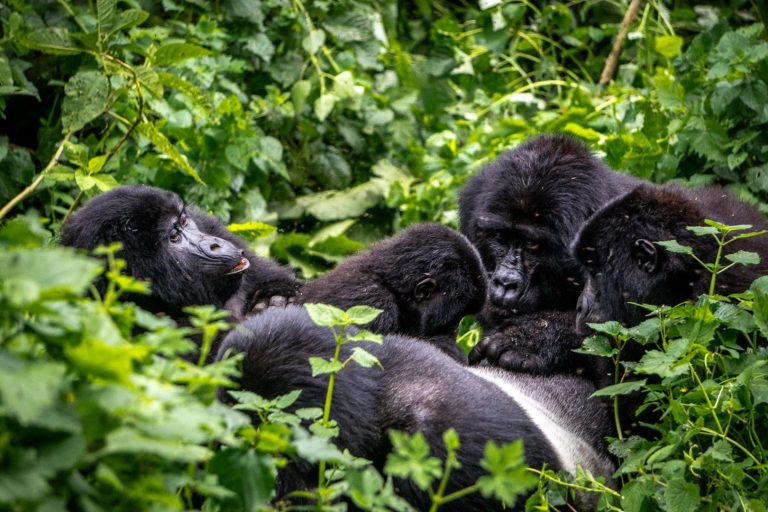
The Sabyinyo Gorilla Family is one of the best-known habituated mountain gorilla groups in Rwanda's Volcanoes National Park. Named after Mount Sabyinyo, the family has a long tourism and conservation history and has traditionally ranged in the lower areas associated with this dramatic volcano on Rwanda's border region.
For many travelers, the Sabyinyo family is especially memorable because of its history of powerful silverbacks, its relatively accessible traditional home range and the spectacular Virunga landscape surrounding it.
Introduction
Rwanda's official tourism information continues to list Sabyinyo among the habituated gorilla families associated with Volcanoes National Park. However, like all mountain gorilla families, its composition and exact daily location can change naturally over time.
Why Is It Called the Sabyinyo Gorilla Family?
The family takes its name from Mount Sabyinyo, one of the volcanoes of the Virunga Massif. The mountain's jagged summit has inspired the commonly used interpretation of Sabyinyo as referring to "old man's teeth."
Mount Sabyinyo lies in the border region between Rwanda, Uganda and the Democratic Republic of Congo and forms one of the most recognizable features of the northern Virunga landscape. The gorilla family received the Sabyinyo name after originally being known by a different name during the habituation period.
History of the Sabyinyo Gorilla Family
The International Gorilla Conservation Programme records that the family was originally known as Amavubi, or "wasps," because its behavior presented challenges to field teams during habituation. The name was later changed to Sabyinyo after the mountain where the group was first observed.
The group's formation was connected to changes in other gorilla families following the death of a dominant silverback. Gorilla society is highly dynamic. When leadership changes or a family destabilizes, females and males may transfer between groups and new families can emerge.
Sabyinyo developed through this natural process.
The Legacy of Guhonda
For many years, Sabyinyo became closely associated with the famous silverback Guhonda. He was widely known for his exceptional size and long leadership of the family.
More recent conservation information indicates that leadership later passed to another silverback, Gihishamwotsi, illustrating how authority within gorilla groups changes over time. IGCP's January 2024 family profile identified Gihishamwotsi as the dominant silverback following Guhonda.
This is an important point for safari content. Older guidebooks and websites may continue to refer to historical dominant silverbacks long after the family's social structure has changed. Travelers should therefore regard named individuals as part of the family's evolving story rather than as permanent fixtures.
Sabyinyo Family Size
The number of gorillas in a family changes constantly. Births add new members. Young males may leave. Females sometimes transfer to different groups. Older individuals die naturally. For that reason, travelers should be cautious about websites presenting an old member count as if it were permanent.
IGCP reported 15 members in Sabyinyo as of 31 January 2024, including multiple silverbacks, adult females, younger males, juveniles and infants. The exact number on a future trekking date may be different.
Where Does the Sabyinyo Family Live?
Sabyinyo traditionally ranges in areas associated with Mount Sabyinyo in Volcanoes National Park. Rwanda's official tourism information describes the Sabyinyo volcanic landscape as important habitat for several gorilla families as well as golden monkeys and other wildlife.
The lower slopes include areas of bamboo and other vegetation used by mountain gorillas. Because gorillas move throughout their home ranges, trekkers must follow the route established by trackers on that particular day.
Is Sabyinyo an Easy Gorilla Family to Trek?
Sabyinyo has often been regarded as one of the relatively accessible gorilla families because of its traditional range on lower slopes. However, travelers should not interpret this as a guarantee of an easy walk. Mountain gorillas move continuously.
A group can travel farther uphill or into more difficult vegetation overnight. Weather can also transform an otherwise manageable path into a muddy and slippery trail. Rwanda's official guidance notes that gorilla treks can range from around 30 minutes to four hours or more before reaching the animals.
Every visitor should therefore prepare for moderate to strenuous walking.
Gorilla Trekking Morning
Visitors begin the day early. After breakfast at the lodge, your guide transfers you to the Volcanoes National Park headquarters in Kinigi. Rwanda's gorilla tracking procedures involve a morning briefing followed by allocation to one of the habituated families available that day.
After allocation, visitors travel to the relevant starting point. The forest trek then begins with park guides and trackers. Porters are also available and are strongly recommended.
What Is It Like to Meet the Sabyinyo Family?
An encounter with the Sabyinyo family can provide an extraordinary look into mountain gorilla social behavior. Adult gorillas may spend much of the viewing period feeding or resting. Juveniles can climb, wrestle and chase one another through vegetation.
Mothers keep infants close while still moving and feeding. Silverbacks may appear calm but remain continuously aware of the group's surroundings. The experience is particularly powerful because visitors are observing a functioning wild family rather than animals in captivity.
Gorilla Behavior
Mountain gorillas communicate through posture, facial expression, touch and vocalization. Visitors may notice grooming between family members, playful behavior among younger gorillas or a silverback quietly positioning himself near the group.
Chest beating is among the most famous gorilla displays, although visitors should not expect to see it during every trek. Most encounters involve long periods of peaceful feeding and resting. The subtle behaviors often become the most memorable part of the visit.
How Close Can You Get?
Visitors must follow the distance and behavioral rules explained by park guides. Sometimes gorillas themselves move closer than the recommended separation. If this happens, remain calm and follow your guide's instructions.
Do not reach toward a gorilla or attempt to move closer for a photograph. The animals control their own movements. Tourism protocols exist to protect both gorillas and visitors.
Photography
Photography is permitted under park rules, but flash should not be used. Forest light can be difficult. Visitors using dedicated cameras should understand ISO, shutter speed and aperture before trekking.
Mobile phones can also produce excellent images when conditions are favorable. Avoid concentrating so heavily on photography that you spend the entire encounter looking through a screen. The opportunity to quietly observe gorilla behavior is the real purpose of the trek.
What Should You Wear?
Appropriate clothing makes a significant difference.
- Long trousers - Long-sleeved shirt - Waterproof jacket - Sturdy hiking boots - Gardening gloves - Gaiters if available - Warm fleece or light sweater - Comfortable hiking socks
Bring drinking water and a small camera bag or backpack. Avoid carrying unnecessary items.
Hire a Porter
Porters are one of the most useful services available during gorilla trekking. They can carry your backpack, camera gear and water. More importantly, they can provide a steady hand on steep or slippery sections.
Hiring a porter also helps ensure that tourism income reaches local households surrounding Volcanoes National Park. Even if you expect an easier Sabyinyo trek, a porter remains worthwhile because the family's location can change before you arrive.
Best Time to Trek Sabyinyo
The Sabyinyo family can potentially be encountered throughout the year whenever it is included in current tourism allocations. Rwanda has relatively wetter and drier seasons. Drier periods may produce firmer paths, while wet-season trekking can involve more mud.
However, rainfall is possible throughout the year in the Virunga Mountains. The forest's green appearance and dramatic mist are partly a result of this moist mountain climate.
How Many Nights Should You Stay?
A minimum of two nights near Volcanoes National Park works well for one gorilla trek. Arrive from Kigali on the first day. Trek on the second morning.
Depart on the third day. Three nights are better if you want to add golden monkey tracking or another activity. A relaxed itinerary also reduces the pressure of immediately transferring elsewhere after a potentially strenuous trek.
Can You Request Sabyinyo?
You can tell your driver-guide that you are interested in the Sabyinyo family. However, allocation cannot be guaranteed. Park management needs to consider the location of the gorillas, visitor numbers, trekking conditions and the needs of different travelers.
If Sabyinyo is not assigned, another habituated family still offers the same fundamental privilege: spending time with wild mountain gorillas in their natural habitat.
Sabyinyo and Golden Monkeys
Mount Sabyinyo is also associated with golden monkey habitat. Rwanda's official tourism information notes that one of Volcanoes National Park's tracked golden monkey groups lives in bamboo forest on Mount Sabyinyo.
This makes golden monkey trekking an excellent complementary activity for visitors spending an extra day in the area. The experience is more energetic and fast-moving than gorilla trekking and provides another perspective on the Virunga ecosystem.
Conservation Significance
Sabyinyo's long history of monitoring has allowed conservationists to document leadership changes, births, transfers and other family dynamics.
In recent years, new births within the family have also featured in Rwanda's Kwita Izina gorilla naming tradition. For example, Visit Rwanda recorded a young female born to Umurinzi in the Sabyinyo family and later named Ikirango.
These records demonstrate the continuity between scientific monitoring, tourism and public conservation awareness.
Why Trek the Sabyinyo Gorilla Family?
The Sabyinyo Gorilla Family combines a fascinating social history with one of the most dramatic locations in Volcanoes National Park.
Its association with Mount Sabyinyo, the legacy of famous silverbacks and its long relationship with conservation monitoring make it one of Rwanda's most recognizable mountain gorilla groups.
For travelers fortunate enough to be allocated to Sabyinyo, the experience offers far more than a wildlife sighting. It is an opportunity to spend a carefully controlled hour observing a complex family of endangered primates in the misty Virunga forest—a wildlife encounter that few other experiences in Africa can match.