
Understanding Rwanda weather & climate is essential when planning gorilla trekking, chimpanzee tracking, wildlife safaris, hiking and road travel. Although Rwanda lies just south of the equator, the country's elevation creates a relatively mild tropical highland climate rather than the intense heat many travelers associate with equatorial Africa.
Rwanda is famously mountainous, and altitude plays a major role in local weather. Kigali is generally warm and comfortable, while Volcanoes National Park can be much cooler and wetter. Nyungwe Forest is humid and receives significant rainfall, while Akagera National Park in eastern Rwanda is warmer and relatively drier.
Introduction
These regional differences mean travelers should pack for several climates within one itinerary.
What Is Rwanda's Climate Like?
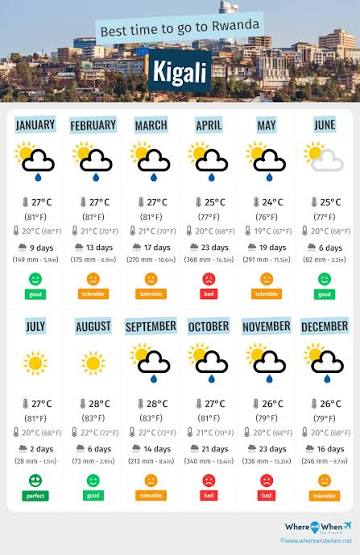
Rwanda has a temperate tropical highland climate. Temperatures remain relatively stable throughout the year because the country is close to the equator. Rainfall creates the main seasonal differences. Rwanda generally experiences:
- Longer rains from March to May - Main dry season from June to September - Short rains around October and November - Shorter dry period from December to February
Exact timing varies by location.
Rwanda's Dry Seasons
The main dry period occurs from approximately June to September. Rainfall is generally lower, making this one of the most popular times for gorilla trekking and wildlife safaris. A shorter relatively dry period occurs from December to February.
These seasons often provide easier road travel and less muddy forest trails. However, mountain rain can occur at any time.
Rwanda's Rainy Seasons
The longer rainy season generally occurs from March to May. April is frequently among the wettest months. The shorter rains usually occur around October and November.
Rainfall can be intense, particularly in mountainous areas. Despite this, safari activities continue throughout the year. Rain often falls in showers rather than lasting continuously all day.
Temperatures in Rwanda
Temperatures remain fairly moderate. Elevation is more important than season. Lower eastern areas can feel warm, while the highlands can become distinctly cool. Travelers should expect a noticeable difference between Akagera and Volcanoes National Park. This makes layered clothing especially useful.
Weather in Kigali
Kigali sits at substantial elevation and enjoys a generally pleasant climate. Days are warm without usually becoming excessively hot. Evenings can feel comfortable or slightly cool. Rain is more frequent during the wet seasons. A lightweight rain jacket or umbrella is useful for city sightseeing.
Weather in Volcanoes National Park
Volcanoes National Park lies in Rwanda's mountainous northwest. Conditions are typically:
- Cool - Damp - Misty - Changeable
Morning temperatures can be surprisingly low. Rain can occur during any month. Gorilla trekkers should always carry a waterproof jacket. A fleece or light sweater is useful before and after the trek.
Weather During Gorilla Trekking
Mountain gorilla trekking takes place in a high-elevation forest environment. Even during the dry season, trails may be damp. Rain can begin unexpectedly. Typical trekking conditions may include:
- Mud - Mist - Wet bamboo - Slippery slopes - Cool wind - Humidity
Proper footwear is essential. Waterproof hiking boots with good grip are far more suitable than ordinary sports shoes.
Does Rain Cancel Gorilla Trekking?
Gorillas inhabit rainforest and mountain vegetation where rainfall is completely natural. Trekking generally continues in wet weather. Visitors should therefore prepare rather than expect cancellation. A porter can help with bags and provide physical support on difficult trail sections.
Weather in Nyungwe Forest
Nyungwe is one of Rwanda's wettest major tourism destinations. Its extensive montane forest receives significant rainfall. Conditions can be humid, cool and rainy. Chimpanzee tracking trails may become slippery. Travelers should wear:
- Waterproof boots - Long trousers - Long sleeves - Rain jacket
A waterproof backpack cover is also useful.
Weather in Akagera National Park
Akagera has a warmer and relatively drier climate than western Rwanda. The park includes savannah, woodland, lakes and wetlands. Daytime temperatures can feel considerably warmer than Volcanoes National Park.
During the main dry season, vegetation may become dry and dusty. Wet-season rainfall transforms the park into green landscapes.
Weather Around Lake Kivu
Lake Kivu enjoys a mild climate influenced by altitude and the large body of water. Days are generally pleasant. Evenings can be cooler.
Rainfall occurs throughout the year, with more frequent showers during wet seasons. Lake Kivu can be visited year-round. Water-based activities are usually most enjoyable during clearer, calmer conditions.
Rwanda in December to February
December to February usually provides a relatively dry period. These months are popular for:
- Gorilla trekking - Akagera safaris - Kigali sightseeing - Lake Kivu
Rain can still occur. Highland mornings remain cool. February may gradually become wetter as March approaches.
Rwanda in March to May
This is the main rainy season.
- Frequent showers - Muddy trails - Green landscapes - Strong river flow - High forest humidity
Gorilla and chimpanzee trekking remain possible. Travelers who are prepared for wet conditions may enjoy fewer visitors and dramatic scenery.
Rwanda in June to September
June to September forms the main dry season. It is the most popular period for many safari travelers. Trails are generally easier. Akagera wildlife viewing can be particularly productive as animals concentrate around permanent water. July and August can be busy.
Rwanda in October and November
October and November usually bring the shorter rains. Rainfall increases. The country becomes greener. Forest trails can become muddy again. Birdwatching conditions can be excellent. Travel remains fully possible.
How Weather Affects Gorilla Trekking
Weather mainly changes the physical character of the hike. Rain can make steep trails considerably harder. Dry-season trekking tends to be more comfortable.
However, gorilla location is unpredictable. A dry-season trek may still involve several hours of steep climbing. A rainy-season trek may sometimes be relatively short. Weather is only one factor.
How Weather Affects Akagera Wildlife Viewing
Dry conditions can improve wildlife visibility. Animals often rely more heavily on lakes and permanent water. Grass may become shorter. During wetter months, the savannah turns green and birdlife becomes extremely active. Wildlife is still present, but taller vegetation can make some animals harder to spot.
Weather and Chimpanzee Tracking
Nyungwe chimpanzee tracking can be more physically demanding after heavy rain. Wet leaves and steep forest slopes require careful footing. Chimpanzee movement depends significantly on food availability. Weather alone does not determine how long a trek will take. Visitors should prepare for several hours in the forest.
Weather and Photography
Both dry and wet seasons offer photographic advantages. Dry-season benefits include:
- Easier access - More predictable game drives - Golden savannah colors
Wet-season benefits include:
- Bright green landscapes - Dramatic skies - Reduced dust - Strong cloud formations - Fresh vegetation
Gorilla photography can be beautiful in light mist.
Rwanda's Altitude
Rwanda's nickname, the Land of a Thousand Hills, reflects its mountainous geography. Elevation keeps temperatures relatively moderate. It also means travelers can experience significant temperature differences within a short distance.
A drive from Akagera to Volcanoes National Park can take visitors from warm savannah to cool mountain conditions within the same country.
Does Rwanda Get Cold?
Yes, especially in mountainous areas. Volcanoes National Park can feel cold in the early morning. Nyungwe can also be cool. Travelers should bring a fleece or sweater even if the overall trip takes place in a tropical country. High-altitude hiking requires additional warm layers.
Does Rwanda Get Very Hot?
Akagera and lower eastern regions can become hot during the day. However, Rwanda is generally not characterized by extreme heat compared with lower-elevation East African destinations. Sun protection remains important. Use sunscreen, a hat and adequate drinking water.
What Should You Pack?
Because of the country's varied climate, bring:
- - Lightweight safari clothing - Long trousers - Long-sleeved shirts - Waterproof jacket - Fleece - Waterproof hiking boots - Hat - Sunscreen - Sunglasses - Insect repellent
- Layering allows you to adapt easily.
Best Weather for Gorilla Trekking
Most travelers prefer June to September and December to February. These periods often provide relatively drier trails. However, gorilla trekking operates throughout the year. If you are traveling during April or November, proper rain gear becomes especially important.
Best Weather for Akagera
June through September provides particularly favorable traditional safari conditions. Wildlife can be easier to see. December to February is also good. Wet seasons provide greener scenery and excellent birdlife. There is no completely unsuitable period.
Best Weather for Nyungwe
The relatively drier months offer easier chimpanzee trekking. However, Nyungwe remains a rainforest, so rain should always be expected. Waterproof clothing is essential regardless of season.
Weather and Road Travel
Rwanda has a strong paved-road network connecting major tourism destinations. Heavy rain can still affect local roads and park tracks. Inside Akagera and remote areas, unpaved tracks can become muddy. Allow realistic travel times. An experienced driver is especially valuable during wet conditions.
Weather and Domestic Itineraries
Rwanda's compact size makes seasonal travel relatively manageable. A typical itinerary may include:
- Kigali - Akagera - Nyungwe - Lake Kivu - Volcanoes National Park
Because distances are shorter than in many larger safari countries, even rainy-season road travel can remain practical with good planning.
Rain Protection for Cameras
Protect photography equipment carefully.
- Waterproof camera cover - Dry bag - Lens cloth - Spare batteries - Moisture-resistant pouches
Condensation can occur when moving between cool mountain conditions and warmer environments. Allow equipment time to adjust.
Weather and Birdwatching
Rwanda offers outstanding birding throughout the year. Wet-season months can be particularly productive because vegetation and insect activity increase. Migratory birds add further diversity during parts of the year. Birders should consider species targets as well as rainfall patterns.
Climate and Mosquitoes
Mosquito activity varies by altitude, rainfall and location. Travelers should use insect repellent and obtain professional malaria advice. Akagera and lower areas generally require particular attention. High elevation does not eliminate all mosquito-related health considerations.
Is There a Bad Season for Rwanda?
Each season has advantages. Dry months provide easier trekking. Wet months create greener landscapes. Peak periods offer favorable conditions but bring more demand for permits and accommodation. Shoulder seasons can be quieter. Your preferred activities should determine the best period.
Rwanda Weather Packing Checklist
- Waterproof hiking boots - Rain jacket - Warm layer - Quick-drying clothing - Long trousers - Long-sleeved tops - Hat - Sunscreen - Sunglasses - Insect repellent - Waterproof backpack cover - Camera protection
- The key is flexibility.
Plan Around Rwanda Weather & Climate
Understanding Rwanda weather & climate helps you choose suitable travel dates and pack properly.
The country enjoys generally mild temperatures because of its elevation, but weather varies substantially between regions. Volcanoes National Park can be cool and wet, Nyungwe is humid and rainy, while Akagera is warmer and drier.
June to September is the main dry season and one of the most popular periods for gorilla trekking and wildlife safaris. December to February offers another relatively dry window. The rainy seasons should not automatically be avoided. They bring lush landscapes, active birdlife and beautiful photographic conditions.
With appropriate rain gear, layered clothing and realistic expectations, Rwanda can be explored successfully throughout the yearu2014from the misty gorilla forests of the Virungas to the sunny savannahs and wetlands of Akagera.