
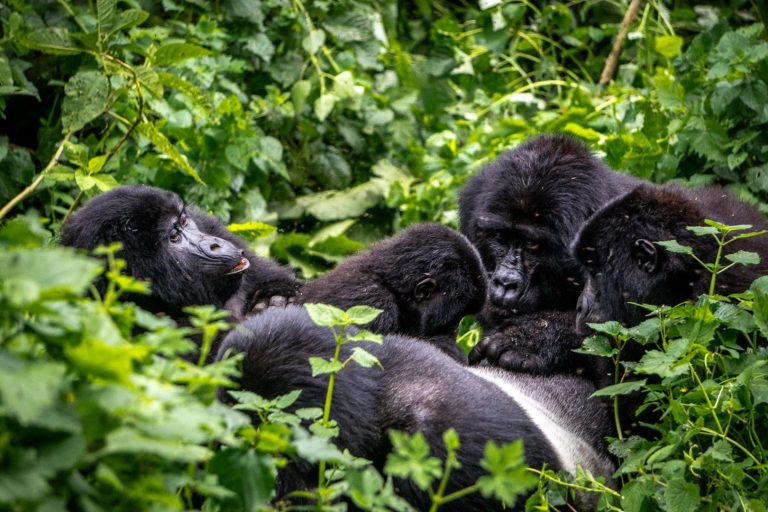
The Susa Gorilla Family is one of the most historically significant mountain gorilla groups in Rwanda's Volcanoes National Park. Its long association with gorilla research, dramatic changes in group size and famous twin births have made Susa one of the best-known names in the story of mountain gorilla conservation in the Virunga Mountains.
Today, travelers visiting Volcanoes National Park may encounter Susa as one of the habituated gorilla families managed for tourism. Rwanda currently has multiple habituated mountain gorilla groups available for trekking, and visitors are allocated to a family on the morning of their trek according to park procedures, group location and other practical considerations.
Introduction
The Susa group is especially interesting because its history illustrates how dynamic mountain gorilla societies can be. Families grow, split, change leaders and alter their home ranges over time. For visitors, this means that a gorilla family should never be understood as a fixed list of individuals. Composition can change through births, deaths, transfers and natural dispersal.
History of the Susa Gorilla Family
Susa is one of the older and better documented gorilla groups in Volcanoes National Park.
According to the International Gorilla Conservation Programme, the group was formed in the 1970s and eventually became exceptionally large. Before a major split in 2009, Susa reportedly reached 41 members, making it one of the largest mountain gorilla groups ever recorded.
The family's historical importance is also closely linked to the long-term scientific study of Rwanda's mountain gorillas.
Research in the Virunga Mountains helped transform global understanding of gorilla social behavior, family relationships and conservation needs. Susa became one of the famous groups associated with this broader research history.
Its long period of monitoring has allowed conservationists to observe social changes that would be difficult to understand without decades of continuous fieldwork.
Why Is the Susa Family Famous?
Several features have contributed to Susa's reputation. Perhaps the most famous is the group's history of twin births.
The International Gorilla Conservation Programme records Susa as having produced the first surviving set of mountain gorilla twins in 2004, named Impano and Byishimo. Another set of twins was born in 2011, although one later died. Twin survival is particularly noteworthy because twin births are uncommon among mountain gorillas and present additional challenges for the mother.
Susa also became famous because of its extraordinary size. Large mountain gorilla groups can contain several adult males, adult females, juveniles and infants. As social pressure increases, subordinate silverbacks may eventually separate and establish new groups. That process became central to Susa's history.
The Susa and Karisimbi Split
One of the most important events in the history of the Susa Gorilla Family occurred in 2009. A subordinate silverback called Nyagakangaga separated from the original group with a number of individuals, creating what initially became known as Susa B.
The new group was later named the Karisimbi Gorilla Family, reflecting its association with Mount Karisimbi. The split is an excellent example of natural mountain gorilla social dynamics.
Gorilla families are not permanently fixed units. Adult males may challenge dominant silverbacks, females may transfer between groups and entirely new families can emerge.
Later changes involving descendants of the original Susa group produced additional family units, making Susa an important ancestral group within Rwanda's broader gorilla population.
Where Does the Susa Family Live?
Susa ranges within Volcanoes National Park, particularly in areas associated with the slopes of Mount Karisimbi. Volcanoes National Park occupies the far northwest of Rwanda and protects a dramatic landscape of volcanic peaks, bamboo forest, montane woodland, grassland and other high-altitude habitats.
The exact location of the family changes naturally. Mountain gorillas spend much of the day moving through their home range while feeding, resting and interacting. Trackers monitor habituated families and help determine where visitors should begin searching each morning.
This is why there is no permanent Susa tourist trail.
How Difficult Is the Susa Gorilla Trek?
Historically, Susa has often been associated with the higher slopes around Karisimbi, and treks to the group can sometimes be demanding. However, no operator can guarantee the precise length or difficulty of a gorilla trek in advance.
Rwanda's official tourism information notes that treks to habituated gorilla families may take from roughly half an hour to several hours depending on the animals' location, and visitors can reach elevations between approximately 2,500 and 4,000 meters.
A family that was close to a trailhead yesterday may move considerably farther away the following day. For this reason, travelers should prepare physically for a genuine mountain forest walk.
What Happens on Trekking Morning?
Gorilla trekkers report to the Volcanoes National Park headquarters at Kinigi in the morning. Visitors are briefed about gorilla trekking regulations and allocated to a habituated family. The allocation process considers practical factors such as family location and visitor fitness.
After briefing, travelers drive with their guides toward the appropriate trekking starting point. From there, they continue on foot with park guides, trackers and, where hired, porters. The trek may pass through farmland before entering the protected forest.
Encountering the Susa Family
The moment trackers locate the family is often the highlight of the entire Rwanda safari. Visitors may see gorillas feeding on vegetation, juveniles playing, mothers caring for infants and silverbacks resting or monitoring the group. Every encounter is different.
Sometimes the gorillas are spread through dense vegetation. At other times several individuals may gather within a small clearing. The value of the experience lies in observing natural behavior rather than expecting a staged wildlife sighting.
Rwanda restricts tourist contact with habituated gorilla families, and each tourism group is visited for a limited period each day.
Photography with the Susa Gorillas
The Susa family can offer extraordinary photographic opportunities, particularly when younger gorillas are active. Forest photography can nevertheless be challenging. Light levels are often low, vegetation can obscure animals and weather may change rapidly.
Travelers should know how to adjust their cameras before entering the forest. Flash photography is not permitted around gorillas. A zoom lens can be useful, but enormous wildlife lenses are generally unnecessary because gorilla encounters can occur at relatively close range.
What to Wear for a Susa Trek
Visitors should prepare for wet vegetation, mud and uneven ground. Recommended equipment includes:
- Sturdy hiking boots with good grip - Long trousers - Long-sleeved shirt - Lightweight waterproof jacket - Gardening-style gloves - Gaiters where available - Small backpack - Drinking water - Camera and spare batteries
A warm layer can also be useful because temperatures at higher elevations may feel cool.
Should You Hire a Porter?
Yes, hiring a porter is highly recommended. A porter can carry your backpack and provide physical support on steep or slippery sections. This can make a substantial difference during longer treks.
Porter employment also connects gorilla tourism directly with local livelihoods around Volcanoes National Park. Even strong hikers often find that having both hands free makes walking through thick vegetation easier.
Can You Request the Susa Gorilla Family?
Travelers sometimes ask specifically to trek Susa because of its history. You can mention your preference to your safari guide, but a specific family should never be considered guaranteed. Group movements, trekking conditions, health considerations and park management priorities all influence daily allocation.
The most important objective is to experience a habituated mountain gorilla family safely and responsibly. Each family has its own fascinating social structure and conservation story.
Best Time to Trek the Susa Family
Gorilla trekking in Rwanda operates throughout the year. Relatively drier months can offer firmer trail conditions, while wetter periods may produce muddier paths and thicker vegetation. Rain remains possible in any month because Volcanoes National Park is a high-altitude tropical environment.
The best travel period therefore depends on your wider safari plans, lodge availability and permit availability rather than on Susa alone.
Combining Susa Gorilla Trekking with Other Activities
Travelers normally spend at least two nights around Volcanoes National Park for a single gorilla trek. A third night allows time for additional experiences. Popular options include golden monkey trekking, exploring Musanze, conservation-focused visits and cultural experiences.
Travelers with more time can combine Volcanoes National Park with Akagera National Park, Nyungwe National Park or neighboring Uganda.
Conservation Importance of the Susa Family
The history of Susa demonstrates why long-term monitoring matters. Without continued observation by trackers, researchers and conservation organizations, important changes in gorilla family structure would be poorly understood.
Tourism also plays a role in Rwanda's mountain gorilla conservation model. Rwanda states that a portion of tourism revenue is directed toward communities surrounding national parks, while gorilla tourism supports employment for guides, trackers, porters and lodge staff.
This connection between wildlife protection and community benefit is an important part of the modern gorilla trekking system.
Why Trek the Susa Gorilla Family?
The Susa Gorilla Family represents far more than a single trekking group. Its extraordinary growth, rare twin births and subsequent family splits provide a living record of mountain gorilla social history.
For travelers fortunate enough to be allocated to Susa, the trek offers an opportunity to encounter one of Rwanda's most historically important gorilla families in the high forests of Volcanoes National Park.
Whether the walk takes one hour or several, the experience of sitting quietly among wild mountain gorillas is likely to remain one of the defining moments of a Rwanda safari.