
Understanding the Rwanda yellow fever requirements is important when preparing for gorilla trekking in Volcanoes National Park, a wildlife safari in Akagera National Park, chimpanzee tracking in Nyungwe Forest or a combined Rwanda-Uganda safari. The vaccination rules are not the same for every traveler and depend largely on where you are arriving from and your recent travel history.
As of August 2026, the CDC states that yellow fever vaccination is generally not recommended solely for travel within Rwanda. However, Rwanda requires proof of yellow fever vaccination for travelers aged one year or older who arrive from a country with a risk of yellow fever transmission. A traveler arriving directly from a country without yellow fever risk may therefore face different requirements from someone crossing into Rwanda after visiting Uganda.
Introduction
Because health regulations can change, confirm current requirements with official authorities and a qualified travel-health professional before departure.
Is Yellow Fever Vaccination Required for Rwanda?
Yellow fever vaccination is not universally required for every traveler entering Rwanda. The key question is where you are arriving from.
Current CDC guidance states that travelers aged one year and older arriving from countries with yellow fever transmission risk must show proof of vaccination. By contrast, a traveler flying directly from a country without yellow fever risk may not require a certificate purely for entry into Rwanda.
This distinction is particularly important for multi-country African safaris.
Why Your Previous Destination Matters
Yellow fever entry requirements are based partly on preventing the disease from being introduced across international borders. For example, a visitor flying directly to Kigali from Europe may have a different documentation requirement from someone who has spent several days in Uganda before entering Rwanda by road.
Uganda is regarded as a yellow fever risk country, and travelers entering Rwanda after Uganda should therefore pay particular attention to vaccination documentation. Always consider your entire itinerary, not merely the country where your international trip began.
What Is Yellow Fever?
Yellow fever is a viral illness transmitted through the bites of infected mosquitoes. It occurs in parts of Africa and South America. Many infections may be relatively mild, but severe yellow fever can cause serious illness involving fever, jaundice, bleeding and organ failure.
Vaccination is one of the most effective ways to prevent the disease. The vaccination requirements imposed by countries are therefore both a traveler-health measure and a public-health tool designed to reduce international spread.
Yellow Fever Certificate
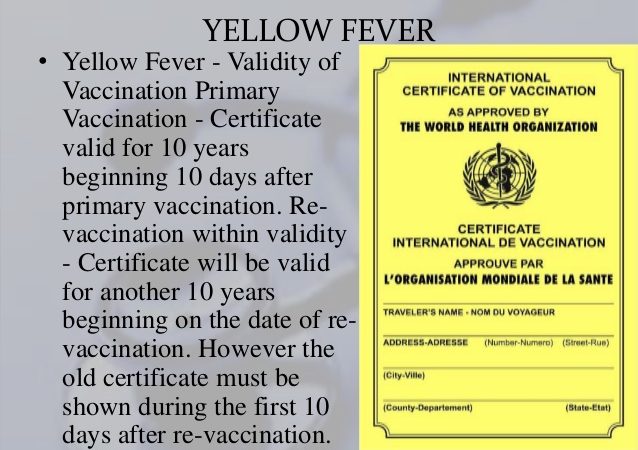
Travelers who require proof of vaccination should carry the internationally recognized International Certificate of Vaccination or Prophylaxis, commonly called the yellow fever card. The document is issued by an authorized vaccination center.
– Completed correctly – Valid – Legible – Carried with your passport – Easily accessible during immigration procedures
Do not pack the original certificate in checked luggage. A photograph or digital scan is useful as a backup, but travelers should not assume that a phone image will automatically replace the original certificate at immigration.
When Does Yellow Fever Vaccination Become Valid?
For travelers receiving their first yellow fever vaccination, the international certificate generally becomes valid 10 days after the primary vaccination. This means that anyone who needs the certificate for entry should arrange vaccination well before departure. Do not leave a first vaccination until one or two days before flying. A travel-health appointment several weeks before departure provides sufficient time to discuss vaccinations, malaria prevention and any other individual health considerations.
How Long Does Yellow Fever Vaccination Last?
Under current international health rules, a properly administered yellow fever vaccination is generally recognized as providing a certificate valid for the lifetime of the vaccinated traveler. This means people vaccinated many years ago should not automatically assume that their certificate is expired merely because more than ten years have passed. Keep old yellow fever cards safely. If the certificate is damaged, lost or incomplete, contact the authorized clinic or medical service that administered the vaccination for guidance.
Traveling Directly to Rwanda
If you are flying directly to Rwanda from a country that is not considered a yellow fever risk area, a yellow fever certificate may not be required for entry under current rules. Current CDC guidance specifically notes that direct travelers from the United States do not require the vaccine for Rwanda entry.
The same principle can apply to travelers arriving from other non-risk destinations, depending on routing. However, transit arrangements matter. If your journey includes time in a yellow fever risk country, check how long the transit lasts and whether you leave the airport.
Rwanda After Uganda
A common East African safari combines Uganda and Rwanda. For example, travelers may: – Arrive in Entebbe – Trek chimpanzees in Kibale – Visit Queen Elizabeth National Park – Trek gorillas in Bwindi – Cross into Rwanda – Visit Volcanoes National Park – Depart through Kigali Because Uganda has yellow fever transmission risk, travelers following this route should carry valid yellow fever documentation when entering Rwanda. This is one reason yellow fever preparation should be addressed at the beginning of a regional safari rather than just before crossing the border.
Rwanda After Kenya
Travelers arriving from Kenya should also check current yellow fever rules carefully because yellow fever risk classifications can vary by region and country. Do not assume that every East African country has identical regulations. A safari combining Kenya, Uganda and Rwanda may involve several different immigration and health-document requirements. Your vaccination card should remain easily accessible throughout the entire journey.
Rwanda After Tanzania
Similarly, travelers combining Tanzania and Rwanda should verify whether their route creates a certificate requirement. Yellow fever classifications and country entry rules can change. This is especially relevant for itineraries combining a Tanzania safari or Zanzibar stay with Rwanda gorilla trekking. Ask a qualified travel-health professional to review the exact sequence of destinations.
Yellow Fever and Kigali International Airport
Most international travelers enter Rwanda through Kigali International Airport. Keep the yellow fever certificate near your passport if it applies to your journey. Health screening and document checks can occur as part of arrival procedures.
Carry important documents in hand luggage, including:
– Passport – Visa documentation if required – Yellow fever certificate where applicable – Return or onward flight – Safari itinerary – Accommodation details – Travel insurance details
Keeping printed and digital copies adds an extra layer of preparedness.
Entering Rwanda by Land
Land entry is common for travelers arriving from Uganda. Routes between southwestern Uganda and Rwanda make it practical to combine Bwindi, Mgahinga and Volcanoes National Park. At the border, travelers complete immigration and any applicable health procedures.
Do not assume that arriving by road removes the requirement to carry health documentation. The same yellow fever certificate may be requested whether you enter by airport or authorized land crossing.
Yellow Fever and Gorilla Trekking
Yellow fever vaccination is an entry-health matter; it is not a gorilla trekking permit requirement in itself. For a Rwanda gorilla holiday, several separate documents may be involved:
1. Passport 2. Appropriate visa or visa-free entry status 3. Yellow fever certificate where required 4. Gorilla trekking permit 5. Travel insurance 6. Safari confirmation
Each serves a different function. A gorilla permit does not replace vaccination documentation.
Is Yellow Fever Vaccine Recommended for Rwanda?
The CDC currently says that yellow fever vaccination is generally not recommended for travel solely to Rwanda, although individual circumstances can change the medical recommendation. For example, the vaccine may still be necessary because of your previous destination or onward travel plans.
This is why health preparation should be based on the entire itinerary rather than the gorilla trekking destination alone.
Malaria Risk in Rwanda
Even when yellow fever vaccination is not recommended for a particular traveler, mosquito precautions remain important. The CDC currently recommends prescription malaria-prevention medication for travelers going to Rwanda and lists malaria transmission across the country.
Travelers should therefore discuss malaria prophylaxis with a healthcare professional and use mosquito-bite prevention measures.
Mosquito-Bite Prevention
Useful measures include:
– Effective insect repellent – Long trousers in the evening – Long-sleeved shirts – Mosquito nets where provided – Screened accommodation – Following prescribed malaria medication correctly
Yellow fever vaccination protects against yellow fever; it does not protect against malaria, dengue or other mosquito-borne infections.
Other Travel Vaccinations
A travel-health consultation may also cover vaccinations such as hepatitis A, hepatitis B, typhoid, rabies and routine immunizations depending on individual circumstances.
CDC currently recommends hepatitis A for unvaccinated travelers aged one year and older visiting Rwanda and recommends typhoid vaccination for most travelers. Recommendations vary with age, medical history and itinerary.
Travelers Unable to Receive Yellow Fever Vaccine
Some travelers may have medical reasons why yellow fever vaccination is not advisable. Examples can include certain immune conditions, allergies or other medical circumstances. Such travelers should seek specialist advice before traveling to a country where proof may be required.
A medical waiver may sometimes be issued by an appropriate practitioner, but travelers should not assume that a waiver will automatically be accepted at every border. Confirm requirements in advance.
Children and Yellow Fever Requirements
Current Rwanda entry guidance referenced by the CDC applies the certificate requirement to travelers aged one year and older arriving from yellow fever risk countries. Families should obtain pediatric travel-health advice for younger travelers. Vaccination decisions for infants should always be made by an appropriate medical professional.
Travel Insurance and Health Preparation
Travel insurance should be considered an important part of safari health planning.
Rwanda has healthcare facilities, but serious illness or injury may require medical evacuation. Current UK travel advice notes that medical facilities can be limited and that serious cases may require air evacuation to Kenya or South Africa.
Choose insurance that includes emergency treatment and medical evacuation suitable for the complete itinerary.
Keep Your Certificate Safe
Practical precautions include:
– Store the original with your passport – Make a digital scan – Keep a photocopy separately – Check that your name is correct – Ensure the vaccination date is readable – Confirm the clinic validation is complete
If you lose the certificate before travel, contact the clinic where the vaccination was administered.
Common Yellow Fever Mistakes
Travelers should avoid:
– Assuming Rwanda requires vaccination from everyone – Assuming Rwanda never requires vaccination – Ignoring previous African destinations – Leaving vaccination until the day before departure – Carrying only a digital photograph – Packing the original card in checked luggage – Confusing health documentation with a gorilla permit – Relying on years-old travel blogs
Current official guidance is always preferable.
Rwanda Yellow Fever Checklist
Before departure, confirm:
– Where you are arriving from – Whether any recent destination has yellow fever risk – Whether your certificate is required – Whether your existing certificate remains valid – That the original certificate is packed in hand luggage – That malaria prevention has been discussed – That travel insurance includes medical emergencies – That all visa and gorilla permit arrangements are separate and complete
Plan Your Rwanda Gorilla Safari
The Rwanda yellow fever requirements are relatively straightforward once your full travel route is known.
Travelers arriving directly from countries without yellow fever risk may not require vaccination purely for entry into Rwanda, while visitors arriving from yellow fever risk countries—including many regional safari destinations—should be prepared to show valid vaccination documentation.
A Rwanda safari can combine Volcanoes National Park, Akagera National Park, Nyungwe Forest, Lake Kivu and Kigali, or form part of a longer Uganda-Rwanda journey.
Organize health documentation early, verify requirements shortly before departure and arrive ready to concentrate on Rwanda’s landscapes, wildlife and unforgettable mountain gorilla encounters.