For most visitors, a gorilla trekking day in Bwindi Impenetrable National Park begins with an early breakfast, a short drive to the park headquarters and a briefing before entering the rainforest. But long before tourists tighten their hiking boots and gather around the briefing area, an important chain of activities is already taking place.
Understanding what happens before gorilla trekking gives you a completely different appreciation of the experience. A successful trek is not simply a matter of tourists walking into Bwindi and hoping to encounter mountain gorillas. Behind every trekking group is a coordinated system involving trackers, Uganda Wildlife Authority rangers, guides, conservation teams and support staff.
Some teams are already working while the forest is still cool and quiet. Their knowledge helps determine where gorilla families are likely to be, whether the animals are behaving normally and how trekking groups can approach them responsibly. Here is a look behind the scenes at what happens in Bwindi before most visitors enter the forest.
Bwindi Wakes Up Before the Trekkers
Morning comes differently in Bwindi. Mist may still hang over the hills while valleys remain partly hidden beneath cloud. Birds begin calling from the forest canopy, and around lodges near Buhoma, Ruhija, Rushaga and Nkuringo, travelers gradually prepare for one of Uganda’s most anticipated wildlife experiences. Inside and around the protected forest, however, preparations are already underway.
Mountain gorillas are wild animals living freely across a large and rugged habitat. They do not return to a fixed location every evening for tourists to find them the following morning. A gorilla family may feed in one valley today and move across a ridge tomorrow. This is why field knowledge is essential.
Trackers Use the Previous Day’s Information
One of the most important clues for a new trekking day comes from what happened the previous day. Gorilla monitoring teams keep track of habituated families and their movements. Information about where a family was last observed provides an important starting point.
Gorillas normally construct nests for resting at night. When trackers return to the forest, previous observations and signs left by the gorillas can help them determine where the family moved. But knowing yesterday’s location does not mean the gorillas will still be there. They may have moved after visitors left. That is where tracking skill becomes critical.
Reading Signs in the Forest
To an inexperienced visitor, Bwindi may appear to be an endless wall of vegetation. To an experienced tracker, the forest contains clues.
Trackers may look for signs such as:
- recently disturbed vegetation,
- feeding remains,
- footprints where ground conditions allow,
- broken stems and branches,
- nests,
- dung,
- trails through undergrowth,
- sounds and vocalizations.
No single sign necessarily reveals the exact location of a gorilla family. Instead, trackers interpret combinations of clues while considering the family’s previous movements and behavior. This is one reason local field experience is so valuable. A tracker who has followed a particular gorilla family repeatedly may become familiar with its preferred feeding areas, common routes and general ranging patterns.
Gorilla Families Are Constantly Moving
Visitors sometimes imagine that gorillas live within small territories where they can easily be found. Reality is more complicated. Mountain gorilla families move according to food availability, social dynamics, weather and other natural influences. They may travel uphill, descend into valleys or remain in an area with abundant food. This movement is one reason trekking duration varies dramatically.
One group may encounter its allocated gorilla family relatively quickly, while another may walk considerably farther. There is no guaranteed walking distance. That uncertainty is part of genuine wildlife tracking.
Monitoring the Gorilla Families
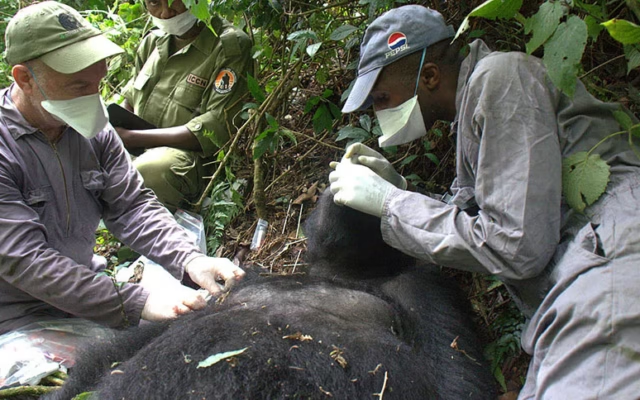
Gorilla tourism and gorilla conservation are closely connected. The habituated families visited by tourists are monitored regularly. Field teams observe the animals and build long-term knowledge about the groups. They may pay attention to matters such as group composition, unusual behavior, births, injuries or other changes that deserve attention from conservation personnel.
This continuous monitoring is important because mountain gorillas remain a conservation-dependent species living within a restricted habitat. Tourism is therefore carefully controlled rather than being an unrestricted wildlife encounter.
Rangers Prepare for the Trekking Day
While trackers and monitoring teams work in the forest, preparations are also taking place at the trekking centers.
Bwindi has several major trekking sectors:
Buhoma
Located in northern Bwindi, Buhoma is the park’s best-known tourism area and one of the longest-established gorilla trekking bases.
Ruhija
Ruhija lies in eastern Bwindi and is surrounded by beautiful high-altitude forest scenery. It is also an important birding area.
Rushaga
Southern Bwindi’s Rushaga sector is a major trekking base with several habituated gorilla families.
Nkuringo
Nkuringo offers dramatic views across the mountainous landscape of southwestern Uganda and provides access to gorilla trekking in southern Bwindi. Each sector operates its own morning arrangements according to the gorilla families available for trekking. Rangers and park staff organize visitors into the appropriate groups and prepare for the briefing.
Gorilla Family Allocation
One of the most important morning processes is determining which visitors will trek which gorilla family. Travelers sometimes assume they can simply choose any family. In practice, allocation depends on several considerations. These can include permit arrangements, operational conditions, family locations and the organization of trekking groups that morning. Where possible, visitor circumstances may also be considered.
For example, older travelers or people who are concerned about hiking ability should communicate this to their guide and the park team. However, gorillas are wild animals and their location can change, so no one should interpret a supposedly “shorter trek” as a guarantee. A family that was close yesterday can travel farther overnight.
Your Safari Guide Plays an Important Role
Your safari driver-guide is also part of the morning process. A good guide does much more than simply deliver you to the park gate. The guide makes sure you arrive at the correct trekking sector on time, helps confirm practical arrangements and can communicate relevant information to park staff. This is especially important because Bwindi’s sectors are geographically separated.
Having a permit for Rushaga while sleeping far away near Buhoma, for example, can create major logistical problems. For this reason, a properly planned Uganda gorilla safari matches your accommodation with your trekking sector.
Visitors Arrive at the Park Headquarters
Eventually, travelers begin arriving. Most have eaten an early breakfast and packed their day bags. Typical essentials include drinking water, a packed lunch or snacks where arranged, camera equipment, rain protection, gloves and other trekking gear. The atmosphere at the headquarters is often a mixture of excitement and uncertainty. How long will today’s trek take?
Will the gorillas be far away? Will there be rain? What will the first encounter feel like? Meanwhile, much of the behind-the-scenes work that makes the trek possible has already begun.
The Pre-Trek Briefing
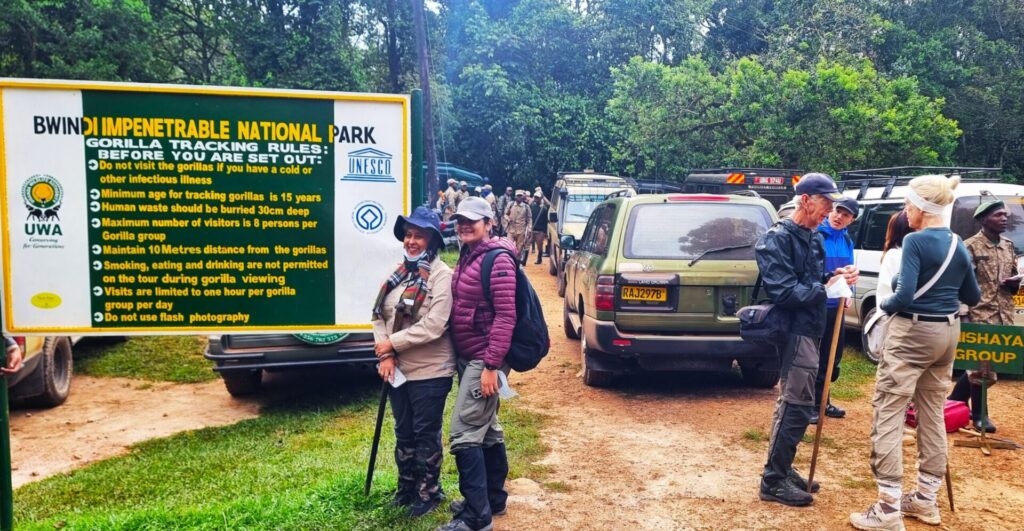
Before entering Bwindi, visitors attend a briefing conducted by park personnel. This is not simply a formality. The briefing explains how to behave in the forest and particularly how to behave around the gorillas. Visitors learn about rules designed to protect both people and animals.
Guidance generally covers issues such as keeping an appropriate distance, following ranger instructions, avoiding disruptive behavior, managing photography and respecting health-related restrictions. Mountain gorillas are genetically close to humans and can be vulnerable to human illnesses. Responsible trekking therefore requires discipline.
Meeting the Ranger Guide
Each trekking group is accompanied by trained personnel who guide visitors through the forest. Once the group is organized, the ranger guide becomes the central authority during the trek. Visitors should follow instructions carefully. The ranger understands the environment, communicates with other field personnel when necessary and manages the group’s approach when the gorillas are located.
Porters Join the Trekking Team
Another important part of a Bwindi morning is the opportunity to hire a porter. Some travelers initially think they will not need one. Then they discover that Bwindi can involve steep slopes, slippery ground and dense vegetation. A porter can carry your daypack and provide useful assistance on difficult sections. Hiring a porter also creates direct economic benefits for people living around the park.
For many visitors, it is one of the simplest ways to make the trek easier while supporting the local tourism economy.
Communication Between Teams
One of the least visible parts of what happens before gorilla trekking is communication. The people accompanying tourists are not operating completely independently from those working elsewhere in the forest. Information from trackers and other field personnel can help ranger guides understand the likely position of the allocated gorilla family. As conditions change, this information becomes valuable.
It is one reason a gorilla trek is more organized than simply following a trail through the rainforest.
The Trek Begins
Once briefing, allocation and final preparations are complete, trekking groups set out. Depending on the sector and the location of the gorilla family, visitors may begin walking directly from a trailhead or travel a short distance before starting on foot. Then the character of the experience changes. Roads and lodges disappear behind you. The sounds of the forest become stronger.
Rangers begin watching the ground and vegetation carefully. You are now entering the world that trackers have already been reading for hours.
When Trackers Locate the Gorillas
As the trekking team approaches the gorilla family’s location, the mood often changes. Rangers may ask visitors to prepare cameras, leave walking sticks or unnecessary items behind where instructed and move forward quietly. The final approach can be one of the most exciting moments of the entire safari. You may first notice movement in the vegetation. Perhaps you hear branches breaking.
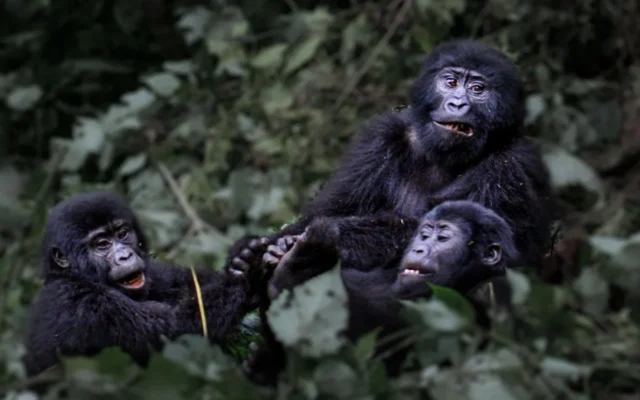
Then a dark shape becomes visible through the leaves. Suddenly, the hours of preparation, tracking and coordination make sense. You are standing close to a wild mountain gorilla family in its natural habitat.
Why This Behind-the-Scenes Work Matters
Gorilla trekking feels adventurous because it is adventurous. But it is not chaotic. The experience depends on decades of conservation work, habituation, monitoring, ranger training, community participation and daily field operations. Without trackers, locating gorillas consistently would be extremely difficult. Without rangers and regulations, tourism could place excessive pressure on the animals.
Without monitoring, conservation teams would know far less about changes within individual families. The controlled system helps make tourism possible while keeping conservation at the center of the experience.
Respect the People Behind Your Gorilla Trek
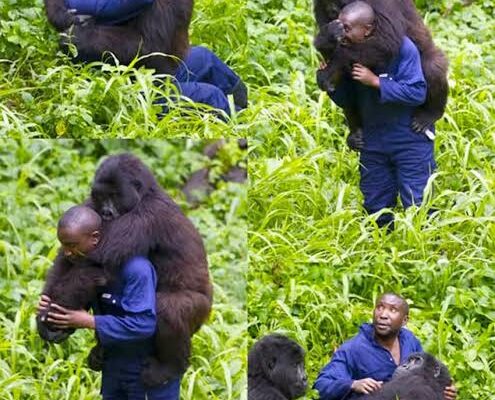
When visitors finally see mountain gorillas, it is natural for the animals to become the focus of every photograph and story. But it is worth remembering the people who helped make the encounter possible. Trackers understand the forest. Rangers manage the visitor experience. Researchers and monitoring teams build knowledge about gorilla populations.
Porters help visitors navigate difficult terrain. Local communities provide accommodation, guiding, crafts, food, transport and many other tourism services. A gorilla trekking experience is therefore not created by one person. It is the result of an entire conservation and tourism network.
Planning Your Own Bwindi Gorilla Trek
If you are preparing for a Uganda gorilla safari, good planning begins well before trekking morning.
Your itinerary should consider:
- gorilla permit availability,
- the Bwindi trekking sector,
- accommodation location,
- road or air transfers,
- appropriate trekking clothing,
- fitness and mobility,
- porter arrangements,
- additional safari activities.
Bwindi can be combined with Queen Elizabeth National Park, Kibale Forest, Lake Bunyonyi, Mgahinga Gorilla National Park and other destinations to create a broader Uganda safari.
Final Thoughts
So, what happens before gorilla trekking? Much more than most visitors ever see.
Before tourists enter Bwindi, trackers and conservation teams are already gathering information about gorilla families and their movements. Rangers prepare trekking groups and organize the day’s activities. Guides coordinate logistics. Porters prepare to assist visitors. Information passes between teams.
Then, after all that preparation, you step into the forest. Knowing what happens behind the scenes makes the eventual encounter even more meaningful. When you finally see a mountain gorilla sitting among the leaves of Bwindi, you are experiencing more than an extraordinary wildlife moment. You are seeing the result of a carefully managed conservation system that begins working long before the first tourist enters the forest.
 Read