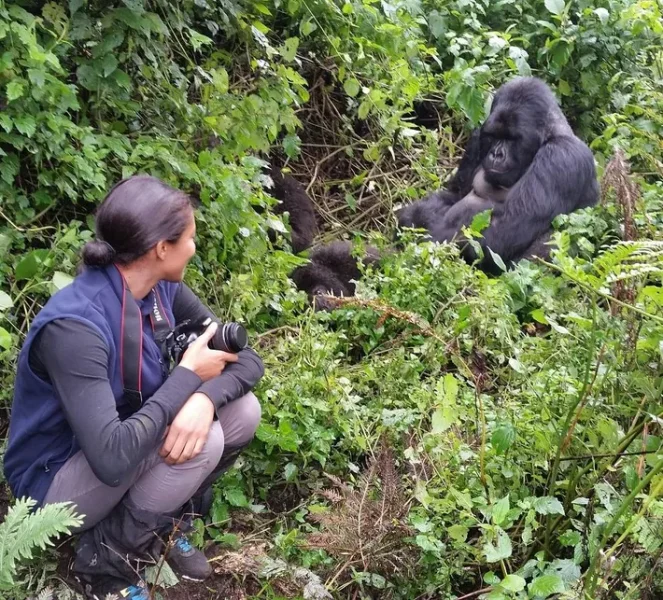
When visitors trek through Bwindi Impenetrable National Park and finally sit quietly near a mountain gorilla family, the gorillas often appear surprisingly relaxed. A silverback may continue feeding. A mother may rest with her infant. Juveniles sometimes play in the vegetation while barely acknowledging the small group of people observing them. This does not happen naturally.
Wild mountain gorillas that have never encountered researchers or trackers may initially avoid people, retreat deeper into the forest or react defensively. Before a gorilla family can receive regular tourist visits, it normally undergoes a long and carefully controlled process known as gorilla habituation.
Introduction
Understanding how gorilla habituation works helps explain why gorilla trekking is possible and why only selected mountain gorilla families can be visited by tourists.
What Is Gorilla Habituation?
Gorilla habituation is the gradual process through which a wild gorilla group becomes accustomed to the predictable and non-threatening presence of humans. The objective is not to domesticate gorillas. Habituated mountain gorillas remain completely wild. They find their own food, choose where they travel, reproduce naturally, interact with neighboring gorilla groups and respond to changes in their environment without human control.
Habituation simply teaches a particular family that the controlled presence of trackers, researchers and eventually tourists does not normally represent a threat. That distinction is extremely important. A habituated silverback is still a wild silverback.
Why Habituation Is Necessary
Imagine walking directly toward a completely wild gorilla family that has never experienced close human presence. From the gorillas’ perspective, you are an unfamiliar primate entering their territory. The dominant silverback’s responsibility is to protect his family. He may respond by moving the group away or displaying defensively. This would make tourism stressful and potentially dangerous.
Habituation allows gorillas to become familiar with a very specific pattern of human presence. Over time, repeated neutral encounters can reduce fear and defensive responses.
The Process Can Take Years
Gorilla habituation is deliberately slow. Conservation teams cannot simply locate a wild family, spend several days nearby and then begin selling permits. The process can take several years depending on the group and circumstances. This extended timeline allows researchers and trackers to increase contact gradually while continually evaluating how the gorillas respond. Some individuals adapt more quickly than others.
The dominant silverback’s response is particularly important because his behavior can influence the entire family.
First, Conservation Teams Identify a Suitable Group
Not every gorilla family is selected for habituation. Wildlife authorities consider conservation objectives, tourism management, the group’s location and other factors before beginning the process. Once a group is selected, trained field teams begin carefully following its movements. During the earliest stage, simply locating the gorillas can be difficult. Unlike established tourist families, the group may actively avoid people. Trackers must therefore rely heavily on forest signs.
Tracking Comes Before Close Observation
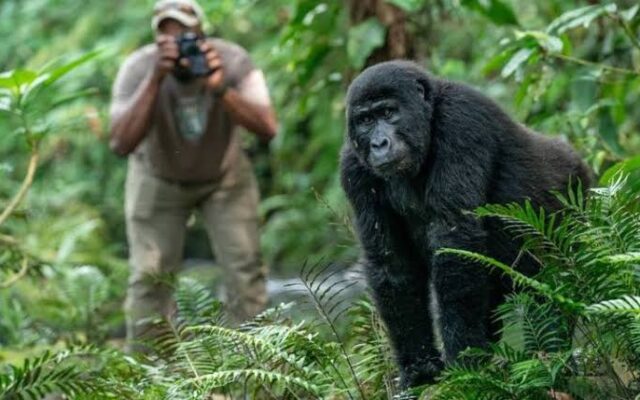
Experienced trackers can identify evidence left by gorillas, including footprints, feeding remains, dung, broken vegetation and sleeping nests. Following these signs allows teams to determine where a family has moved. Initially, trackers may remain at a considerable distance. The goal is not to force an encounter. It is to establish repeated, predictable contact. Over time, the distance can gradually decrease as the gorillas become more tolerant.
The Silverback Plays a Critical Role
A mature silverback is usually the central protective figure within a mountain gorilla family. When unfamiliar people appear, he evaluates whether they represent a danger. Early encounters may involve displays. The silverback may vocalize, beat his chest or position himself between humans and other members of the group. Trackers must understand these behaviors and respond correctly. Running away dramatically could reinforce the impression that humans are unpredictable. Moving too aggressively toward the group could increase defensive behavior. Calm, consistent conduct helps demonstrate that the trackers are not there to challenge the silverback.
Trackers Behave Predictably
Predictability is one of the foundations of habituation. Teams generally approach in controlled ways and avoid sudden threatening movements. Human behavior becomes familiar. The same types of voices, postures and movements are repeated. Over time, the gorillas begin learning that these particular human encounters do not result in hunting, chasing or aggression. Trust is perhaps not exactly the right word. Tolerance is more accurate. The gorillas gradually tolerate controlled human presence.
Researchers Begin Identifying Individuals
As observation improves, field teams start learning the composition of the family. They identify the dominant silverback, adult females, younger males, juveniles and infants. Individual gorillas can be distinguished using physical characteristics. Researchers may document relationships, movements and behavioral patterns. Eventually, individual gorillas can receive names used for monitoring purposes. This creates a detailed record of the family.
Habituation Supports Research as Well as Tourism
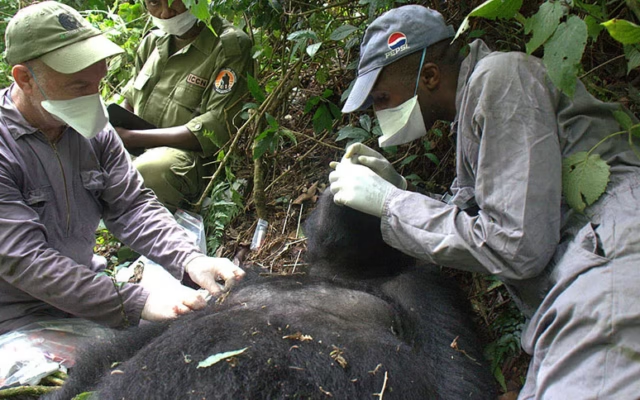
Although tourism is the most visible outcome, habituation also makes detailed scientific monitoring possible. Researchers can observe gorilla behavior at relatively close range. They can document births, deaths, transfers, injuries and changes in group composition. Health monitoring becomes easier. Conservation teams can recognize individuals and detect unusual behavior.
This information contributes to long-term understanding of mountain gorilla ecology.
Habituation Does Not Eliminate Wild Behavior
One of the biggest misconceptions about gorilla trekking is that habituated gorillas have somehow been trained. They have not. A habituated gorilla does not perform tricks. It does not receive food from tourists. It does not remain in a designated location waiting for visitors.
The family may travel several hours from the trailhead. The gorillas decide where to feed, sleep and move. Visitors must find them. That is why every trek is different.
Gorillas May Still React to Humans
Habituation reduces fear but does not eliminate all reactions. A silverback may still display. A juvenile may become curious. A mother may move away if she wants more space. The family may simply decide to travel elsewhere. Visitors must respect these responses. Habituation gives people an opportunity to observe gorillas—it does not give people control over them.
When Is a Family Ready for Tourism?
Conservation authorities assess the group’s behavior over time. A family must demonstrate sufficient tolerance of controlled human presence before ordinary tourist visits begin. The process cannot be rushed simply because tourism demand is high. Moving too quickly could increase stress or create unsafe encounters. Only when specialists consider the group appropriately habituated can it transition toward regular tourism.
What Is a Gorilla Habituation Experience?
Uganda has also offered specialized gorilla habituation experiences associated with groups undergoing advanced stages of the habituation process. These differ from standard gorilla trekking. Participants may spend longer with the gorillas and accompany researchers and trackers in a more conservation-focused experience, subject to the current regulations and availability.
This can appeal to travelers who want deeper insight into gorilla behavior and conservation. However, it should not be confused with unrestricted access. Strict rules still apply.
Standard Gorilla Trekking vs Habituation Experience
During standard gorilla trekking, visitors track a fully habituated family and generally receive a controlled observation period once the group is located. A habituation experience can involve a longer period associated with a family still being integrated into regular human observation. The emphasis can feel different. Standard trekking is primarily a wildlife encounter. Habituation offers additional insight into monitoring and research. Both experiences depend on responsible visitor behavior.
Why Visitor Numbers Remain Limited
Even after habituation, gorillas should not be surrounded by unlimited numbers of tourists. Controlled group sizes reduce disturbance and disease exposure. Habituation therefore does not remove conservation limits. In fact, the ability to approach gorillas creates an even greater responsibility to control tourism carefully. A family that tolerates people could theoretically receive visitors all day.
Responsible management deliberately prevents that.
Health Risks Remain
Habituated gorillas are still biologically vulnerable to some human illnesses. Their comfort around humans does not make them immune to pathogens. Visitors must follow health and distance regulations. Anyone showing signs of contagious illness should disclose this to their guide or park authorities. The welfare of the gorillas must come before an individual tourist’s desire to trek.
Habituation Creates Extraordinary Conservation Opportunities
Regular observation allows conservation teams to know individual gorillas in remarkable detail. A tracker may recognize an infant born years earlier and follow its development into adolescence. Researchers can observe females transferring between groups. Silverbacks can be monitored as they mature and potentially establish families of their own. Few large wild mammals are observed at such an individual level.
Habituation makes this possible.
But Habituation Has to Be Carefully Managed
Bringing humans and endangered wildlife into regular proximity always creates risks. Potential concerns include disease transmission, behavioral disturbance and excessive tourism pressure. This is why habituation must occur within a professionally managed conservation framework. It should never be attempted informally. Tourists should never seek unhabituated gorillas independently or encourage guides to approach groups not approved for tourism.
The Human Side of Habituation
The process requires enormous patience from trackers and researchers. Teams may spend years following a family before ordinary tourists ever see it. They work in rain, mud and steep terrain. Early encounters may be brief. Gorillas may disappear into dense vegetation.
Progress can be gradual. The calm family that tourists eventually photograph represents thousands of hours of fieldwork.
Habituation Makes Gorilla Tourism Possible
Without habituation, modern gorilla tourism would be dramatically different. Visitors might rarely see gorillas clearly. Encounters could be stressful and unpredictable. Detailed monitoring would be more difficult. Habituation creates the carefully controlled middle ground that allows humans to observe wild gorillas without turning them into captive animals.
What Visitors Should Remember
When you finally meet a habituated gorilla family in Bwindi, remember that their calmness should never be mistaken for tameness. Do not touch them. Do not feed them. Do not imitate aggressive behavior. Do not move closer simply because the gorillas appear relaxed.
Follow the ranger’s instructions. The entire habituation process is based on humans behaving predictably and non-threateningly. Tourists must continue that pattern.
From Fear to Tolerance
Understanding how gorilla habituation works makes a gorilla trek even more extraordinary. The silverback sitting peacefully in front of you belongs to a family whose relationship with human observers may have developed over years. Trackers once followed that same family from a distance. Researchers gradually learned individual identities. The gorillas slowly discovered that these particular human encounters did not represent danger.
Eventually, carefully managed tourism became possible. Yet the most important thing never changed. The gorillas remained wild.
That is the achievement of responsible habituation: not making gorillas behave like humans want them to, but creating enough tolerance for humans to briefly enter their world, observe them respectfully and then leave the forest exactly as they found it.
 Read