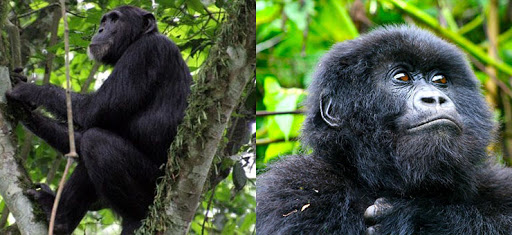
Photographing primates in Uganda can produce some of the most memorable wildlife images of an African safari. Mountain gorillas and chimpanzees are both extraordinary subjects, yet anyone who has photographed both quickly discovers that the two experiences are remarkably different.
When comparing chimpanzee photography vs gorilla photography, chimpanzees are generally the more difficult subjects. Gorillas often spend long periods feeding or resting relatively close to the ground, while chimpanzees can race through the forest, climb high into the canopy, disappear behind vegetation and suddenly reappear somewhere completely different.
Introduction
This does not mean chimpanzee photography is less rewarding. In many ways, the challenge makes successful photographs even more satisfying.
Uganda offers opportunities to experience both primates, particularly when combining chimpanzee trekking in Kibale National Park with gorilla trekking in Bwindi Impenetrable National Park. Understanding the photographic differences can help you prepare your equipment and expectations before entering the forest.
Chimpanzees Move Much Faster Than Gorillas
The biggest difference is movement. Mountain gorillas are incredibly powerful animals, but their normal daily activities can be surprisingly relaxed. A gorilla family may settle in an area where members feed on leaves, groom one another, rest or allow youngsters to play. This can give photographers time to observe what is happening and wait for an interesting expression or composition. Chimpanzees are different.
A chimpanzee community can suddenly become extremely active. Individuals may walk rapidly along the forest floor, climb trees, swing between branches or follow other members through dense vegetation. A chimp that appears clearly in front of you may disappear seconds later. Photographers therefore need to react quickly. There may be little time to carefully compose an image before the animal moves.
Chimpanzees Spend More Time in Trees
Mountain gorillas are primarily terrestrial. Although gorillas can climb trees, especially younger animals, visitors commonly encounter them on or close to the forest floor. Chimpanzees are far more arboreal. They regularly climb high into trees to feed, rest and travel. This creates one of the major challenges of chimpanzee photography.
You may find yourself standing beneath a large rainforest tree while chimpanzees feed high above you. Branches, leaves and vines can obstruct your view. The angle can also be difficult because you may be photographing almost directly upward. A chimpanzee sitting twenty metres above the ground can be fascinating to watch but challenging to photograph well.
Fortunately, chimpanzees frequently descend to the forest floor, particularly in areas such as Kibale where habituated communities are accustomed to controlled human presence. These moments often provide the best photographic opportunities.
Rainforest Light Can Be Extremely Difficult
Both gorilla and chimpanzee trekking take place in forest environments where light can be challenging. However, chimpanzees often make the problem more complicated because they move between different levels of the forest. One moment a chimpanzee may be sitting in deep shade. Seconds later it may climb into a patch of bright sunlight. Your camera settings may suddenly be completely wrong.
The rainforest canopy also produces strong contrasts between dark vegetation and shafts of sunlight. A chimpanzee’s dark hair can easily become underexposed when photographed against a bright sky. This is why photographers should understand how to quickly adjust ISO, shutter speed and exposure compensation. Automatic ISO combined with an appropriate minimum shutter speed can be particularly useful.
Dense Vegetation Frequently Blocks the View
Kibale Forest is incredibly beautiful. It is also incredibly dense. Trees, vines, shrubs, branches and leaves create endless obstacles between the photographer and the subject. Chimpanzees seem remarkably skilled at positioning themselves behind exactly the branch you wish was not there. Sometimes you may see a chimpanzee clearly with your eyes but discover that your camera’s autofocus repeatedly locks onto vegetation in front of the animal.
Patience becomes essential. Instead of constantly moving around, watch the chimpanzee and anticipate where it may go next. A small change in position can sometimes create a much clearer photographic angle.
Gorillas Often Provide Longer Portrait Opportunities
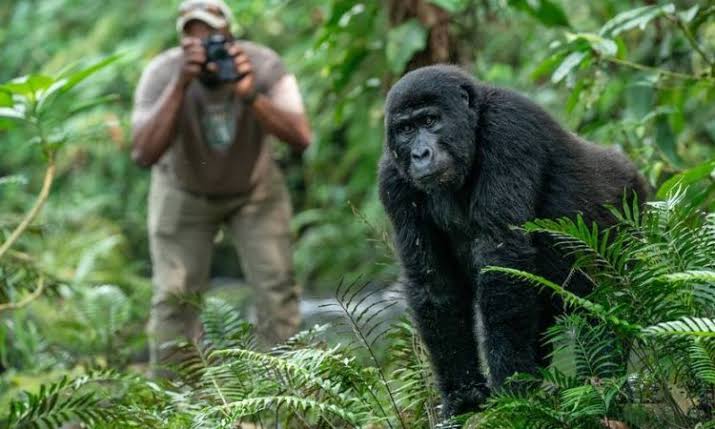
Gorilla trekking frequently produces wonderful opportunities for portraits. A silverback may sit quietly while feeding. A mother may hold an infant against her body. Young gorillas may play nearby. These situations can allow photographers to concentrate on facial expressions, eyes and interactions.
Chimpanzees rarely make portrait photography quite so straightforward. Their faces can be highly expressive, but they may constantly turn, move or disappear. Capturing a clean chimpanzee portrait therefore often requires patience and fast reactions. When the opportunity appears, it can last only seconds.
Chimpanzee Groups Can Be More Spread Out
Mountain gorillas generally live in cohesive family groups. Once trackers locate a habituated gorilla family, several individuals may be relatively close together. Chimpanzee communities operate differently. They have what scientists describe as a fission-fusion social system. Members of a large community regularly split into smaller parties before joining others again.
During your trek, you might initially encounter only several chimpanzees. Other members may be hundreds of metres away. Calls echoing through the forest can suddenly cause individuals to move toward another group. For photographers, this means the situation can change rapidly. A quiet encounter can suddenly turn into a fast walk through the forest.
Chimpanzee Photography Is Often More About Action
One reason photographers love chimpanzee trekking is the possibility of capturing dynamic behavior. Chimpanzees may groom, chase one another, climb trees, drum against tree trunks, vocalize or interact socially. Young chimpanzees may play energetically. Adults may suddenly race through the vegetation. Occasionally visitors may witness behaviors such as tool use or hunting.
These moments can create extraordinary images. However, photographing action requires faster shutter speeds than photographing a resting gorilla. A photographer who normally uses 1/250 second for a stationary subject may need 1/800, 1/1000 or faster when chimpanzees become active. Higher ISO values may therefore be necessary inside the dark forest.
Autofocus Becomes Extremely Important
Modern autofocus systems can be very helpful when photographing primates. However, rainforest vegetation can confuse even advanced cameras. Branches may cross the chimpanzee’s face. Leaves may move in front of the subject. The camera may focus on vegetation rather than the animal.
Continuous autofocus is usually preferable for moving chimpanzees. Photographers should also become comfortable quickly changing autofocus points or zones. Animal eye-detection can sometimes work extremely well, but it should not be relied upon completely in dense vegetation. Knowing how to override your camera’s automatic decisions remains valuable.
What Lens Is Best for Chimpanzee Photography?
A medium telephoto zoom is one of the most practical options. Something around the 70–200mm range can be extremely versatile, although photographers using crop-sensor cameras may prefer slightly different focal lengths. Longer lenses can help when chimpanzees remain high in trees. However, extremely large wildlife lenses can become cumbersome while trekking through dense rainforest. Remember that you may need to walk over uneven terrain, cross streams or climb forest slopes. Porters can assist with carrying equipment and are highly recommended, especially when travelling with heavier photographic gear.
Gorilla Photography Has Its Own Challenges
It would be misleading to suggest that gorilla photography is easy. Bwindi is called an impenetrable forest for good reason. Vegetation can be dense. Light levels may be extremely low. Rain is possible throughout the year.
Gorillas may turn their backs toward photographers or sit behind plants. A silverback’s dark fur can also be difficult to expose correctly. However, the slower pace of many gorilla encounters generally provides more opportunities to adjust settings and wait for a photograph. That difference is significant.
Photography Rules Matter More Than Getting the Shot
Whether photographing chimpanzees or gorillas, conservation rules always come first. Visitors must follow instructions from rangers and guides. You should never move closer simply because you want a better photograph. Flash photography should not be used during gorilla trekking, and similar respect should be applied when photographing chimpanzees. Animals must never be disturbed for photographs.
If a ranger asks you to move, lower your camera or remain still, follow the instruction immediately. Responsible wildlife photography means accepting that sometimes the best photograph is the one you choose not to take.
Prepare Your Camera Before Finding the Chimpanzees
One of the easiest mistakes is entering the forest with unsuitable camera settings. Chimpanzees may appear suddenly. Before beginning your trek, consider preparing a basic rainforest setup. A reasonably fast shutter speed, continuous autofocus and automatic ISO can provide a useful starting point. Take several test photographs in the forest before reaching the chimpanzees. Check exposure. Check shutter speed. Check whether your ISO is becoming excessively high. Making these adjustments beforehand allows you to concentrate on the animals when the encounter begins.
Don’t Spend the Entire Encounter Behind the Camera
Photography can become addictive during primate trekking. You may feel that every second needs to be photographed. It doesn’t. There is enormous value in occasionally lowering the camera. Listen to the forest. Watch how chimpanzees interact. Notice their expressions and movements. The experience itself is more important than producing hundreds of photographs. Some travelers return from Uganda with thousands of images but remember most clearly the moments when they simply watched.
Should Photographers Choose Gorillas or Chimpanzees?
If photography is your primary priority, gorillas generally offer more predictable opportunities. Their slower movements and terrestrial behavior can make portraits easier. Chimpanzees provide something different. They offer unpredictability, movement and extraordinary behavioral possibilities. The challenge is part of their appeal.
For serious wildlife photographers, the best solution is not choosing between them. Experience both. A safari combining Kibale National Park and Bwindi Impenetrable National Park allows you to photograph two of Africa’s most remarkable primates within the same journey.
Final Thoughts on Chimpanzee Photography vs Gorilla Photography
The comparison between chimpanzee photography vs gorilla photography ultimately comes down to movement, habitat and behavior. Gorillas often give photographers time. Chimpanzees demand reactions. Gorillas may sit quietly among forest vegetation while chimpanzees race between trees and disappear into the canopy. Neither experience is better.
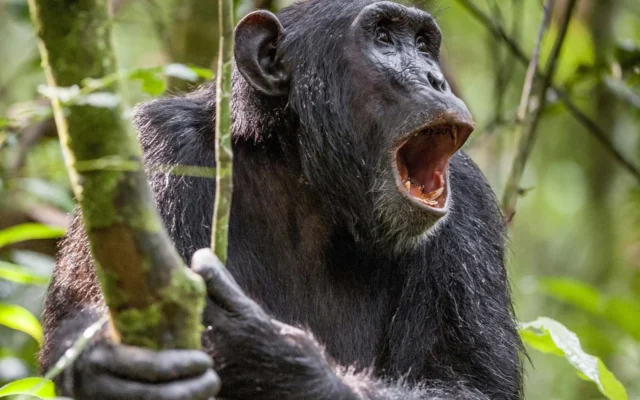
They simply challenge photographers in different ways. When you finally capture a chimpanzee looking directly through a gap in the vegetation, a youngster playing on a branch or an adult calling through the forest, the difficulties suddenly feel worthwhile. And sometimes the slightly imperfect photographs become the ones that best capture what chimpanzee trekking in Uganda actually feels like.
 Read