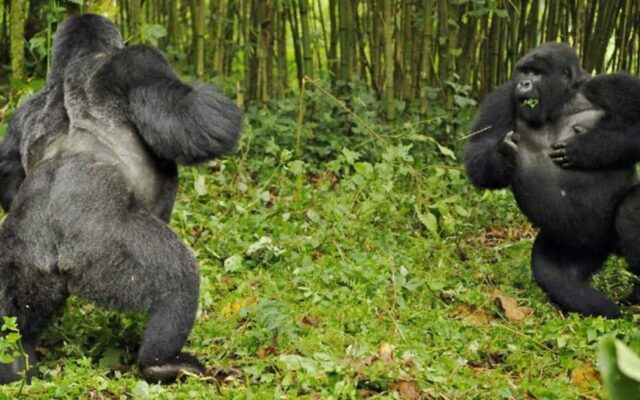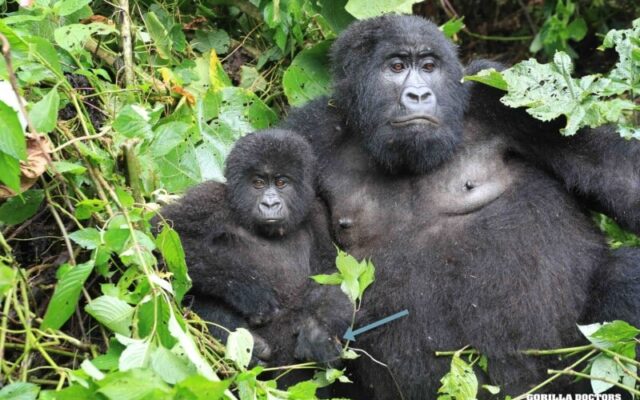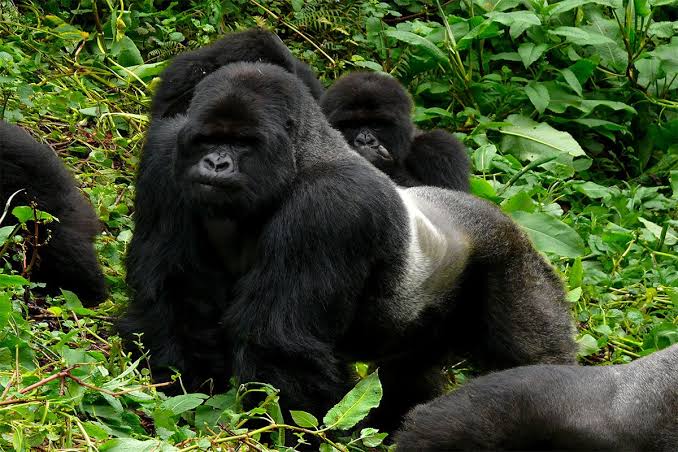
Stand a few meters from a mature silverback mountain gorilla in Bwindi Impenetrable National Park and one thing becomes immediately obvious: this is an extraordinarily powerful animal. The shoulders are enormous. The arms are heavily muscled. The hands seem disproportionately large, and even a relaxed movement through vegetation reveals considerable physical power. It naturally raises the question: how strong is a silverback gorilla?
Search online and you will find dramatic claims. Gorillas are often described as being five, ten or even twenty times stronger than humans. Articles may claim they can lift precise enormous weights or perform feats that have never actually been scientifically measured. The reality is more nuanced.
Introduction
Silverback gorillas are undoubtedly much stronger than humans in many physical tasks, but assigning a precise “times stronger” figure is difficult because scientists cannot put wild gorillas through standardized gym tests. Instead, we can understand their strength by examining their anatomy, body size, movement, behavior and the physical demands of life in the forest.
What Is a Silverback Gorilla?
A silverback is a mature adult male gorilla. The name comes from the distinctive silver or gray hair that develops across the back as the male matures. Silverbacks are not a separate species of gorilla. In Uganda, visitors trekking in Bwindi Impenetrable National Park and Mgahinga Gorilla National Park encounter mountain gorillas.
A mature silverback may lead or play an important role within a family group consisting of females, infants, juveniles and sometimes additional adult males.
How Big Is a Silverback?
Adult male gorillas are considerably larger and more heavily built than females. Body size varies between individuals and gorilla populations, so there is no single weight that describes every silverback. Wild mountain gorillas can reach substantial body masses, supported by thick bones and extensive muscle. But weight alone does not explain their impressive strength. Their body proportions matter enormously.
Look at a silverback’s upper body and you immediately notice the shoulders and arms. Gorillas have long, powerful upper limbs suited to climbing, pulling vegetation, moving on the ground and interacting physically with their environment.
Why Are Gorilla Arms So Powerful?
Gorillas move primarily using quadrupedal knuckle-walking when traveling on the ground. Their upper limbs therefore perform tasks that human arms normally do not. Humans evolved for habitual upright walking, meaning our legs perform most locomotor work. Gorillas use their arms extensively for locomotion as well as climbing, pulling, grasping and manipulating vegetation. A silverback’s arms are not muscles developed for appearance. They are functional tools used every day.
Can We Say Exactly How Many Times Stronger a Gorilla Is Than a Human?
Not reliably. This is where many online explanations become misleading. You will often see statements claiming that a gorilla is exactly “X times stronger” than an average human. The problem is that strength is not one single measurement. Humans and gorillas have different anatomy and movement patterns. There is also an obvious practical problem: researchers cannot ask a wild silverback to perform a controlled deadlift, bench press or standardized strength test. Therefore, exact comparisons should be treated cautiously. What can safely be said is that a mature silverback possesses exceptional physical strength and would dramatically outperform a human in many tasks involving pulling, climbing and upper-body power.
Gorilla Strength Comes From Evolution, Not the Gym
A silverback does not need weight training. Its normal life provides constant physical activity. Mountain gorillas travel across uneven forest terrain. They climb slopes. They pull vegetation. They occasionally climb trees. They manipulate branches and stems while feeding. Young males play and wrestle. Adults may display or engage in physical confrontations. Their anatomy evolved for these demands.
Their Hands Reveal Their Power
Seeing a silverback’s hands at close range is unforgettable. They are enormous compared with human hands. Strong fingers allow gorillas to grasp vegetation and manipulate food. Their hands and wrists must also tolerate forces associated with knuckle-walking. Yet these same powerful hands can be used with remarkable delicacy. A gorilla can carefully select leaves, groom another gorilla or interact gently with an infant. This combination of strength and fine control is fascinating.
How Strong Is a Gorilla’s Grip?
Again, precise internet numbers should be approached carefully. But anatomically, gorillas possess very strong hands and forearms. Their ability to grasp branches, climb and manipulate dense vegetation demonstrates substantial grip strength. During a gorilla trek, you may see an individual pull vegetation toward itself with apparent ease. Something that would require considerable effort from a person can appear completely routine.
Can Silverbacks Climb Trees?
Yes, although large adult males are generally less agile in trees than smaller gorillas. Their considerable body mass makes climbing more demanding. Nevertheless, silverbacks can climb when necessary. Young gorillas are particularly enthusiastic climbers and may spend considerable time playing above ground. Watching them makes the physical capabilities of gorillas obvious.
How Powerful Are a Gorilla’s Jaws?
Gorillas have large jaws and substantial chewing muscles. Their teeth and jaw anatomy are adapted to their diet and lifestyle. Adult males also develop impressive canine teeth. Again, exact bite-force numbers circulating online vary and should not automatically be treated as established facts. The important point is that a gorilla has a powerful jaw system suited to processing tough vegetation and capable of causing serious injury if used during conflict. This is one reason visitors should always respect trekking regulations.
If Gorillas Are So Strong, Why Is Gorilla Trekking Safe?
This is a reasonable question. The answer involves behavior, habituation and professional management. Mountain gorillas are not constantly aggressive animals looking for opportunities to attack humans. Habituated families have gradually become accustomed to controlled human presence. Treks are conducted with trained rangers, visitor numbers are restricted, and behavioral rules reduce disturbance.
Gorillas remain wild animals, however. Their calmness should never be confused with domestication.
A Silverback Does Not Need to Prove His Strength Constantly
One of the most striking things about seeing a silverback in the wild is how little his enormous strength may feature in ordinary daily life. You might spend most of your encounter watching him eat. He may sit quietly pulling vegetation toward himself. He may rest. He may move slowly through the forest while other family members follow. An animal capable of extraordinary physical force can spend much of the day behaving peacefully. That contrast makes the experience even more impressive.
When Do Silverbacks Use Their Strength?
Physical power is useful in many contexts. A silverback may use strength while: Serious fights can occur between males, but physical confrontation carries risks and is not the only way conflicts are managed. Displays and communication can sometimes prevent escalation.
Chest Beating and Strength
Chest beating is perhaps the most famous silverback display. It creates an impressive sound and can communicate information to other gorillas. Researchers have examined how the acoustic characteristics of chest beats may relate to male body size. This is important because rivals may be able to assess a male without immediately entering physical combat. Being able to communicate strength can be almost as important as using it.
Could a Human Fight a Silverback?
This is a popular internet question, but it is not a meaningful wildlife comparison. An unarmed human should never attempt to physically confront a gorilla. The difference in body structure, upper-body power, bite capability and overall physical capacity makes the idea extremely dangerous. More importantly, responsible gorilla tourism is based on avoiding confrontation entirely. Visitors observe gorillas under ranger supervision.
The objective is conservation and appreciation, not testing strength.
Why You Should Never Challenge a Gorilla
Visitors should never: Such behavior is irresponsible and can create unnecessary stress. If a gorilla approaches or displays, follow the ranger’s instructions.
How Fast Can a Gorilla Move?
The relaxed pace you often see during trekking can be misleading. Gorillas are capable of quick bursts of movement. Their powerful limbs allow them to move rapidly when necessary. This is another reason running away from a gorilla is inappropriate. A tourist is not going to improve the situation by turning the encounter into a chase. Remain calm and listen to the ranger.
Silverback Strength and Family Protection
The dominant silverback plays an important protective role within many gorilla families. His size and presence can discourage threats. If a serious challenge occurs, he may place himself between danger and other members of the group. This protective function helps explain why mature male size and strength are important evolutionary characteristics. But leadership involves more than fighting. Silverbacks also participate in social relationships within the family.
Silverbacks and Young Gorillas
Visitors are sometimes surprised by interactions between massive silverbacks and tiny infants. A silverback can appear extremely gentle around youngsters. Young gorillas may approach, play near or interact with adult males. Seeing an enormous hand near a tiny infant emphasizes the extraordinary control these animals have over their physical strength. Strength does not mean uncontrolled aggression.
What Does Gorilla Strength Look Like During Trekking?
You probably will not see a silverback performing an extraordinary “strength demonstration.” Instead, you notice power in small details. Watch how easily he moves through dense vegetation. Notice the thickness of his forearms. Watch him pull branches toward himself. Observe the shoulder muscles as he changes position. Listen if he performs a chest beat. Notice how the surrounding family responds when he moves. The strength is obvious without needing to be tested.
Mountain Gorillas Are Built for Their Environment
Bwindi is rugged. Trails climb and descend through steep hills. Vegetation can be exceptionally dense. For humans, moving through this environment can require hiking boots, walking sticks, gloves and assistance from porters. Gorillas live there every day. They move through vegetation without trails. They climb slopes with extraordinary ease. Their bodies are perfectly adapted to an environment that can leave human visitors exhausted.
Strength Is Only One Part of What Makes Gorillas Fascinating
Focusing exclusively on how strong a silverback gorilla is misses much of what makes the animal extraordinary. Gorillas have complex social relationships. They communicate through sounds, gestures, posture and touch. Mothers care intensively for infants. Youngsters learn through play.
Adult males form relationships with family members and respond to social situations. Their physical power is impressive, but their behavior is even more interesting.
Seeing a Silverback in Bwindi
Uganda’s Bwindi Impenetrable National Park offers visitors an opportunity to see habituated mountain gorilla families in their natural habitat. Treks begin with a park briefing and are led by trained rangers and trackers. Once the gorillas are located, visitors spend a regulated period observing the family while following conservation rules. It is during these quiet moments that you begin to appreciate a silverback’s true physical presence.
No photograph prepares you completely.
Respecting Their Power
The appropriate response to gorilla strength is not fear. It is respect. Mountain gorillas generally do not regard properly managed trekking groups as threats, particularly within habituated families. But they remain powerful wild animals. Maintaining the required distance, listening to rangers and avoiding provocative behavior protect both visitors and gorillas.
Avoiding Exaggerated Gorilla Strength Myths
When researching gorillas online, be cautious with dramatic statistics. Claims such as exact lifting capacities or precise multiples of human strength are often repeated from one website to another without clear scientific evidence. A better description is more accurate: A mature silverback gorilla is an exceptionally powerful primate with much greater upper-body strength than a human and anatomy adapted for knuckle-walking, climbing, pulling vegetation, displays and occasional physical conflict. We do not need exaggerated numbers to make that impressive.
Final Thoughts
So, how strong is a silverback gorilla? Extremely strong—but assigning a precise number to that strength is difficult and often misleading. A mature silverback combines substantial body mass with powerful shoulders, long muscular arms, strong hands, robust jaws and an anatomy shaped by life in demanding forest environments. Yet perhaps the most remarkable thing is not how much force a silverback could theoretically produce.
It is how rarely visitors see that force used aggressively. During a gorilla trek, the huge animal in front of you may simply sit among the leaves, carefully selecting vegetation while an infant plays nearby. That quiet control is part of what makes seeing a silverback in the wild so unforgettable. You are standing near one of the most physically powerful primates on Earth—and he may be completely occupied with eating breakfast.

 Read