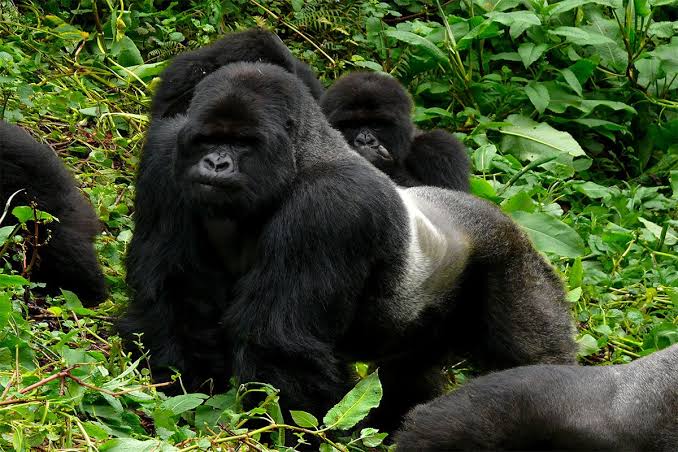
A mature silverback sitting among a mountain gorilla family can appear completely secure in his position. Females feed nearby. Juveniles play around him. Infants cling to their mothers. When the group moves, his decisions may influence its direction. If danger appears, his physical presence becomes extremely important.
But he was not born the leader. He began life as a tiny infant completely dependent on his mother. So how does a silverback become leader of a gorilla family?
Introduction
The journey involves years of growth, social learning, increasing independence and competition. Some males eventually establish their own families. Others may remain within multi-male groups. Leadership can change through social developments, departures, transfers and, occasionally, serious confrontation between males. Understanding this process reveals just how complex mountain gorilla society can be.
Every Silverback Begins as a Baby
A newborn male gorilla is certainly not dominant. Like other gorilla infants, he depends heavily on his mother. He clings to her body, nurses and gradually begins exploring the world around him. During these early years, he learns constantly. He watches adults.
He interacts with siblings and other youngsters. He plays. He becomes familiar with the social relationships within his family. The foundation of an adult male’s future begins during this long period of development.
Young Gorillas Learn Through Play
Play is especially important for juvenile gorillas. Young males may wrestle, chase one another, climb and engage in mock displays. To tourists, these activities can look like pure entertainment. But play develops coordination, confidence and social skills. Young gorillas are learning how other group members react to different actions. They begin understanding boundaries and relationships. Some behaviors displayed by adults may appear in smaller, less impressive forms among youngsters. A young male beating his chest can look almost comical compared with a huge mature silverback, but it is part of behavioral development.
When Does a Male Become a Silverback?
The famous silver coloration develops gradually as a male matures. Before becoming a fully mature silverback, a male passes through developmental stages and continues gaining body mass and social experience. Eventually, the darker hair across his back changes to the characteristic silver-gray appearance. But having silver hair does not automatically make him the dominant male of a family. He must still establish a social position.
Does Every Silverback Lead a Family?
No. This is one of the most important points to understand. “Silverback” describes a mature male, not necessarily a group leader. A gorilla family can sometimes contain more than one mature silverback. Their relationships may differ considerably. One male may hold the dominant position while another occupies a subordinate role. In other situations, males may live differently or eventually attempt to form their own groups. Therefore, becoming physically mature and becoming socially dominant are not the same thing.
Young Males Face an Important Transition
As a male matures, his relationship with his natal family—the family into which he was born—can change. Depending on the social circumstances, he may remain within the group or eventually disperse. Leaving the natal group can be a major stage in a male gorilla’s life. Once independent, he may need to establish himself socially and eventually attract females if he is to create a family of his own. This does not happen overnight.
Becoming a Solitary Male
Some males spend periods living independently. A solitary silverback faces very different circumstances from a male surrounded by a family. He must move through the landscape without the social support of a larger group. During this stage, he may encounter other gorillas. Eventually, opportunities to establish a group may arise. For visitors, solitary males are less familiar because gorilla trekking experiences generally focus on habituated family groups, but they are an important part of gorilla social dynamics.
How Does a Silverback Form His Own Family?
For a male to become leader of a new family, females need to associate with him. Female transfers between groups are part of natural gorilla social life. A female may leave one group and join another male or group. Over time, a silverback may attract one or more females and establish a family unit. His physical size, maturity, social behavior and ability to provide a degree of protection can all matter within these dynamics.
The formation of a gorilla family is therefore not simply a case of the strongest male defeating everyone else. Social choice and relationships are important.
Do Female Gorillas Choose Their Silverback?
Females are active participants in gorilla society. They are not merely possessions controlled by males. Females can transfer between groups under natural circumstances, and their decisions influence group formation. A strong male may offer protection, but relationships and social stability also matter. This makes gorilla family structure far more interesting than a simplistic “strongest male wins” explanation.
Why Physical Strength Still Matters
Although social relationships are important, enormous physical strength has obvious advantages for an adult male. A silverback may need to protect his family when confronted by rival males. His size can also make displays more persuasive. A rival assessing a powerful adult male must consider the potential cost of physical confrontation. This is where gorilla communication becomes important. Chest beating, posture, vocalization and other displays can communicate strength before a serious fight occurs.
Leadership Does Not Always Require Fighting
Popular images often suggest that every silverback becomes dominant by defeating another male in a violent battle. That is not accurate. Leadership can develop through several paths. A male may establish a new group. He may gradually increase his status within an existing multi-male family. Changes can occur when another male leaves or dies. Social relationships can shift over time. Physical confrontation is possible, particularly when rival males come into conflict, but it is not the only route to leadership.
What Happens When a New Male Challenges a Group?
An encounter between an established silverback and an outside male can become tense. The resident silverback has strong reasons to defend his family. Displays may include vocalizations, chest beating and other physical signals. These behaviors can communicate size, confidence and willingness to escalate. Sometimes the confrontation ends without a serious fight. At other times, physical conflict can occur. The outcome can affect the future structure of the family.
What Makes a Successful Gorilla Leader?
Physical strength is only one part of the equation. A successful silverback may need experience, social awareness and an ability to maintain family cohesion. He needs to navigate relationships with females, younger gorillas and sometimes subordinate adult males. He may influence group movement. He responds to potential threats.
He may intervene during social disputes. A male who has lived within gorilla society for many years possesses experience that cannot be measured by muscle alone.
The Silverback’s Protective Role
Protection is among the most visible functions associated with a dominant silverback. When a significant threat appears, he may position himself defensively. His sheer size can be enough to discourage some confrontations. If necessary, however, a mature male is physically capable of serious defense. This protective role can be particularly important for females and youngsters. It is one reason a stable adult male can have such a strong influence on the family.
Leadership and Daily Movement
Leadership can also appear in quieter ways. Imagine a gorilla family feeding across a forested slope. After some time, the silverback begins moving toward another area. Other family members gradually follow. This does not look dramatic. No chest beating is required. Yet these everyday decisions contribute to family organization. The male’s knowledge of feeding areas and the wider landscape becomes valuable.
What Happens When a Dominant Silverback Gets Older?
Leadership does not necessarily last forever. As a male ages, his strength and circumstances may change. Another male may become increasingly important within the group. An outside silverback may pose a challenge. Or the family may experience structural changes for entirely different reasons.
The presence of additional mature males can influence what happens when an older leader loses his position or dies. Every gorilla family’s history is different. This is one reason long-term monitoring is so valuable.
Can Sons Stay With Their Father?
Some males may remain within their natal group beyond adolescence, particularly within multi-male family structures. This creates fascinating relationships between mature males. A younger silverback may occupy a subordinate position rather than immediately leaving to challenge his father or another dominant male. These arrangements demonstrate that gorilla society is more flexible than many people assume.
Why Do Some Gorilla Families Have Several Silverbacks?
Multi-male groups can develop when mature males remain together within the same family. The dominant position is not necessarily shared equally. One male may have greater social influence while others occupy subordinate roles. Their presence can potentially contribute to group protection and continuity. For gorilla trekkers, seeing two or more huge silverbacks within a single family is particularly impressive. It also provides an excellent opportunity to notice differences in behavior and status.
How Rangers Recognize the Dominant Silverback
People who monitor a family regularly become familiar with individual gorillas and their relationships. Dominance is not determined simply by looking for the largest animal. Observers consider patterns of behavior over time. Which male influences movement? How do females respond to him? How do other males behave around him? How does he respond to external threats or internal disputes? Long-term observation reveals the social structure far better than a single encounter can.
Does the Dominant Silverback Control Everything?
No. Calling a silverback the “leader” can sometimes create an overly simplistic picture. Individual gorillas still make many of their own decisions. Females have social relationships and can make choices about group membership. Youngsters interact independently. Subordinate males may also play important roles. The dominant silverback is highly influential, but a gorilla family remains a network of relationships rather than a dictatorship.
What Happens If the Leader Dies?
The death of a dominant male can create major changes. What happens next depends on the family’s structure. If another mature male is already present, he may assume a more important role. In other circumstances, females may transfer or the group may reorganize. The exact outcome varies. This uncertainty is one reason conservation teams monitor known families over long periods. Each family’s story develops across generations.
Why Gorilla Trekking Makes This Easier to Understand
Reading about gorilla leadership is interesting. Seeing the family is entirely different. During a trek in Bwindi Impenetrable National Park, you may notice the silverback sitting slightly apart while others feed. Later he moves, and the family begins following. A juvenile approaches him and is tolerated.
A female passes nearby. With explanations from your ranger, these small observations begin revealing a social system that was invisible when you first entered the forest.
Do Not Expect Constant Dominance Displays
A truly influential silverback does not need to remind his family every few minutes that he is powerful. Much of his leadership is quiet. He feeds. He rests. He moves. Other gorillas respond to him based on established relationships. The dramatic chest-beating display that tourists hope to photograph is only one small part of his social life.
Becoming a Leader Takes Years
Perhaps the most important answer to how does a silverback become leader is that the process cannot be rushed. A male needs years to grow. He develops physically and socially. He learns from his natal group. He may eventually disperse or remain within a multi-male family. He encounters other gorillas. He establishes relationships. He may attract females. And under the right circumstances, he becomes the dominant male within a family.
Final Thoughts
A silverback does not become leader simply because his back turns silver. Nor does every male gain leadership by winning a spectacular fight. Gorilla leadership develops through a complex combination of maturity, strength, experience, relationships, group structure and changing social circumstances. Some males establish new families. Some remain within existing groups.
Some rise in status when social conditions change. And some never become the dominant male of a family at all. When you eventually see a leading silverback in Bwindi, remember that the enormous animal sitting quietly before you has a history extending back many years. He was once an infant clinging to his mother. He played with other youngsters.
He matured, learned and found his place in gorilla society. The silver hair on his back may show his maturity. His relationships with the family around him show something even more important: how he became their leader.
 Read