

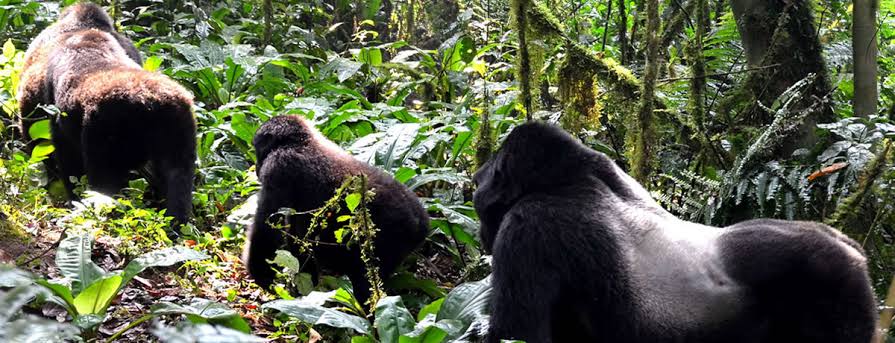
Seeing mountain gorillas in Bwindi Impenetrable National Park may be the reason you traveled to southwestern Uganda, but your adventure does not have to end when you walk out of the forest. In fact, deciding what to do after gorilla trekking in Bwindi can transform a short gorilla trip into a much richer Uganda safari.
Bwindi lies within one of the country’s most scenic regions. Forested mountains, crater-like lakes, rural communities, wildlife reserves and other primate destinations can all be incorporated into an itinerary. You might spend the afternoon relaxing at your lodge, cruise between the islands of Lake Bunyonyi, search for tree-climbing lions in Ishasha, continue to Queen Elizabeth National Park or even add another primate adventure.
Introduction
Here are some of the best ways to continue your journey after meeting Bwindi’s mountain gorillas.
First: Give Yourself Time to Enjoy the Achievement
When you return from the forest, you may feel tired, muddy, excited and slightly overwhelmed. Do not feel that you must immediately rush into another major activity. Gorilla trekking can be physically demanding. Depending on where the gorillas were located, you may have walked for several hours through steep terrain. Returning to your lodge, taking a hot shower, enjoying a proper meal and sitting somewhere with a view can be the perfect afternoon.
The experience deserves time to sink in. You have just encountered wild mountain gorillas in one of Africa’s most remarkable forests.
1. Relax at Your Bwindi Lodge
Bwindi has accommodation ranging from relatively simple budget properties to comfortable mid-range lodges and luxurious forest retreats. Many are positioned to take advantage of the area’s spectacular scenery. After trekking, you can spend the afternoon enjoying your lodge rather than immediately packing for another destination. Order a drink. Sit on the veranda. Look through your photographs. Listen to forest birds. If your safari schedule allows it, spending a second night in Bwindi after trekking can make the experience feel far less rushed.
2. Visit Lake Bunyonyi
Lake Bunyonyi is one of the most popular additions to a Bwindi gorilla safari. The lake lies among steep, cultivated hills and is dotted with numerous islands, creating one of southwestern Uganda’s most recognizable landscapes. After the intensity of trekking, Lake Bunyonyi provides a dramatic change of pace. Instead of climbing through rainforest, you can relax beside calm water surrounded by green hills. Activities may include boat trips, canoeing, birdwatching, community experiences or simply enjoying the scenery from your lodge. For travelers wondering what to do after gorilla trekking in Bwindi, Bunyonyi is particularly appealing because it combines naturally with many southern Bwindi itineraries.
3. Take a Boat or Canoe Experience on Lake Bunyonyi
A lake excursion provides a relaxing way to explore Bunyonyi. Local guides can explain stories associated with different islands and communities around the lake. The experience is not about rushing from one attraction to another. It is slower and more scenic. After a physically demanding gorilla trek, that contrast can be exactly what you need.
4. Add a Community Experience Around Bwindi
Gorilla tourism exists within a wider human landscape. Communities live around Bwindi’s boundaries, and responsible cultural experiences can help visitors understand the region beyond the national park. Depending on where you are staying, community visits may introduce you to local livelihoods, crafts, music, food, farming or other aspects of everyday life. Some experiences also provide opportunities to learn about Batwa heritage and the historical relationship between forest-dependent communities and the wider Bwindi landscape. Choose experiences that are respectful, locally organized and beneficial to participating communities.
5. Explore Bwindi Beyond Gorilla Trekking
Bwindi is famous for gorillas, but it is not only a gorilla destination. The forest is extraordinarily biodiverse. If you have an additional day, guided nature walks can reveal a completely different side of the park. Instead of focusing entirely on locating one gorilla family, you can pay attention to trees, butterflies, monkeys, birds and the structure of the ancient forest itself. This is especially worthwhile for travelers who enjoy natural history.
6. Go Birding in Bwindi
Serious birders already know that Bwindi is one of Uganda’s outstanding birding destinations. The Albertine Rift region supports a remarkable variety of birdlife, including several species with restricted ranges. A dedicated birding walk allows you to experience the forest at a much slower pace than a gorilla trek. Rather than concentrating on steep terrain and the location of gorillas, you can stop frequently, listen for calls and search different levels of the forest. Even travelers who do not consider themselves committed birdwatchers may enjoy the diversity.
7. Continue to Queen Elizabeth National Park
One of the best safari combinations is Bwindi plus Queen Elizabeth National Park. The two destinations offer completely different wildlife experiences. Bwindi gives you an intimate forest encounter on foot. Queen Elizabeth introduces open savannah, crater landscapes, wetlands and classic African wildlife viewing. Depending on your route, the journey may take you through the Ishasha sector in the southern part of Queen Elizabeth National Park.
8. Search for Tree-Climbing Lions in Ishasha
Ishasha is famous for its tree-climbing lions. Although wildlife sightings are never guaranteed, searching the sector’s open plains for lions resting in fig trees can be a memorable addition to a gorilla safari. The contrast is striking. One day you may be standing quietly in dense rainforest watching a gorilla feed on vegetation. The next, you may be driving across savannah looking for lions, elephants, buffalo and antelope. That diversity is one of the strongest reasons to combine Uganda’s national parks rather than visiting Bwindi alone.
9. Take a Game Drive in Queen Elizabeth National Park
Continue farther north and Queen Elizabeth National Park offers extensive game-drive opportunities. Areas such as Kasenyi are known for open grasslands and wildlife viewing. Depending on luck and season, visitors may encounter Uganda kob, buffalo, elephants, warthogs, lions and many bird species. Predator sightings can never be promised, but early-morning game drives provide excellent opportunities to explore the park.
10. Cruise the Kazinga Channel
The Kazinga Channel boat cruise is another excellent activity to combine with gorilla trekking. The natural channel connects Lake George and Lake Edward and supports abundant wildlife. Boat trips can offer close views of hippos, crocodiles, buffalo and numerous waterbirds, with elephants and other animals sometimes appearing along the banks. After trekking through dense forest, seeing wildlife from the water provides another completely different perspective.
11. Continue to Kibale for Chimpanzee Trekking
If gorillas have increased your interest in primates, consider adding Kibale National Park. Kibale is Uganda’s best-known chimpanzee trekking destination. Combining gorilla trekking and chimpanzee trekking allows you to observe two of our closest primate relatives in very different forest environments. The experiences are not identical. Chimpanzees are highly active and may move rapidly through the forest, while gorilla encounters often involve watching a family feeding or resting at relatively close range. Doing both provides a much broader understanding of Uganda’s primate diversity.
12. Visit Mgahinga Gorilla National Park
Travelers based in southern Bwindi can also consider continuing toward Mgahinga Gorilla National Park. Mgahinga forms part of the larger Virunga landscape and offers dramatic volcanic scenery. While gorilla trekking is available here subject to permit arrangements, the park also offers another distinctive primate experience: golden monkey tracking.
13. Go Golden Monkey Tracking
Golden monkeys live in the Virunga highlands and provide a lively contrast to mountain gorillas. They are smaller, quicker and frequently active among bamboo vegetation. For travelers particularly interested in primates, combining Bwindi gorillas with Mgahinga golden monkeys creates a varied itinerary without immediately leaving southwestern Uganda.
14. Climb or Hike in the Virunga Region
Adventurous travelers may want something more physically demanding after gorilla trekking. The volcanic landscapes around Mgahinga offer hiking opportunities, including challenging mountain experiences. These activities require appropriate fitness, preparation and scheduling. If your legs are already tired after Bwindi, give yourself adequate recovery time before attempting a strenuous hike.
15. Continue to Lake Mburo National Park
If you are traveling back toward Kampala or Entebbe by road, Lake Mburo National Park can provide a convenient safari stop. Its landscape differs greatly from Bwindi. The park contains open savannah, woodland and wetlands and is known for wildlife including zebra and several antelope species. Lake Mburo can also provide walking and other safari experiences, depending on current park arrangements. It is a useful way to break the long road journey between southwestern Uganda and Entebbe.
16. Return to Kigali Through Rwanda
Bwindi can also be accessed through Kigali, making Rwanda a practical arrival or departure point for some itineraries. Depending on border arrangements, documentation and your itinerary, travelers may continue from Bwindi toward Kigali rather than returning to Entebbe. This can be especially convenient for shorter gorilla-focused trips. However, international border crossings require proper planning, so this should be arranged in advance rather than treated as a spontaneous change after trekking.
17. Spend Another Night in Bwindi
One of the simplest recommendations is also one of the best. Do nothing ambitious. Stay. Many short gorilla itineraries are designed around arriving one day, trekking the next morning and leaving immediately afterward. That schedule works when time is limited. But if you have an extra night, remaining in Bwindi lets you enjoy the destination without the pressure of a long transfer immediately after trekking. You may appreciate the forest even more once the anticipation of the gorilla encounter has passed.
18. Review Your Gorilla Photographs
You will probably take many photographs during the encounter. After returning to your lodge, back them up if possible. Do not rely on a single memory card or phone for images from an experience you may have traveled thousands of kilometers to enjoy. If you have a laptop or backup drive, make copies. At minimum, avoid deleting or formatting your memory card until the photographs are safely stored elsewhere.
19. Celebrate the Trek
A successful gorilla trek is worth celebrating. Enjoy dinner with your travel companions. Talk about the funniest and most memorable moments. Compare photographs. Your guide may also have stories and insights from previous treks that add context to what you observed. The emotional impact of gorilla trekking sometimes becomes clearer after the adrenaline of the forest has faded.
20. Turn Your Gorilla Trek Into a Complete Uganda Safari
If you have enough time, the best answer to what to do after gorilla trekking in Bwindi may be to continue exploring Uganda. A well-designed itinerary can combine: This transforms a single bucket-list activity into a broader journey through Uganda’s landscapes and ecosystems.
Sample Ideas After Gorilla Trekking
If you have one extra day, consider a community experience, birding activity or an additional night around Bwindi. If you have two extra days, Lake Bunyonyi can work particularly well. With three or four extra days, consider adding Queen Elizabeth National Park and Ishasha. With five or more days, you can begin creating a larger circuit involving Queen Elizabeth, Kibale or Lake Mburo.
The right choice depends on your arrival point, departure airport, interests and available time.
Should You Travel Immediately After the Trek?
You can, but it is worth thinking carefully about the distance. Gorilla trekking can finish at different times because the animals’ location determines how long you spend walking before the encounter. Planning an extremely tight transfer immediately afterward may create unnecessary pressure. A flexible itinerary is safer and more enjoyable. Avoid scheduling important flights too close to the expected end of your trek.
Final Thoughts
There is no single answer to what to do after gorilla trekking in Bwindi. For some travelers, the perfect choice is a hot shower, a good meal and another peaceful night overlooking the forest. Others want to continue immediately toward Lake Bunyonyi, Queen Elizabeth National Park or Mgahinga.
Wildlife enthusiasts can search for tree-climbing lions in Ishasha and cruise the Kazinga Channel. Primate lovers can continue to Kibale for chimpanzees or Mgahinga for golden monkeys. Birders can remain in Bwindi and explore one of Uganda’s richest forest ecosystems. The important thing is not to think of Bwindi as an isolated attraction. Mountain gorillas may be the headline experience, but southwestern Uganda offers much more.
Plan the days after your trek carefully, and your first sight of a silverback may become the beginning—not the end—of an unforgettable Uganda safari.
 Read


