Introduction
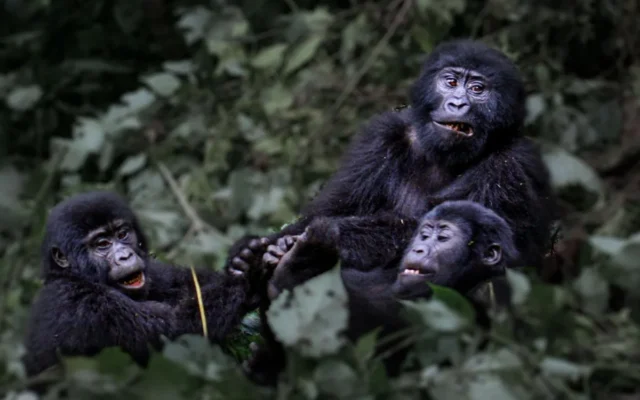
Few wildlife experiences are as heartwarming as watching baby mountain gorillas during a trek in Bwindi Impenetrable National Park. Tiny infants tumble through vegetation, climb over sleeping adults, chase siblings, and curiously inspect visitors from a safe distance beside their mothers. Their playful behavior is entertaining, but it is also essential training for survival.
This guide explains how baby gorillas grow from newborn infants into confident members of the family.
Birth of a Baby Gorilla
Mountain gorillas are born after about 8½ months of pregnancy. Newborns weigh around 2 kilograms (4–5 pounds).
First Months of Life
Babies spend nearly all their time clinging to their mothers. Mothers carry infants on their chest initially.
Riding on Mother’s Back
Around several months of age, infants begin riding on their mother’s back while she travels.
Learning Through Play
Play develops: Balance. Strength. Coordination. Social skills.
Climbing Lessons
Young gorillas climb small shrubs before attempting taller vegetation. Falling is common—and usually harmless.
Wrestling With Siblings
Juveniles wrestle constantly. These games teach boundaries and physical skills.
Curious Personalities
Babies investigate insects, leaves, branches, and other gorillas. Curiosity is an important learning tool.
When Babies Start Eating Plants
They gradually sample vegetation while continuing to nurse.
Mothers as Teachers
Infants learn feeding behavior by watching mothers closely.
Silverbacks and Babies
Silverbacks often tolerate babies climbing all over them.
Danger in the Forest
Potential risks include illness, injury, and accidents—not predators.
Growing Independence
By age three to four, youngsters become much more independent.
Teenage Gorillas
Older juveniles become energetic climbers and explorers.
Why Visitors Love Baby Gorillas
Infants often provide the funniest moments during gorilla trekking.
Gorilla Parenting
Mothers invest years raising each infant. This slow reproduction is one reason conservation is so important.
What Happens if an Infant Gets Lost?
The family quickly responds through vocal communication and movement.
Can Visitors Touch Babies?
Never. Even if a baby approaches, visitors must remain still and follow ranger instructions.
Conservation Success Stories
Increasing numbers of infants are encouraging signs of mountain gorilla population recovery.
Baby Gorillas and Tourism
Responsible tourism helps fund conservation that protects future generations of baby gorillas.
Conclusion
Watching baby mountain gorillas grow, climb, wrestle, and learn inside Bwindi is one of the most unforgettable experiences on any Uganda safari. Their playful behavior hides an extraordinary learning process that prepares them for life in one of Africa’s oldest rainforests.
 Read