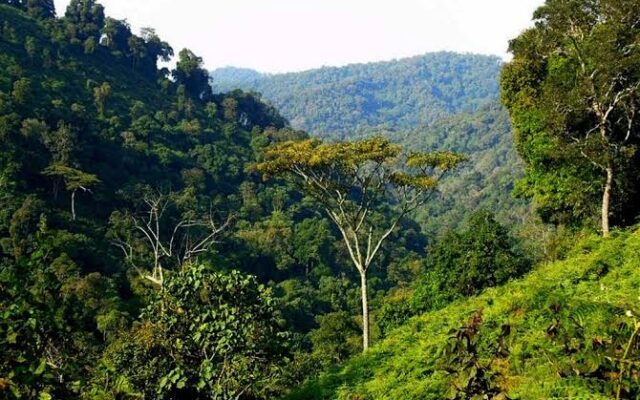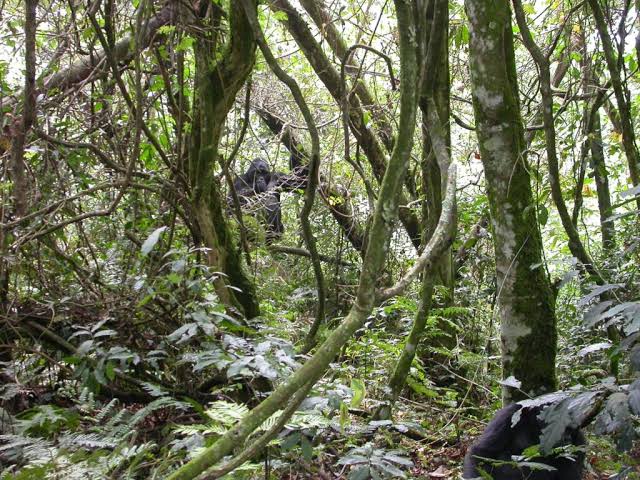
For many travelers planning a gorilla safari in Uganda, Bwindi is a name they know long before they ever see the forest. Photographs usually show mountain gorillas sitting among green leaves, mist hanging over distant hills, or trekkers following narrow trails through thick vegetation. But these images only provide fragments of the experience. So, what does Bwindi Impenetrable Forest actually look like inside?
The answer is more complex than simply saying it is a dense rainforest. Bwindi is a layered landscape of enormous trees, tangled vines, ferns, streams, ridges, valleys, bamboo, shrubs and dark green undergrowth. Some sections feel open and surprisingly easy to walk through, while others immediately explain why the word “Impenetrable” became attached to the forest. More importantly, Bwindi feels alive.
Introduction
The forest changes with elevation, weather, sunlight and terrain. You can begin a trek walking through relatively open vegetation, descend into a shadowy valley, climb a steep hillside covered in vines and suddenly emerge onto a ridge where distant mountains are visible through gaps in the canopy. Here is what you can realistically expect when you step inside Bwindi Impenetrable Forest.
Bwindi Is Much More Than a Wall of Trees
From outside the national park, Bwindi often appears like an enormous green wall covering the hills. The boundary can be remarkably distinct in certain areas. Cultivated farmland, villages and tea plantations occupy landscapes near the protected forest, and then suddenly the vegetation becomes taller, darker and considerably denser. Once you enter, however, the forest reveals its complexity.
Bwindi is not one continuous tunnel of vegetation. The environment changes repeatedly as you trek. Some trails pass beneath towering trees where the canopy blocks much of the direct sunlight. Other sections contain lower vegetation, shrubs and thick tangles of vines. There are places where you may walk comfortably along an established trail and places where trackers have to create a temporary path through vegetation to reach the gorillas.
This variation is one of the things that makes gorilla trekking in Bwindi so interesting.
Ancient Trees Tower Above the Forest
One of the first things many visitors notice is the height of the trees. Bwindi is an ancient forest, and its vegetation reflects that history. Large trees rise high above trekkers, their trunks sometimes covered in moss, lichens, vines and climbing plants. Looking upward can reveal several layers of vegetation. At ground level there may be herbs, ferns and shrubs. Above them are smaller trees and young plants competing for sunlight. Higher still, mature trees create the forest canopy. Occasionally shafts of sunlight penetrate through openings in the canopy and illuminate sections of the forest floor. When mist or light rain is present, the atmosphere becomes even more dramatic.
The Forest Floor Can Be Surprisingly Dark
The dense canopy means that sunlight does not always reach the ground easily. Even during daytime, parts of Bwindi can feel dim. The forest floor may be covered with fallen leaves, twigs, decomposing vegetation and exposed roots. In wetter areas, the soil can become soft and muddy. This is one reason sturdy hiking boots are strongly recommended for gorilla trekking. The darkness also creates a striking contrast when you enter a clearing or reach a more open ridge. Suddenly the landscape becomes brighter and the surrounding hills become visible.
Expect Ferns Everywhere
Ferns are one of the characteristic features of the Bwindi landscape. They appear beside trails, underneath trees and across damp slopes. Some are small plants close to the ground, while others grow considerably larger. Combined with moss-covered trees and vines, they contribute to the prehistoric appearance that visitors sometimes associate with the forest. Standing among these plants can make Bwindi feel incredibly old. And in geological and ecological terms, it is. Bwindi’s forests survived major climatic changes that affected many other forests in Africa, contributing to the extraordinary biodiversity found here today.
Vines and Tangled Vegetation Explain the Word “Impenetrable”
There are sections of Bwindi where the vegetation becomes extremely thick. Vines twist around trees. Shrubs overlap. Branches extend across potential routes. This is particularly noticeable when trackers leave established trails while following a gorilla family. Mountain gorillas do not follow tourist paths. If the gorillas have moved into dense vegetation, trackers and rangers may need to carefully open a route through the forest. This can involve stepping over fallen branches, ducking beneath vines and navigating vegetation that seems to occupy every available space. At these moments, the name Bwindi Impenetrable Forest suddenly makes complete sense.
Bwindi Is a Landscape of Hills and Valleys
Visitors sometimes imagine gorilla trekking as walking through a relatively flat rainforest. Bwindi is very different. The national park occupies a mountainous landscape in southwestern Uganda, and trekking can involve substantial changes in elevation. You may descend into a valley and then climb a steep hillside shortly afterward. Some slopes are gradual. Others can be demanding, particularly after rain when the ground becomes slippery. The terrain is one reason the length and difficulty of a gorilla trek cannot be predicted perfectly in advance. The gorillas may be relatively close to the starting point, or they may be feeding across a distant ridge.
Small Streams Run Through the Forest
Water is another important part of Bwindi’s environment. Depending on your trekking route, you may encounter small streams, wet valleys and drainage channels running beneath the forest canopy. These waterways help support the lush vegetation. After rainfall, water can flow quickly through some sections, while muddy patches become more common along trails. The sound of running water mixed with bird calls and insects contributes to the atmosphere of the forest.
Mist Can Completely Transform Bwindi
Bwindi is particularly beautiful when mist settles over the hills. Early mornings can reveal layers of forest-covered mountains disappearing gradually into clouds. Inside the forest, mist softens the landscape and creates moisture on leaves, branches and spider webs. Then the weather may change. Sunlight breaks through the canopy, mist lifts from the valley and previously hidden hills become visible. These rapid changes are typical of mountainous tropical environments. For photographers, they create constantly changing conditions.
The Forest Is Full of Sounds
Understanding what Bwindi looks like also means understanding what it feels like to stand inside it. The forest is rarely completely silent. Birds call from the canopy. Insects create background noise. Branches move in the wind. Monkeys may travel through trees overhead. Trackers sometimes pause to listen carefully for gorilla vocalizations or movement. Then there are moments when the forest becomes unusually quiet. During these pauses, visitors often become much more aware of how far they have traveled into the rainforest.
You May See Other Primates
Mountain gorillas are the main attraction, but Bwindi supports numerous other species. Depending on the area and luck, visitors may encounter monkeys moving through the trees. These sightings can happen quickly. A branch shakes overhead, leaves move, and suddenly a monkey crosses through the canopy before disappearing again. Bwindi also contains an extraordinary diversity of birds, butterflies and smaller forest animals. Much of this wildlife is easier to hear than to see because of the dense vegetation.
Then the Trackers Find the Gorillas
Perhaps the most dramatic visual transformation during a gorilla trek happens when trackers finally locate the gorilla family. At first, you may see nothing. A tracker points toward vegetation. You look carefully. Then a dark shape becomes visible between leaves.
Suddenly you realize you are looking at a mountain gorilla. Sometimes the first gorilla is partly hidden. At other times, a silverback may be sitting in relatively open vegetation. The forest that previously seemed chaotic begins to make sense as gorillas move through it effortlessly. They pull branches toward themselves, climb trees, sit among vines and disappear into vegetation that would be extremely difficult for humans to cross.
Seeing gorillas within their natural habitat is very different from simply seeing photographs of them. The forest becomes part of the encounter.
Gorilla Habitat Can Be Extremely Dense
Do not expect every gorilla encounter to happen in an open clearing. Mountain gorillas frequently feed among thick vegetation. You may initially see only a face through leaves or the enormous back of a silverback behind shrubs. Guides and trackers carefully position visitors where viewing is possible while respecting the gorillas and conservation regulations. Sometimes gorillas move into a more open area. At other times, the encounter remains surrounded by vegetation. This unpredictability is part of the authenticity of gorilla trekking. You are entering their habitat rather than bringing them into yours.
Bwindi Looks Different in Every Trekking Sector
Bwindi gorilla trekking takes place from four principal sectors: Buhoma, Ruhija, Rushaga and Nkuringo. Although all are part of the same broader forest ecosystem, the landscapes can feel different. Buhoma is famous for its long-established tourism infrastructure and forested valleys. Ruhija sits at higher elevation and offers beautiful mountainous scenery. Rushaga provides access to several habituated gorilla families in southern Bwindi. Nkuringo is associated with dramatic hills and spectacular views across southwestern Uganda. Your experience of the forest therefore depends partly on where you trek.
Is Bwindi Really Impenetrable?
Not everywhere. There are established trails that make movement through parts of the forest relatively straightforward. But leave those trails while following gorillas and the name becomes much easier to understand. Historically, the dense combination of steep terrain, vines, shrubs and forest vegetation made crossing the region extremely difficult.
Even today, experienced trackers sometimes need machetes to carefully open passages through vegetation. For visitors, this is not a manicured nature walk. It is a genuine rainforest experience.
What Should You Wear Inside Bwindi?
Because of the vegetation and terrain, appropriate clothing makes a significant difference. Long trousers help protect your legs from vegetation and insects. A long-sleeved shirt provides additional protection. Waterproof hiking boots with good grip are highly recommended. Garden gloves can be useful when you need to steady yourself against vegetation or branches.
A lightweight rain jacket should remain accessible because rainfall can occur unexpectedly. Many travelers also tuck their trousers into long socks or gaiters to reduce the chance of insects entering their clothing.
Should You Hire a Porter?
A porter can make exploring Bwindi considerably easier. Porters can carry your backpack, water and camera equipment while also helping you negotiate difficult sections of the trail. On steep slopes, having someone available to offer a steady hand can be surprisingly valuable. Hiring a porter also directly supports people living in communities surrounding the national park.
Even physically fit travelers often finish their trek saying that hiring a porter was a good decision.
What Makes Bwindi So Beautiful?
Bwindi’s beauty is not based on perfect viewpoints or carefully maintained gardens. It comes from complexity. The forest feels wild. Plants grow on plants. Vines climb enormous trees. Streams cut through valleys. Mist moves between ridges. Trails disappear beneath leaves.
And somewhere inside this enormous green landscape, mountain gorillas are moving through the vegetation. That knowledge changes the experience of walking through Bwindi. Every broken branch becomes interesting. Every sound attracts attention. Every movement in the vegetation makes you wonder what might be nearby.
Experience Bwindi Beyond the Photographs
Photographs can show the trees, gorillas and mountains, but they cannot fully reproduce the atmosphere inside Bwindi Impenetrable Forest. You need to hear the birds, feel the humidity, negotiate the slopes and watch the trackers interpret signs in the vegetation. Then, after walking through one of Africa’s most extraordinary forests, you may suddenly find yourself standing only a short distance from a mountain gorilla family.
That combination of rainforest adventure and wildlife encounter is what makes Bwindi one of Uganda’s most remarkable destinations. A well-planned Uganda gorilla safari can combine Bwindi with Queen Elizabeth National Park, Kibale Forest, Lake Bunyonyi or other destinations, allowing you to experience much more of southwestern Uganda before or after your trek.

 Read