

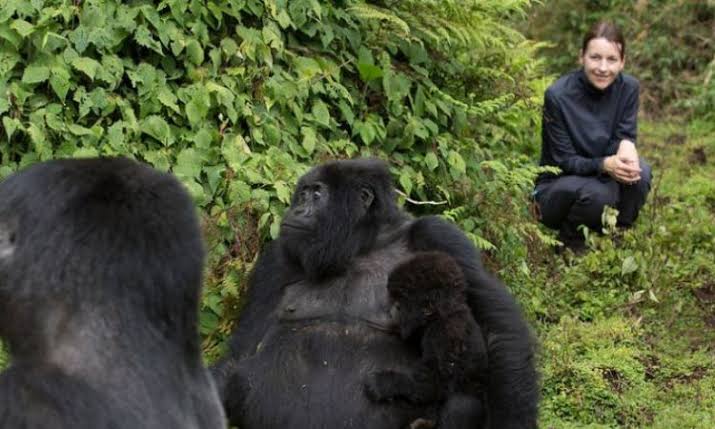
Imagine standing in Uganda’s Bwindi Impenetrable National Park when a huge silverback suddenly gets up and begins moving in your direction. Your instincts may immediately tell you one thing: Run. But during a professionally guided gorilla trek, that is precisely what you should not do.
Understanding why you should never run from a gorilla is an important part of preparing for gorilla trekking. Mountain gorillas are usually calm around properly managed trekking groups, but they remain wild animals, and visitors must behave predictably and follow ranger instructions throughout the encounter. If a gorilla approaches or displays, running can unnecessarily complicate the situation.
Introduction
Instead, remain calm, stay with the trekking group and listen carefully to your ranger.
Why Is Running Such a Natural Reaction?
Humans have an instinctive fight-or-flight response. When something large suddenly moves toward us, our brains can react before we have time to think rationally. A mature silverback intensifies that response. He is powerful. His shoulders are enormous.
His movements can be fast. He may beat his chest or vocalize. In a dense forest where visibility is limited, a dramatic display can feel even more intimidating. Your brain may immediately interpret the situation as: “Get away.” This is why understanding the rules before entering the forest matters. If you know what to expect, you are more likely to respond correctly.
Why You Should Never Run From a Gorilla During a Trek
Running creates sudden, unpredictable movement. Around wild animals, predictable behavior is preferable. You want the gorilla to perceive the trekking group as calm, non-threatening and controlled. A person suddenly sprinting through vegetation introduces confusion into that situation. It can also make it difficult for guides to manage the group.
The correct response is therefore generally to remain calm and follow the specific directions given by the ranger.
Running Can Make a Calm Situation More Complicated
Suppose a silverback stands up and walks toward your group. He may not be threatening you at all. Perhaps he wants to move to another feeding location. Maybe another family member has moved ahead. Perhaps the trail where you are standing happens to be his preferred route.
If you panic and start running, you have transformed a controlled wildlife encounter into an unpredictable situation. This is why tourists should not try to interpret gorilla intentions themselves. The ranger observes the gorilla and decides what visitors should do.
A Gorilla Approaching You Is Not Automatically an Attack
This is one of the most important principles to understand. Gorillas move around constantly. They feed. They rest. They follow family members.
They change locations. They sometimes pass through areas where tourists happen to be positioned. Seeing a large silverback moving toward you can feel threatening even when he is simply walking from one place to another. Wait for the ranger’s assessment. Do not assume that proximity equals aggression.
Mountain Gorillas Are Wild but Habituated for Tourism
Tourist visits are conducted with habituated gorilla families. Habituation is a lengthy process through which gorillas gradually become accustomed to predictable, controlled human presence. This allows researchers, conservation personnel and ranger-led tourist groups to spend limited periods near them.
The International Gorilla Conservation Programme notes that threatening behavior toward visitors is uncommon and that mountain gorillas generally tolerate properly managed tourism encounters. But habituation does not transform them into tame animals. They still make their own decisions. Visitors must therefore respect their space and behavior.
What Should You Do Instead of Running?
The first thing is to listen. Your ranger may give instructions such as remaining still, lowering your body or slowly changing position. Different situations require different responses. There is no advantage in memorizing dramatic “survival techniques” from social media and then trying to use them independently during an actual trek. You will already have a professional ranger with you.
Follow that ranger.
Stay With Your Group
Do not separate yourself. Trekking groups are deliberately managed together. Running away can leave you isolated, create confusion and make it more difficult for guides to control the situation. Stay where directed. If movement is necessary, the ranger will guide you.
Avoid Sudden Body Movements
Even if you do not run, sudden dramatic movement should be avoided. Do not wave your arms. Do not jump behind another visitor. Do not throw objects. Do not attempt to make yourself appear larger. You are not trying to challenge or intimidate the gorilla. Calm, controlled behavior is the objective.
Never Try to Challenge a Silverback
A gorilla trek is not a test of courage. Do not beat your chest back at a silverback. Do not shout. Do not aggressively stare at him. Do not move toward him to demonstrate that you are unafraid. A mature silverback is the dominant adult male within his family and should be treated with respect. You have entered his habitat. Your role is observation.
Running Can Be Dangerous Because of the Terrain
There is another practical reason why you should never run from a gorilla: The forest itself. Bwindi Impenetrable National Park is mountainous and densely vegetated. Trekking routes can include:
Attempting to sprint through this environment in panic could easily result in a fall. The International Gorilla Conservation Programme has noted that ordinary trekking hazards such as falls on steep trails are generally a more realistic concern for visitors than injury from a gorilla. Good behavior therefore protects you from both wildlife-related problems and terrain-related injuries.
What If a Silverback Charges?
Stay calm and focus on your ranger. A silverback display can appear spectacularly dramatic. Chest beating, vocalizing, rushing forward or striking vegetation can all look frightening to someone unfamiliar with gorillas. But displays are part of gorilla communication. Do not automatically assume that every dramatic behavior means an attack is inevitable.
Your ranger may ask you to stay still, lower yourself or avoid direct staring. Follow those instructions.
What If the Gorilla Comes Extremely Close?
Visitors are expected to maintain the distance set by Uganda Wildlife Authority regulations. UWA’s published trekking rules currently specify approximately 10 meters between visitors and gorillas whenever practical. However, gorillas sometimes move closer themselves. If that happens, do not attempt to maintain distance by suddenly running backward. Follow the ranger’s directions.
You may simply need to remain still and allow the gorilla to pass. A few seconds of patience can turn an intimidating moment into one of the most extraordinary experiences of your safari.
What If a Gorilla Walks Directly Behind You?
Do not panic. Remain calm and avoid suddenly turning or jumping away. Listen to the guide. A gorilla may simply be passing. Visitors sometimes discover that staying still is much easier once they realize the animal has no interest in interacting with them.
The gorilla continues walking, begins feeding somewhere else and the situation returns to normal.
Never Try to Touch a Gorilla
Close proximity does not give you permission to make contact. Do not reach toward the animal. Do not put out your hand. Do not attempt to pat a juvenile. Do not touch a silverback as he passes.
Mountain gorillas are vulnerable to some human illnesses, which is one reason tourism rules emphasize distance and responsible visitor behavior. Watching is enough.
Why Disease Prevention Matters
Gorilla trekking rules are designed not only for visitor safety but also for gorilla conservation. UWA requires visitors who are ill with infectious conditions to avoid visiting the gorillas and enforces separation between people and the animals. This is important because great apes can be susceptible to pathogens transmitted by humans. A visitor’s responsibility therefore extends beyond personal safety.
Your behavior contributes to protecting the gorillas you have traveled to see.
What About Young Gorillas?
Young gorillas can sometimes appear curious. A juvenile may play near the trekking group or move unexpectedly close. The situation can feel less intimidating than an approaching silverback, but the same principles apply. Do not encourage the youngster. Do not attempt to play.
Do not run if it suddenly approaches. Remain calm and let the ranger manage the interaction. Remember that other members of the gorilla family are nearby.
What If You Feel Too Frightened to Stay Still?
Focus on the ranger. The advantage of organized gorilla trekking is that you are never expected to manage wildlife encounters by yourself. Your guide has experience with the family. Listen to his or her voice rather than concentrating only on the approaching animal. Control your breathing.
Make deliberate rather than sudden movements. Most intense moments pass quickly. A gorilla that seemed to be walking directly toward you may simply cross the trail and continue feeding a few meters away.
How Rangers Prepare Visitors
Before entering the forest, visitors attend a briefing. This is the time to learn expected behavior around mountain gorillas. Pay attention even if you have watched many gorilla trekking videos online. Official procedures and the ranger’s on-the-ground instructions matter more than internet advice.
The Uganda Wildlife Authority requires trekkers to follow tracking procedures that may be revised periodically, so travelers should always treat their actual briefing as the definitive guidance for that day’s trek.
Why Online Gorilla Videos Can Be Misleading
Short social-media videos often show spectacular moments without enough context. You may see a silverback walk past someone. A juvenile may brush against a tourist. A gorilla may rush through vegetation. What the video may not show is the ranger standing nearby, the behavioral instructions given before the encounter or the events that happened immediately before and after the clip.
Do not assume that because someone in a video remained near a gorilla, you should reproduce the situation. Every encounter is different.
Can You Run If the Ranger Tells You To?
Follow the ranger. That is the overriding rule. Articles such as this can explain general principles, but no webpage can see the gorilla standing in front of you. The professional guide present during the encounter has the information required to manage that specific situation. If an unusual emergency requires a different response, follow the ranger rather than an online checklist.
Does Understanding Gorilla Behavior Make Trekking Less Scary?
Usually, yes. The more you understand the experience, the easier it becomes to remain calm. You learn that gorillas spend much of their day feeding and resting. You see juveniles playing. You watch mothers caring for infants.
You observe the silverback monitoring his family. After several minutes with them, many visitors stop focusing on their physical strength and begin noticing their complex social behavior instead. That transformation is one of the most memorable parts of gorilla trekking.
Respect Is More Important Than Fear
Mountain gorillas deserve respect, but the goal is not to make travelers terrified of them. They are extraordinarily powerful wild animals, but gorilla tourism exists because habituated families can tolerate limited, carefully controlled human presence. Responsible visitors cooperate with that system. They behave quietly. They respect distance.
They listen to guides. They do not attempt physical interaction. And they remain calm when animals move unexpectedly.
Preparing Yourself Before the Trek
Before your Uganda gorilla safari, mentally rehearse the simplest rules. Listen to your guide. Stay with your group. Remain quiet. Avoid sudden movements.
Never touch a gorilla. Do not use flash photography. Do not deliberately move closer than permitted. And if a gorilla approaches, do not automatically run. Knowing these principles before the encounter means you are less likely to panic when something unexpected happens.
What Makes These Close Encounters So Extraordinary?
There is a powerful contradiction at the heart of gorilla trekking. You are standing near an animal capable of extraordinary physical strength, yet much of the encounter consists of watching remarkably peaceful everyday behavior. A silverback might calmly strip leaves from vegetation. A female may groom another gorilla. An infant may cling to its mother.
A juvenile may roll down a slope. Then suddenly the silverback stands and walks past. Your heart races. Seconds later, he sits down and begins eating again. That unpredictability reminds you that you are witnessing genuinely wild animals.
Final Answer: Why You Should Never Run From a Gorilla
So, why should you never run from a gorilla during trekking? Because running introduces sudden, unpredictable behavior into a carefully managed wildlife encounter. It can separate you from the group, make the situation harder for rangers to manage and expose you to additional hazards on steep or slippery forest terrain. An approaching gorilla is also not automatically attacking. It may simply be moving through its habitat.
If a gorilla or silverback approaches or displays, remain calm and follow the ranger’s instructions. Do not run. Do not scream. Do not challenge the animal. Do not attempt to touch it.
Do not let your camera distract you from what the guide is saying. Gorilla trekking works because visitors enter the forest on the gorillas’ terms. You are not there to overpower, escape from or interact physically with these magnificent animals. You are there to observe them.
And sometimes the most memorable thing you can possibly do when a huge mountain gorilla begins walking toward you is also the simplest: Remain calm, listen to your ranger and let the gorilla pass.

 Read
