

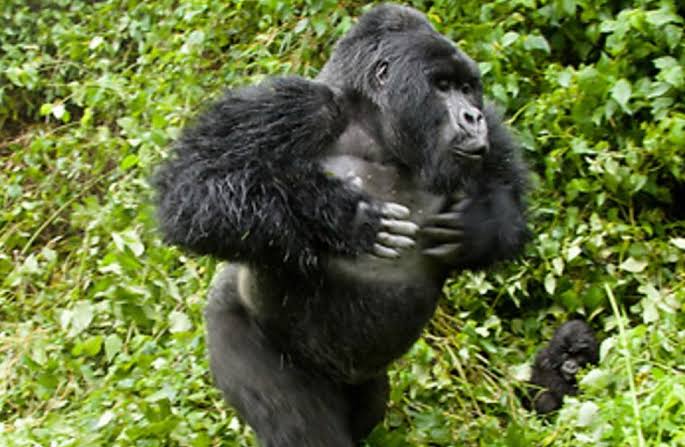
Standing near a fully grown mountain gorilla is one of the most powerful wildlife experiences in Africa. A mature silverback is enormous, muscular and capable of impressive displays of strength. It is therefore understandable that travelers preparing for Uganda ask what to do if a silverback charges during a gorilla trek.
The most important advice is straightforward: Do not run. Stay calm and follow the ranger’s instructions immediately. A charging or displaying silverback can look terrifying, but dramatic behavior does not automatically mean the gorilla intends to attack. Mountain gorillas communicate through posture, vocalizations, movement and displays. Experienced rangers understand those signals and know how visitors should respond.
Introduction
Your job is not to prove that you are brave or to figure out what the silverback is thinking. Your job is to listen to your guide.
Do Silverback Gorillas Charge Tourists?
The possibility should be understood in context. The gorilla families visited during trekking are habituated to carefully controlled human presence. The International Gorilla Conservation Programme says mountain gorillas generally do not react aggressively to visitors and threatening behavior toward tourists is uncommon when trekking rules are followed. However, mountain gorillas remain wild animals.
A silverback may display if he feels uncomfortable, if family dynamics change, if another gorilla causes tension or if something unexpected occurs nearby. Such behavior should always be taken seriously.
What Does a Silverback Charge Look Like?
A silverback display can involve several behaviors. Depending on the circumstances, the gorilla may vocalize loudly, beat its chest, move rapidly, strike vegetation, throw or drag vegetation, or move toward another individual. To a first-time visitor, almost any dramatic silverback movement can look like the beginning of an attack. But gorilla communication is complex. A display may be designed to communicate dominance or create space without the animal intending physical contact. That is why you should never independently decide whether a charge is “real” or a bluff. Let the ranger interpret the behavior.
Why Do Silverbacks Display?
The silverback is normally the dominant adult male within a mountain gorilla family. His responsibilities include maintaining group cohesion and protecting family members. Displays can therefore have many meanings. A silverback may react to tension within the group. He may respond to another gorilla.
He may communicate dominance. He may be uncomfortable with something happening around him. Sometimes energetic movement may have little to do with tourists at all. Visitors who do not understand gorilla behavior can easily assume every dramatic action is directed toward them. This is another reason experienced guides are essential.
Rule Number One: Never Run
Running is one of the worst reactions a frightened visitor can have. People naturally want to move away from something that appears threatening. But the forest is not a normal human environment. Sudden movement can complicate an encounter and may trigger further attention. Running also creates practical dangers. Bwindi’s terrain can be steep, muddy, covered in roots and surrounded by dense vegetation. A panicked visitor could fall or collide with other trekkers. Instead, remain as calm and controlled as possible. Listen for your ranger’s instructions.
Rule Number Two: Do Not Scream
A charging silverback may cause a visitor to gasp or panic. Try to remain quiet. Shouting, screaming or making sudden loud noises can add unnecessary tension. Gorilla trekking groups are expected to behave quietly around the animals even during normal encounters. That becomes even more important when a silverback is displaying. Your ranger may communicate quietly and firmly with the group. Pay attention.
Rule Number Three: Follow the Ranger’s Body-Language Instructions
Depending on the circumstances, your guide may instruct visitors to lower themselves, remain still, avoid direct staring or slowly reposition. Follow those instructions exactly. Do not decide that standing upright gives you a better view. Do not step forward for photographs. Do not attempt to imitate the ranger’s gorilla sounds unless specifically instructed—which tourists generally should not do. The guides work with these gorilla families repeatedly. They understand behaviors that visitors may interpret incorrectly.
Should You Look a Charging Gorilla in the Eyes?
Avoid deliberately staring down a silverback. You will naturally see and monitor the animal, but sustained confrontational eye contact can carry different meaning in animal communication. If your ranger instructs you to lower your eyes or adopt a particular posture, do so. You are not trying to establish dominance. The correct message is the opposite. You want your body language to remain calm and non-threatening.
What If the Silverback Keeps Coming Toward You?
Remain with your group and follow instructions. A silverback may move closer before turning away or passing through. Do not suddenly break away from the group. Do not turn and sprint. Do not raise your arms to make yourself look larger. Do not throw anything. Let the ranger control the encounter. Your instinct may tell you to “do something.” Often, calmness and predictability are far more useful than dramatic action.
What If the Silverback Is Only a Few Meters Away?
Remain calm. Although visitors are expected to maintain the official viewing distance—currently around 10 meters under UWA trekking rules—the gorillas themselves sometimes close that distance. You cannot force a wild gorilla to remain exactly 10 meters away. If the animal approaches, follow your ranger’s directions and avoid initiating contact. This is particularly important with a silverback. His size can make proximity feel far more intense than the same distance from a juvenile.
Don’t Try to Photograph the Charge at All Costs
A dramatic silverback display might seem like the photograph or video of a lifetime. But safety and responsible behavior come first. Your camera should never distract you from ranger instructions. If a ranger tells you to lower your camera, do so. If you need both hands to steady yourself or move carefully, forget the photograph. There will be other opportunities for pictures. Your primary responsibility is to avoid disturbing the gorillas.
Should You Beat Your Chest Back at a Gorilla?
No. You are visiting the gorilla’s territory, not participating in a dominance contest. Do not imitate dramatic behaviors in an attempt to entertain other tourists or produce a memorable video. Chest beating has communicative significance among gorillas. Visitors should observe natural behavior rather than trying to participate in it. Similarly, avoid copying vocalizations unless a ranger specifically directs otherwise.
Can a Silverback Actually Hurt a Human?
Mountain gorillas are tremendously strong animals. That is precisely why rules surrounding gorilla trekking must be taken seriously. However, the relevant question for visitors is not whether a gorilla possesses the physical strength to cause injury. Clearly it does. The relevant question is how encounters with habituated families are managed. Visitors enter the forest with professional guides, track known habituated groups and receive a mandatory behavioral briefing. These safeguards are designed to minimize risk while protecting both gorillas and people.
Habituation Does Not Mean Domestication
This point deserves emphasis. A habituated silverback is not a trained animal. He does not perform. He has not been domesticated. He simply tolerates the limited, controlled presence of humans because his family has gradually become accustomed to researchers and ranger-led visitors.
Travelers should never let calm gorilla behavior create false confidence. Respect remains essential from the first minute of the encounter to the last.
What Rangers Do During a Silverback Display
Rangers monitor gorilla behavior throughout the viewing period. They may recognize changes before tourists notice anything unusual. When a silverback becomes alert or begins displaying, the ranger may quickly control the visitors’ position and behavior. Guides can use their knowledge of the individual animal and family dynamics to assess what is happening. That is one of the great advantages of visiting habituated gorillas with professionals rather than attempting to encounter wildlife independently.
Why Staying Together Matters
Do not separate yourself from the trekking group during an intense encounter. Visitors are easier for rangers to manage when they remain together. A person stepping suddenly to one side to get a photograph can create unnecessary movement. Stay where the guide places you. If repositioning is necessary, the ranger will explain what to do.
What If You Panic?
Fear is an understandable reaction. A silverback may weigh several times as much as an average person and can appear enormous at forest level. Try to focus on the ranger rather than the gorilla. Listen to the instructions. Control your breathing. Avoid sudden movement. Remember that the guide has likely observed the family many times before and understands the silverback’s behavior far better than you do.
Is Gorilla Trekking Dangerous?
Any wilderness activity has some level of risk. During gorilla trekking, however, the most common physical challenges are generally associated with the forest environment rather than hostile gorilla behavior. Trails may be steep. Rain can make paths slippery. Roots and vegetation can make footing difficult.
Travelers therefore benefit from good hiking boots, sensible fitness and porter assistance. Encounters themselves are carefully regulated.
Preventing Problems Before They Happen
Good trekking etiquette reduces the likelihood of creating unnecessary tension. Always attend the briefing carefully. Follow the required viewing distance. Keep voices low. Never feed gorillas. Do not touch them. Avoid blocking an animal’s movement. Never deliberately approach a silverback. Do not use flash photography. UWA currently limits ordinary viewing time with a gorilla family to one hour and requires strict visitor behavior around the animals.
What If a Gorilla Is Between You and the Exit?
Don’t attempt to push past it. Remain where you are and let the guide choose the appropriate route or wait until the gorilla moves. Gorillas control their own movement through the forest. Tourism groups must adapt. Patience is one of the most important skills during a trek.
Understanding the Silverback’s Role
Knowing more about silverbacks can make their behavior less frightening. A dominant silverback is central to the social structure of his group. He may lead movements between feeding and resting locations, intervene in disputes and protect the family. His dramatic appearance and strength are therefore part of a much more complex social role. Watching how younger gorillas interact with him can be particularly fascinating.
A huge male capable of an intimidating display may moments later sit peacefully while juveniles play nearby. That contrast is one of the remarkable aspects of mountain gorilla behavior.
A Charge Does Not Mean Your Trek Has Gone Wrong
Wildlife tourism is valuable precisely because animals are allowed to behave naturally. A silverback is not required to sit quietly facing cameras for an hour. He may move. He may vocalize. He may display. The important thing is that visitors respond responsibly. The experience should always remain centered on observing gorillas rather than controlling them.
Final Answer: What to Do If a Silverback Charges
If you are wondering what to do if a silverback charges during gorilla trekking, remember these essentials: Stay calm. Do not run. Do not scream. Do not throw anything.
Do not deliberately stare the gorilla down. Do not attempt to touch it. Do not make sudden movements for photographs. Above everything else, follow your ranger’s instructions immediately. Mountain gorilla trekking is conducted with habituated families and experienced professional guides. Dramatic silverback behavior can certainly make your heart beat faster, but it does not automatically mean an attack is taking place.
Respect the animal, remain predictable and let the people who understand the gorillas manage the situation. A silverback’s extraordinary strength is part of what makes seeing one in the wild so unforgettable. The goal is not to fear that strength, challenge it or test it. The goal is to witness it respectfully from within one of Africa’s most remarkable forests.

 Read
