
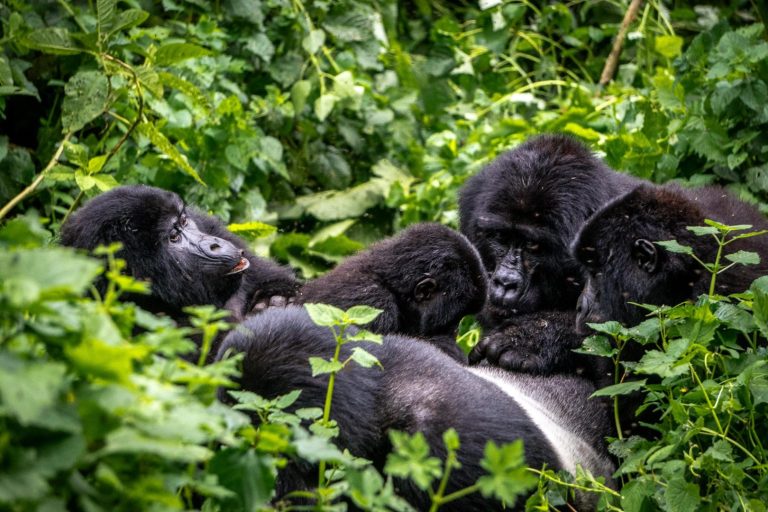
The Umubano Gorilla Family is one of the habituated mountain gorilla groups associated with Volcanoes National Park in Rwanda. Its name means togetherness or living together in Kinyarwanda, reflecting the social bonds that define mountain gorilla family life.
Umubano is historically linked to the Amahoro family, making its story particularly useful for understanding how mountain gorilla groups form and change.
Introduction
Like many gorilla families, Umubano developed after social changes within a larger group. Such events are a natural part of gorilla society and illustrate why family composition is never static.
For travelers trekking gorillas in Rwanda, an encounter with Umubano offers the same extraordinary opportunity provided by other habituated families: a carefully managed visit with wild mountain gorillas in their natural environment.
How the Umubano Gorilla Family Formed
Umubano is closely connected to the history of the Amahoro group. Mountain gorilla families may contain more than one mature male. As younger silverbacks grow stronger, competition for leadership can increase.
Some eventually leave their natal group alone, while others may depart with females and establish independent families. Umubano emerged through this type of natural social change. The formation of a new group does not mean that the original family has necessarily collapsed.
Instead, it can represent the normal expansion and diversification of the gorilla population. Such events are closely monitored because they provide valuable information about mountain gorilla behavior.
What Does Umubano Mean?
The Kinyarwanda word Umubano refers to togetherness, connection or coexistence. It is an appropriate name because gorilla life revolves around strong family relationships. Mountain gorillas rely on the social group for security and development.
Infants learn behavior from their mothers and other family members. Young gorillas play together and gradually develop social skills. Adult females maintain important relationships within the group, while the dominant silverback provides protection and leadership.
Watching these interactions is one of the great rewards of gorilla trekking.
Where Is Umubano Found?
The Umubano family lives within Volcanoes National Park in northern Rwanda. The park protects the Rwandan section of the Virunga Massif. This dramatic region contains volcanic mountains, bamboo forests and high-altitude vegetation.
Gorilla home ranges are not defined by tourist trails. Families move daily while feeding and resting. Trackers therefore monitor their movements and locate them before or during each day's tourism activities. Visitors should not expect Umubano to remain in exactly the same area from one trek to the next.
How Difficult Is the Umubano Trek?
Trekking difficulty varies according to the family's current location. Some days may involve a relatively manageable walk. On others, the gorillas may have moved farther uphill or into denser vegetation.
The terrain in Volcanoes National Park can include steep slopes, mud, thick vegetation and uneven forest floor. Rain can make conditions considerably more challenging. Reasonable fitness is therefore helpful. Visitors should prepare for several hours of walking even if the eventual trek proves shorter.
Starting the Trek
A typical trekking day begins at a lodge near Kinigi or Musanze. After breakfast, travelers are transferred to the Volcanoes National Park headquarters. Park staff conduct registration and explain the rules governing gorilla encounters.
Visitors are then allocated to gorilla families. Your group travels to the relevant starting point before entering the forest with professional guides and trackers. The walk itself is part of the experience.
Along the way, visitors see Rwanda's volcanic scenery, farmland near the park boundary and eventually the dense habitat used by mountain gorillas.
Meeting the Umubano Gorilla Family
The first sight of a wild mountain gorilla is often difficult to describe. A tracker may quietly point toward vegetation before the shape of a silverback, female or juvenile becomes visible. Once the family is located, visitors observe the gorillas under carefully controlled conditions.
The animals may be feeding, resting, moving slowly through vegetation or interacting socially. Juveniles often provide lively moments. Young gorillas may climb plants, wrestle or approach older family members.
Infants remain closely connected to their mothers. Silverbacks typically appear powerful yet composed, regularly monitoring the group's surroundings.
Gorilla Social Behavior
An encounter with Umubano gives travelers an opportunity to see the importance of social relationships. Grooming reinforces bonds. Play helps young gorillas develop coordination and social skills.
Mothers demonstrate strong protective behavior toward infants. The dominant silverback maintains group stability and responds to potential threats. Even apparently simple moments, such as several gorillas resting together, reveal the value of family cohesion.
This helps explain why the name Umubano is especially fitting.
What Should You Wear?
The Virunga Mountains are cool and frequently wet. Wear sturdy hiking boots with strong grip. Long trousers protect against vegetation and insects.
A long-sleeved shirt is recommended. Carry a waterproof jacket even if the weather appears clear in the morning. Gardening gloves help when grabbing branches or vegetation for balance. Gaiters can help protect lower legs from mud. A lightweight fleece is useful during cooler periods.
Carrying Water and Equipment
Bring sufficient drinking water. Your lodge or safari operator may provide a packed snack or lunch depending on the anticipated duration of the activity. Camera equipment should be protected from rain.
A waterproof cover or dry bag can be particularly useful. Keep the backpack relatively light. A heavy bag can become tiring during prolonged climbing.
Hire a Porter
Porters are highly recommended. A porter can carry your daypack and help you maintain balance on difficult sections. This can be especially useful when the trail is muddy.
Hiring a porter also supports employment in communities around the national park. Tourism benefits local conservation most effectively when the surrounding population sees direct economic value from protecting wildlife.
Photography Tips
Forest photography requires patience. Light levels can change rapidly. A gorilla sitting in dense vegetation may require completely different camera settings from one sitting in an open area.
- Avoid using flash. Set your camera before the encounter so you do not waste valuable time adjusting basic controls. Take a selection of photographs, but also spend time observing. Many travelers later remember the gorillas' behavior more vividly than the photographs.
Can You Request Umubano?
You may express an interest in trekking the Umubano Gorilla Family, but park authorities make the final allocation. The daily location of the family and the physical abilities of different visitors can influence group assignments.
Specific family requests should therefore be regarded as preferences rather than guarantees. The best strategy is to arrive with an open mind. Each habituated family has unique individuals and a different social history.
Best Time to Visit
Gorilla trekking is possible throughout the year. Relatively drier months may provide somewhat firmer trails. Wetter periods can be more challenging because of mud.
However, rainfall occurs in all seasons. The forest remains green throughout the year, and gorilla sightings are not dependent on a migration or seasonal wildlife movement. Your choice of travel dates may therefore depend more on permit availability and your wider Rwanda safari plans.
Accommodation for the Trek
Travelers can stay around Kinigi or Musanze. Kinigi offers easy access to the park headquarters. Musanze provides a wider range of accommodation, including budget and mid-range hotels.
Luxury travelers can choose secluded lodges around the Virunga foothills. The most important consideration is ensuring that morning transport to the park headquarters is well organized.
Combining Umubano with Golden Monkey Tracking
A common itinerary includes gorilla trekking on one day and golden monkey tracking on another. Golden monkeys live primarily in the bamboo zones of the Virunga ecosystem. Their fast-moving behavior creates a completely different experience from gorilla trekking.
Adding an extra night near Volcanoes National Park gives travelers time to enjoy both primate activities without rushing.
Rwanda and Uganda Combination Safaris
Travelers interested in primates can combine Rwanda with Uganda. After Volcanoes National Park, an itinerary can continue toward Mgahinga Gorilla National Park or Bwindi Impenetrable National Park.
Longer safaris can add Kibale National Park for chimpanzee trekking and Queen Elizabeth National Park for savannah wildlife. This produces one of East Africa's most complete primate itineraries.
Conservation Importance of Gorilla Families
Habituated families such as Umubano are carefully monitored. Trackers record movements, births, health concerns and changes in social structure. This long-term monitoring contributes to mountain gorilla conservation.
Tourism revenue also supports the wider conservation system while creating employment for guides, porters, accommodation staff and local communities. Visitors are therefore participating in a tightly controlled form of wildlife tourism designed to balance access with protection.
Why Trek the Umubano Gorilla Family?
The Umubano Gorilla Family is particularly interesting because its history demonstrates how new gorilla families emerge through natural social processes. Its name, associated with togetherness, also captures the powerful relationships visible within a mountain gorilla group.
For anyone allocated to Umubano, the trek provides the privilege of observing one of the world's most remarkable primates within the volcanic forests of Rwanda.
The combination of adventure, family behavior, conservation and dramatic scenery makes the experience one of the defining moments of a Volcanoes National Park safari.