
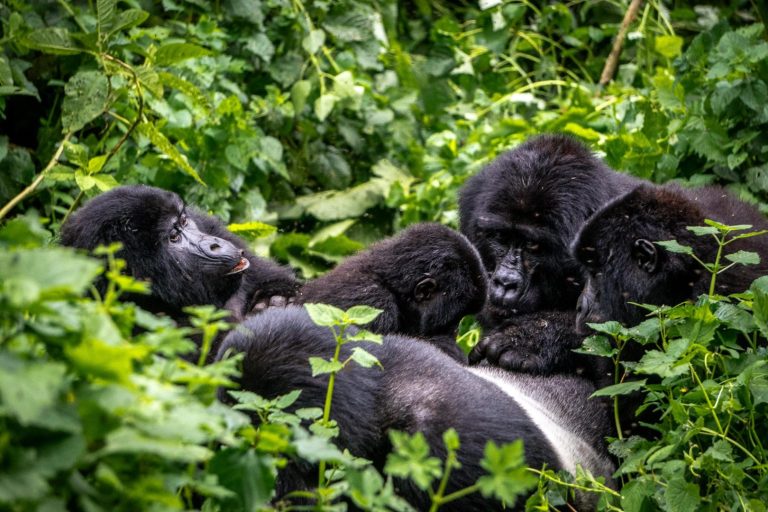
The Isimbi Gorilla Family is one of the mountain gorilla groups associated with Rwanda's Volcanoes National Park and has a particularly interesting history because it emerged from changes within the famous Karisimbi group. The formation of Isimbi demonstrates how new mountain gorilla families develop naturally as silverbacks mature, compete for leadership and establish independent social groups.
For travelers preparing for gorilla trekking in Rwanda, learning about Isimbi helps explain why the list of gorilla families in Volcanoes National Park changes over time. Families are not permanent organizations. They grow, split, merge or disappear depending on the lives and decisions of individual gorillas.
Introduction
This dynamic social structure is one of the reasons mountain gorilla trekking is such a fascinating wildlife experience.
How the Isimbi Gorilla Family Formed
The history of Isimbi is linked directly to the Karisimbi Gorilla Family. Karisimbi itself originated from the large Susa family after a major group split. Over time, further social changes occurred within Karisimbi.
A silverback ultimately separated with other gorillas and formed what became the Isimbi group. This sequence demonstrates how one historically large family can eventually give rise to multiple independent gorilla groups.
For researchers, these splits provide valuable opportunities to study silverback leadership, female choice and family formation. For visitors, they show that every named gorilla family has a broader genealogy.
What Does Isimbi Mean?
The name Isimbi is associated with the idea of snow or something bright and white.
The name is particularly evocative in the Virunga landscape, where the highest volcanic slopes can occasionally appear pale or cloud-covered and Mount Karisimbi has historically been associated with frost and occasional snow-like conditions at very high elevation.
Gorilla family names in Rwanda often reflect individuals, events, characteristics or aspects of the local environment. These names help park personnel and researchers distinguish social groups while also making their histories easier for visitors to understand.
Where Does Isimbi Live?
Isimbi belongs to the mountain gorilla population occupying Volcanoes National Park. The park lies in northwestern Rwanda and forms part of the Virunga Massif, shared with Uganda and the Democratic Republic of Congo. The landscape is dominated by a chain of volcanoes, including Mount Karisimbi and Mount Bisoke.
Mountain gorillas occupy different vegetation zones within the park and move according to food availability and social circumstances. Because Isimbi developed from Karisimbi, its history is closely associated with the higher volcanic landscape. However, no gorilla family remains in one exact location permanently.
Does Isimbi Follow the Same Route Every Day?
Mountain gorillas do not follow fixed tourism trails. They wake from night nests, feed and move through their territory. They may travel uphill, downhill or laterally through the forest.
Trackers monitor their movements and help trekking guides determine the best starting point each morning. This means the difficulty of an Isimbi Gorilla Family trek can vary substantially between different days. One visitor may have a relatively moderate walk.
Another trekking the same family several days later could face a much longer climb.
How Gorilla Trekking Starts
Visitors participating in gorilla trekking normally stay around Kinigi, Musanze or the surrounding countryside. The morning begins early. After breakfast, your driver-guide transfers you to the Volcanoes National Park headquarters.
Park staff explain trekking regulations and divide visitors into small groups. Each group is allocated to one habituated gorilla family. Your vehicle then takes you toward the appropriate trekking starting area. From there, the journey continues on foot.
Can You Ask to Trek Isimbi?
You may express a preference for Isimbi. However, a particular family should never be considered guaranteed. Park teams need to manage trekking based on current gorilla locations and visitor circumstances.
Some families may be farther away on a particular morning. Others may be temporarily unavailable for management or veterinary reasons. It is therefore better to regard a named family as a preference rather than the sole objective of your safari.
All habituated mountain gorilla groups provide an extraordinary experience.
How Difficult Is the Isimbi Trek?
Because Isimbi is historically connected with Karisimbi, travelers sometimes associate the group with more demanding terrain. This may be true on some days, but there is no permanent difficulty rating. The challenge depends on:
- Current gorilla location - Rainfall - Trail condition - Elevation - Thickness of vegetation - Distance from the starting point
Visitors should prepare for moderate to strenuous walking. Good hiking boots are essential.
Physical Preparation
Travelers can improve their trekking experience with basic preparation. Walk regularly before departure. Include hills where possible.
Stair climbing is also useful. The altitude of Volcanoes National Park may make physical exertion feel more difficult than the same activity at sea level. Take the trek at a comfortable pace. Professional guides understand that visitors have different fitness levels.
Hiring a Porter
A porter is highly recommended. Porters can carry backpacks and provide support when crossing difficult terrain. Their assistance can be especially useful in mud.
Even a small camera bag and water bottle become tiring after several hours of climbing. Using a porter also helps connect gorilla tourism with direct community employment. This contributes to the wider conservation value of tourism.
What Happens When Isimbi Is Found?
Trackers normally identify the family before the tourist group approaches closely. Visitors then receive final instructions. The experience changes from hiking to quiet observation.
The gorillas may be feeding, grooming, resting or playing. Different family members can be spread throughout vegetation. Guides help visitors identify silverbacks, adult females and younger gorillas. The encounter is carefully controlled to reduce disturbance.
Watching Silverbacks
Silverbacks are often the most visually impressive members of a group. Mature males can be extremely large. Despite their size, they frequently spend long periods resting or feeding peacefully.
The dominant silverback acts as the family's principal protector. He monitors surroundings and responds if necessary. Subordinate silverbacks or blackbacks may also be present depending on the current structure of the family.
Mothers and Infants
For many visitors, mothers and infants provide the most emotionally memorable moments. Young infants cling to their mothers during movement. As they become older, they begin exploring independently.
Juveniles are frequently playful and curious. They climb plants, tumble down slopes and interact with siblings or other young gorillas. These behaviors are important for development.
What to Wear
The Virunga forest requires practical clothing.
- Waterproof hiking boots - Long trousers - Long-sleeved shirt - Rain jacket - Gardening gloves - Gaiters - Comfortable hiking socks - Warm lightweight layer
Long clothing provides protection against vegetation and insects.
What to Carry
Carry only essential equipment. Bring water, a camera, rain protection and personal medication. A small waterproof backpack is ideal. Protect electronics from moisture. A walking stick can sometimes be useful on steep terrain. Your porter can carry the bag while you keep your camera accessible.
Photography Tips
The forest around Isimbi can create challenging photography conditions. Light often changes rapidly. Use a camera setting that allows reasonable shutter speeds at higher ISO.
- A lens with some zoom flexibility is useful. Take photographs efficiently, then spend time watching the gorillas without a camera. The direct experience is often more powerful than the images.
Weather and Best Time to Trek
Gorilla trekking is available throughout the year. There is no season when mountain gorillas migrate away. The main difference between seasons is trail condition.
Relatively drier periods can produce easier walking. Wet periods can result in deep mud and slippery slopes. However, rain remains possible throughout the year. The forest's moisture is part of what sustains its rich vegetation.
Accommodation Near Volcanoes National Park
Visitors can choose from budget, mid-range and luxury accommodation. Kinigi is convenient because of its proximity to the morning briefing point. Musanze offers a greater selection of hotels and local services.
Luxury lodges occupy scenic positions around the volcanic foothills. Your accommodation does not determine your gorilla family allocation. Guests from different lodges join the same park-managed trekking system.
Adding Golden Monkey Tracking
An excellent way to extend a Volcanoes National Park visit is to add golden monkey tracking. Golden monkeys occupy bamboo forest and are very different from mountain gorillas. They move rapidly and frequently leap through vegetation.
Spending three nights in the Volcanoes region allows one day for gorillas and another for golden monkeys.
Combining Rwanda and Uganda
The location of Volcanoes National Park makes cross-border safari combinations possible. Travelers can continue into southwestern Uganda for Mgahinga Gorilla National Park or Bwindi Impenetrable National Park. Longer itineraries can include Queen Elizabeth National Park and Kibale National Park.
This combination allows travelers to experience both gorillas and chimpanzees alongside classic African wildlife.
Conservation Importance of Isimbi
Groups such as Isimbi provide important data for researchers monitoring the mountain gorilla population. Daily observations can reveal births, deaths, injuries and transfers. Changes in group leadership are also recorded.
This information helps conservationists understand population growth and social stability. It also demonstrates why old online lists can quickly become inaccurate.
Why the Isimbi Gorilla Family Is Fascinating
The Isimbi Gorilla Family is especially interesting because its formation forms part of a longer chain of gorilla family history beginning with the famous Susa group and continuing through Karisimbi. This genealogy shows that mountain gorilla families evolve naturally across generations.
Visitors fortunate enough to encounter Isimbi are therefore seeing more than a collection of individual gorillas. They are witnessing one chapter in an ongoing social history shaped by silverback leadership, family relationships, reproduction and conservation.
Combined with the spectacular Virunga scenery, the Isimbi trek can be one of the most memorable experiences of a Rwanda safari.