
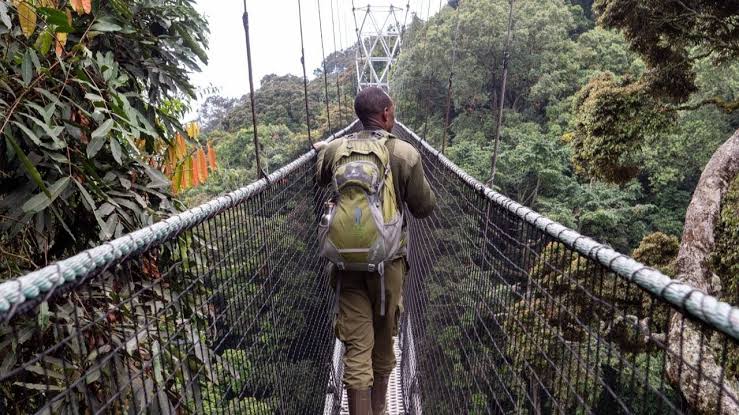
The best time to visit Nyungwe depends on what you want to do, your tolerance for rain and mud, and how the park fits into the rest of your Rwanda safari. Nyungwe National Park is a mountainous rainforest in southwestern Rwanda, so rain can occur during any month of the year. However, some periods are generally drier than others and can provide easier conditions for chimpanzee trekking, hiking and canopy walks.
For many travelers, the relatively drier periods are the most convenient because trails are generally less muddy and forest walking can be more comfortable. However, wetter months also have advantages, including exceptionally lush vegetation, atmospheric forest conditions and interesting birding opportunities.
There is therefore no single month that is perfect for every traveler.
Understanding Nyungwe's Climate
Nyungwe is a montane tropical forest, and its elevation has a major influence on local weather.
Temperatures are generally moderate compared with hotter lowland safari regions, while rainfall is an important part of the ecosystem throughout the year.
Even during periods considered relatively dry, visitors should always carry rain protection.
The forest can also feel cool early in the morning, particularly before sunrise when chimpanzee trekking activities begin.
Weather can change quickly, so clothing should be selected for flexibility rather than relying entirely on seasonal averages.
June to September
June through September is commonly considered one of the most convenient periods for visiting Nyungwe.
These months generally fall within Rwanda's longer dry season.
Trails are often easier to walk than during the wetter months, which can be helpful for chimpanzee trekking and longer hikes.
Visitors who are combining Nyungwe with gorilla trekking in Volcanoes National Park may also find these months attractive because forest conditions can be more manageable across both destinations.
The main disadvantage is popularity.
Because this period overlaps with international summer holidays, permit and accommodation demand can be stronger.
Advance booking is recommended.
December to February
December, January and February can also provide relatively favorable conditions.
Rainfall is generally lower than during the major wet seasons, although showers remain possible.
This period can work especially well for travelers escaping winter in Europe or North America.
Chimpanzee trekking, canopy walking and guided hikes can all be included.
Travelers planning a Rwanda primate safari during these months should still carry waterproof equipment because Nyungwe's rainforest climate does not follow perfectly predictable patterns.
March to May
March, April and May are generally wetter months in Rwanda.
Forest trails can become muddy and slippery, making hiking more physically demanding.
Chimpanzee trekking is still possible, but visitors should be prepared for wetter conditions.
The advantages can include fewer tourists and especially lush forest scenery.
Photographers may appreciate mist, cloud and saturated green vegetation.
Travelers who are comfortable with rain and want a quieter atmosphere should not automatically dismiss this season.
Good waterproof clothing and sturdy footwear become particularly important.
October and November
October and November are also associated with increased rainfall.
Conditions can vary from sunny periods to heavy showers.
These months may appeal to travelers who value lower visitor numbers and do not mind wetter trekking conditions.
Nyungwe remains active year-round, and primates do not disappear simply because it rains.
The main difference is visitor comfort and trail conditions rather than whether wildlife exists in the park.
Best Time for Chimpanzee Trekking
The best time to visit Nyungwe specifically for chimpanzee trekking is often during relatively drier periods when trails are easier to navigate.
However, chimpanzees remain in the forest throughout the year.
Their movement depends largely on food availability and social behavior rather than simply whether the day is dry.
Visitors should therefore avoid believing that a particular month guarantees better sightings.
The quality of the experience depends on many natural factors.
Drier conditions mainly improve comfort and accessibility.
Best Time for the Canopy Walk
The canopy walkway can be enjoyed throughout the year.
Clearer conditions may provide wider views across the forest, making drier periods attractive.
During wet or misty weather, however, the forest can look exceptionally atmospheric.
Visitors should consider personal comfort with wet trails and suspended bridges.
The approach to the canopy walkway involves forest walking, so trail conditions matter just as much as visibility.
Best Time for Hiking
Hikers generally prefer the drier months because Nyungwe's trails can become muddy during extended rainfall.
Longer routes involving slopes and elevation changes become easier when the ground is less slippery.
However, hikers who enjoy rainforest environments and are equipped appropriately can visit during wetter periods.
Quick-drying clothing, waterproof jackets and reliable hiking footwear make a substantial difference.
Best Time for Birdwatching
Nyungwe is one of Rwanda's leading birding destinations.
Birding can be rewarding throughout the year, although activity varies according to breeding, food availability and seasonal movements.
Dedicated birdwatchers should not select dates based solely on trail dryness.
A specialist birding itinerary may prioritize particular species or seasonal behavior.
Spending several days in the forest is usually more valuable than attempting to identify one supposedly perfect month.
January in Nyungwe
January is generally part of a relatively dry period.
This can provide favorable walking conditions for chimpanzee trekking, canopy activities and hiking.
The forest remains green, and rain is still possible.
Travelers visiting in January should book permits and accommodation in advance if combining their trip with other major Rwanda attractions.
February in Nyungwe
February can also offer good forest conditions.
Temperatures remain moderate, and visitors can undertake most activities comfortably with appropriate clothing.
Rainfall patterns can begin changing toward the wetter season later in the month, so visitors should remain prepared.
March in Nyungwe
March generally marks the beginning of wetter conditions.
Trails may become muddier, particularly after repeated rainfall.
Visitors should expect more challenging walking conditions but may enjoy lower visitor pressure.
Chimpanzee trekking remains available.
April in Nyungwe
April is often one of the wetter months.
Travelers should expect rain and potentially slippery trails.
For visitors who strongly dislike mud, this may not be the ideal month.
However, the forest can be extraordinarily lush and dramatic.
Experienced rainforest travelers may still find the experience rewarding.
May in Nyungwe
May generally remains wet, although conditions can begin transitioning later in the month.
Forest activities continue, but good rain protection is essential.
Visitors should build additional flexibility into their schedule because weather can affect walking comfort.
June in Nyungwe
June usually marks the start of the longer dry season.
Trail conditions often begin improving, making it an attractive month for chimpanzee trekking and hiking.
The combination of favorable weather and relatively moderate visitor levels early in the season can make June a strong choice.
July in Nyungwe
July is one of the most popular months.
Drier weather generally makes forest activities easier.
However, demand for permits and quality accommodation can be high.
Travelers should reserve well in advance, especially if also planning gorilla trekking.
August in Nyungwe
August is another excellent month for forest walking.
It is also a busy travel period.
Families and international vacationers commonly travel during this month.
Advance planning becomes particularly important for travelers requiring specific accommodation categories.
September in Nyungwe
September can remain relatively dry, although conditions may begin transitioning toward the shorter rains.
It often provides good trekking and hiking conditions.
Visitors should still pack waterproof layers because rainfall can occur.
October in Nyungwe
October generally brings increased rainfall.
Trails can become more slippery, but the forest remains beautiful.
Travelers who are well equipped and comfortable with rain may enjoy a quieter experience than during July or August.
November in Nyungwe
November can also be wet.
Rain showers may affect the timing and comfort of outdoor activities.
However, Nyungwe's primates and birds remain present.
Visitors who prioritize low visitor numbers over perfect trail conditions may find November appealing.
December in Nyungwe
December often marks the beginning of another relatively drier period.
It can be an excellent time for a Rwanda safari, although Christmas and New Year travel can create increased accommodation demand.
Early booking is advisable for late December.
Visitor Numbers and Peak Season
Weather is not the only consideration when choosing the best time to visit Nyungwe.
July, August and holiday periods can attract more visitors.
Popular lodges may fill earlier, and permit availability can become tighter.
Traveling during shoulder months may provide a quieter experience.
For photographers and nature enthusiasts, lower visitor density can be particularly valuable.
What to Pack in the Dry Season
Do not assume that dry season means completely dry forest.
Carry a waterproof jacket regardless of the month.
Wear sturdy walking shoes or hiking boots with good grip.
Long trousers and long sleeves provide protection from vegetation and insects.
A light fleece or jacket can also be useful during cool early mornings.
What to Pack in the Wet Season
During wetter months, waterproof preparation becomes even more important.
A good rain jacket, waterproof cover for your daypack and quick-drying clothing are highly recommended.
Gaiters can help protect trousers and footwear from mud.
Carry spare socks if you are undertaking several consecutive forest activities.
Best Time for a Rwanda Primate Safari
If your itinerary combines Nyungwe with Volcanoes National Park, consider conditions in both destinations.
June through September and December through February are popular periods because forest trails can be more manageable.
However, these months also tend to attract stronger demand.
Travelers willing to accept rain can visit during quieter periods and still enjoy excellent primate experiences.
Best Time for Nyungwe and Lake Kivu
Lake Kivu can be included at almost any time of year.
A few nights beside the lake can provide relaxation after active chimpanzee trekking and hiking.
Drier weather may make outdoor lake activities more predictable, although Rwanda's climate remains variable.
Including Lake Kivu also creates flexibility within the itinerary if you prefer not to schedule strenuous forest activities every day.
Is There a Bad Time to Visit Nyungwe?
There is no completely unsuitable month.
The park remains open and ecologically active year-round.
The main differences involve rainfall, trail conditions, visitor numbers and personal comfort.
Travelers who dislike mud should prioritize drier periods.
Visitors who enjoy rainforest atmosphere and quieter destinations may find wetter months equally rewarding.
When Should You Book?
Chimpanzee permits and accommodation should be organized early if traveling during June–September, Christmas, New Year or other popular holiday periods.
Travelers requiring high-end accommodation or specific room configurations should book especially early.
If traveling during quieter months, availability may be more flexible, but permits should still be secured before finalizing the itinerary.
Plan the Best Time to Visit Nyungwe
The best time to visit Nyungwe depends on your priorities rather than a single calendar date.
June through September and December through February are generally attractive for easier trekking conditions, while wetter months can provide lush scenery, fewer visitors and a more dramatic rainforest atmosphere.
We can help select travel dates based on chimpanzee permit availability, accommodation, weather preferences and the rest of your Rwanda itinerary. Nyungwe can then be combined with Lake Kivu and Volcanoes National Park or linked with Uganda for a broader East African primate safari.