
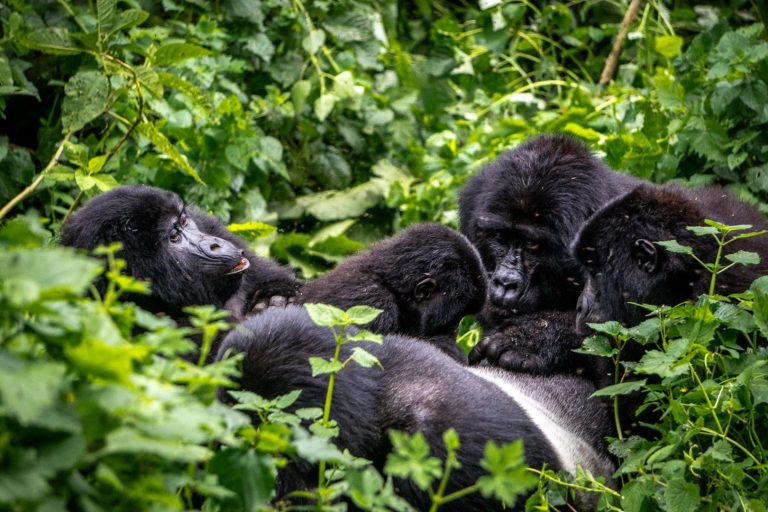
Gorilla Trekking Difficulty: How Hard Is the Trek?
Gorilla trekking difficulty varies considerably from one day to another. One traveler may find mountain gorillas after a relatively manageable forest walk, while another may spend several hours climbing steep, muddy terrain before reaching the assigned family.
Professional trackers monitor their movements, but no responsible operator can guarantee exactly how long your trek will last.
Uganda Wildlife Authority describes gorilla tracking as an activity requiring moderate fitness and notes that trekking may take approximately two to seven hours depending on the location of the gorillas.
The best approach is therefore to prepare for a challenging trek and be pleasantly surprised if the gorillas are relatively close.
What Makes Gorilla Trekking Difficult?
Several factors affect difficulty. Several factors affect difficulty. The most important is the distance between the starting point and the gorilla family's current location.
Other factors include terrain, altitude, rainfall, mud, vegetation, personal fitness, temperature and the weight you are carrying. Two travelers trekking on consecutive days in the same park can therefore have completely different experiences. One may describe the trek as easy.
The other may call it one of the hardest walks they have completed. Both accounts can be accurate.
Terrain in Bwindi
Bwindi Impenetrable National Park is mountainous. Bwindi Impenetrable National Park is mountainous. The word "impenetrable" reflects the forest's dense vegetation and rugged character.
Some routes involve steep slopes. Trails may cross natural forest terrain rather than smooth paths. Roots, fallen branches and vegetation can slow progress.
Rain creates mud and can make downhill sections particularly slippery. Bwindi therefore deserves respect, but its difficulty should not discourage reasonably active travelers.Terrain in Mgahinga
Mgahinga Gorilla National Park lies within Uganda's Virunga Mountains. Mgahinga Gorilla National Park lies within Uganda's Virunga Mountains. The landscape includes volcanic slopes and montane vegetation.
Terrain in Rwanda
Rwanda's Volcanoes National Park also involves volcanic mountain terrain. Rwanda's Volcanoes National Park also involves volcanic mountain terrain. Visit Rwanda advises sturdy walking shoes, waterproof clothing and protective clothing because of the forest vegetation.
Does Every Trek Take Several Hours?
Some gorilla families may be located relatively close to the starting area. Some gorilla families may be located relatively close to the starting area. A trek can therefore be much shorter than the maximum duration travelers prepare for.
Is Gorilla Trekking Harder Than a Normal Hike?
A normal recreational hike often follows a defined trail with known distance and elevation. A normal recreational hike often follows a defined trail with known distance and elevation. Gorilla trekking is less predictable.
Trackers may need to follow the gorillas' movements away from established paths. Vegetation can be dense. Mud can slow progress. The unknown distance makes pacing more important. However, trekking groups are accompanied by experienced personnel who understand the terrain.
How Hard Is Gorilla Trekking in the Rain?
Rain increases the challenge. Rain increases the challenge. Mud can make uphill walking more tiring and downhill walking more slippery.
Vegetation may become wet enough to soak clothing even after the rain has stopped. This is why waterproof boots, gaiters and a rain jacket are valuable. Wet-season trekking is not necessarily unsuitable. It simply demands better preparation.
Is Dry-Season Gorilla Trekking Easy?
Not automatically. Not automatically. Relatively drier conditions can improve the trail. However, the gorillas may be farther away. A six-hour dry-season trek can still be harder than a two-hour rainy-season trek. Seasonal conditions are only one part of the difficulty equation.
Does Altitude Make It Harder?
The gorilla regions are at elevation, and some travelers may notice the difference during climbing. The gorilla regions are at elevation, and some travelers may notice the difference during climbing. Most visitors adjust adequately, but steep uphill walking can increase breathing rate.
A steady pace is useful. Do not attempt to keep up with someone walking faster simply because you feel embarrassed about requesting a pause. Communicate with your guide and conserve energy.
How Fit Should You Be?
Moderate fitness is ideal. Moderate fitness is ideal. If you can walk several hours, climb hills and remain active without serious difficulty, you are likely to be much better prepared.
People who rarely walk should train before traveling. You do not need to run marathons. Regular walking is the most relevant preparation.
Can Beginners Do Gorilla Trekking?
Many first-time hikers successfully trek gorillas. Many first-time hikers successfully trek gorillas. Beginners should take preparation seriously. Wear tested hiking boots. Keep the daypack light. Listen to guides. These simple decisions can reduce difficulty substantially.
Can Senior Travelers Manage?
Age is less important than physical condition. Age is less important than physical condition. A fit 70-year-old may outperform an inactive 30-year-old.
Senior travelers should consider joint health, balance, cardiovascular fitness and previous walking experience. A slower safari itinerary can reduce fatigue before trekking day.
What If You Have Knee Problems?
Steep descents can place substantial strain on knees. Steep descents can place substantial strain on knees. Travelers with existing knee issues should obtain appropriate medical guidance before travel.
A walking pole may help some trekkers who are accustomed to using one. Porter assistance can also be extremely useful. Do not hide significant mobility limitations from your safari planner. Advance knowledge allows a more realistic itinerary to be designed.
Can You Request an Easier Gorilla Group?
Trekking staff may take visitor circumstances into consideration during allocations where operationally possible, but travelers should never treat an easy trek as guaranteed.
Trekking staff may take visitor circumstances into consideration during allocations where operationally possible, but travelers should never treat an easy trek as guaranteed. The gorillas' locations change. Even a family that was close yesterday may move.
Visitors should therefore prepare for a genuine trek regardless of any preference expressed.
Hire a Porter
Porters can make one of the biggest differences to perceived difficulty. Porters can make one of the biggest differences to perceived difficulty. Your bag may feel light at the lodge but increasingly heavy after hours of climbing.
Allow a porter to carry it. Their assistance on steep slopes can also improve balance. The service supports community livelihoods as well.
Use Proper Footwear
Good hiking boots reduce slipping and provide ankle support. Good hiking boots reduce slipping and provide ankle support. Shoes should already be broken in. Avoid brand-new boots. Avoid smooth-soled casual trainers. Gaiters are particularly useful in mud.
Proper footwear cannot shorten the trek, but it can make every kilometer easier.
Dress Correctly
Long trousers and long sleeves protect against vegetation. Long trousers and long sleeves protect against vegetation. Gardening gloves protect the hands.
A rain jacket prevents soaking. Quick-drying material is more comfortable than heavy cotton. Suitable clothing reduces distractions and allows you to concentrate on walking.
Keep Your Pack Light
- Carry only what you need. Carry only what you need. Water, rain protection, camera equipment, medication and lunch may be sufficient. Your main luggage remains at the lodge. The less weight you carry, the more energy you retain.
Walk at a Sustainable Pace
The objective is not to reach the gorillas before another trekking group. The objective is not to reach the gorillas before another trekking group. A steady pace protects energy. Short breaks are normal. Drink water regularly. Follow instructions from your guide.
Is Gorilla Trekking Dangerous Because It Is Difficult?
Physical challenge and danger are not the same thing. Physical challenge and danger are not the same thing. A trek can be tiring while remaining professionally managed.
Rangers and guides understand the terrain and gorilla behavior. Visitors contribute to safety by following instructions, wearing appropriate footwear and being realistic about fitness.
How Difficult Is the Final Approach?
Once trackers indicate that the gorillas are close, visitors may leave bags with porters according to local instructions and approach with essential camera equipment.
Once trackers indicate that the gorillas are close, visitors may leave bags with porters according to local instructions and approach with essential camera equipment. Vegetation can still be dense. The final distance may involve careful movement through forest.
The reward is the opportunity to observe a mountain gorilla family at close range under controlled conditions.Does Difficulty Make the Experience Better?
For many travelers, yes. For many travelers, yes. The effort can make the encounter feel earned.
Walking through mountain rainforest, following trackers and finally seeing the gorillas creates a sense of expedition that would not exist if visitors simply drove to a viewing platform. However, difficulty should not become a competition. A short trek is no less meaningful. The gorilla encounter is the objective.
How to Prepare Four Weeks Before Travel
Use your trekking boots. Use your trekking boots. Practice carrying a light daypack. Strengthen your legs. Stretch after exercise. The final week should focus on maintaining activity and arriving rested rather than pushing for last-minute fitness gains.
Difficulty for Photographers
Camera equipment can make the trek harder. Camera equipment can make the trek harder. Large lenses, multiple bodies and heavy tripods add weight. Consider a streamlined setup. Use a porter specifically to carry equipment if necessary. Photography should not make the physical challenge unnecessarily difficult.
Difficulty for Families
Eligible teenagers can be excellent trekkers, but parents should assess individual fitness and motivation realistically. Eligible teenagers can be excellent trekkers, but parents should assess individual fitness and motivation realistically. A teenager who dislikes walking may struggle despite being young.
Family itineraries should also allow recovery time.
Difficulty for Honeymooners
Couples should not underestimate trekking simply because the trip is a honeymoon. Couples should not underestimate trekking simply because the trip is a honeymoon. Spend the night before trekking near the correct briefing point.
Avoid an exhausting transfer immediately beforehand. An extra night afterwards can provide welcome relaxation.
Difficulty for Budget Travelers
Budget level does not affect the forest terrain. Budget level does not affect the forest terrain. A budget traveler and luxury traveler allocated to similar gorilla areas face the same physical environment. Spend money where it matters: appropriate footwear, sensible transport, good accommodation location and a porter.
Difficulty for Luxury Travelers
Domestic flights and premium accommodation can reduce travel fatigue but cannot change the trek itself. Domestic flights and premium accommodation can reduce travel fatigue but cannot change the trek itself. A luxury safari should therefore still include proper fitness preparation.
The wilderness element is part of the appeal.
Should Difficulty Stop You From Going?
Understanding Gorilla Trekking Difficulty
The central fact about gorilla trekking difficulty is that it cannot be predicted precisely. The central fact about gorilla trekking difficulty is that it cannot be predicted precisely. Terrain, weather and gorilla location all matter.