
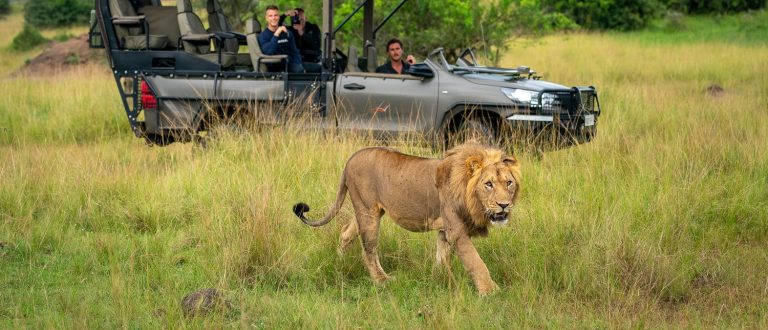
Because Akagera is open throughout the year, there is no single month when wildlife disappears or the park becomes inaccessible. Seasonal changes mainly affect vegetation, road conditions, water availability, bird activity and how easily animals can be located.
For most travelers combining Akagera with gorilla trekking in Volcanoes National Park or chimpanzee tracking in Nyungwe, the best travel period should be selected according to the entire Rwanda itinerary rather than one park alone.
Dry Seasons in Akagera
Rwanda generally experiences two comparatively dry periods.
The longer dry season commonly falls between June and September, while a shorter dry period usually occurs around December to February.
These months are popular for Akagera wildlife safaris because vegetation becomes less dense in some areas and animals may increasingly concentrate around permanent water sources.
Game-drive tracks are also generally easier to navigate during extended dry conditions.
For travelers whose main objective is seeing large mammals and predators, the dry season is often the best time to visit Akagera National Park.
June to September
June, July, August and September are among the most popular months for visiting Akagera.
Rainfall is generally lower, and the park gradually becomes drier as the season progresses.
As temporary water sources shrink, wildlife often depends more heavily on lakes and other permanent water.
This can improve opportunities to locate animals.
Vegetation may also become shorter or less dense in certain areas, providing better visibility.
Photographers can enjoy classic savannah scenes with golden grasslands and animals around water.
This period is also popular for gorilla trekking elsewhere in Rwanda, so accommodation and permits should be arranged well in advance.
June
June marks the transition toward drier conditions.
The landscape may still retain some greenery from previous rains, creating attractive photographic conditions.
Road conditions usually improve, while wildlife remains widely distributed.
For travelers who want a combination of relatively green scenery and increasingly favorable game viewing, June can be an excellent month.
July
July is typically one of the driest and busiest periods.
Wildlife viewing can be highly productive as animals gather around reliable water.
Morning and late-afternoon drives are especially rewarding.
Because July overlaps with major international holiday periods, lodges can become busy.
Advance planning is therefore strongly recommended.
August
August remains an excellent month for game drives.
Dry conditions usually continue, making wildlife easier to observe in many parts of the park.
Dustier roads and golden vegetation can create the classic East African safari atmosphere.
Daytime temperatures can become warm, so early starts are advisable.
Boat safaris remain highly rewarding because Akagera’s lakes support hippos, crocodiles and numerous birds.
September
September can still provide excellent game viewing, although weather conditions may begin to change toward the end of the month.
Some rainfall may return depending on the year.
The first showers can refresh parts of the landscape and produce attractive contrasts between green vegetation and dry-season terrain.
September is therefore an interesting transitional month.
December to February
The shorter dry season around December, January and February is another popular period.
These months are well suited to travelers escaping winter conditions in Europe or North America.
Wildlife remains highly visible, and game-drive roads are generally manageable.
The Christmas and New Year period can be busy, so early reservations are advisable.
January and February can be particularly attractive for visitors combining Akagera with gorilla trekking.
January
January usually offers favorable conditions for game drives.
Vegetation may be relatively open, and animals often remain concentrated around dependable water.
Morning safaris are especially comfortable before daytime temperatures rise.
Birdlife remains impressive, making January suitable for travelers who want both mammals and birds.
February
February can also be excellent for wildlife viewing.
It may become warmer and drier before the longer rains begin.
Photographers can enjoy strong contrasts between dry savannah tones and Akagera’s blue lakes.
Travelers should remain prepared for occasional showers because seasonal patterns can vary from year to year.
March to May
March, April and May generally correspond with Rwanda’s longer wet season.
Rainfall increases, and the park becomes greener.
For some travelers, this sounds less attractive, but the wet season has several advantages.
The scenery can be exceptionally beautiful, birding is excellent and visitor numbers may be lower.
Young animals may also be present among some herbivore species.
Roads can become muddy after heavy rain, but experienced safari guides adapt routes according to conditions.
March
March often marks the beginning of wetter conditions.
Rain becomes more frequent, although game drives remain possible.
The park starts turning greener, and birds become increasingly active.
Travelers willing to tolerate occasional rain may find fewer vehicles and excellent photographic scenery.
April
April is often among the wetter months.
Heavy showers can occur, and some tracks may become challenging.
However, the park becomes lush and vibrant.
Cloud formations, fresh vegetation and dramatic light can create excellent landscape photography.
This period particularly appeals to birders and travelers who prefer fewer visitors.
May
Rainfall may continue through much of May, but conditions can gradually improve toward the end of the month.
The park remains green and scenic.
Wildlife may be more dispersed because water is widely available.
This means game viewing can require more searching, but sightings remain possible throughout the park.
October and November
October and November are commonly associated with another wetter period.
Rainfall replenishes wetlands and encourages fresh vegetation.
For birdwatchers, these months can be very rewarding.
The landscape is greener, and different habitats support a broad variety of species.
Game viewing remains possible, but animals may spread across larger areas rather than concentrating around a few water sources.
Best Time for Big Five Viewing
For travelers specifically hoping to see the Big Five, the drier months are usually preferred.
Shorter grass and greater concentration around water can improve visibility.
However, no season guarantees sightings of lions, leopards, elephants, buffaloes or rhinos.
Leopards in particular remain naturally elusive.
The best strategy is to spend at least two or preferably three nights in Akagera and participate in several game drives.
Best Time for Boat Safaris
Boat safaris can be enjoyed throughout the year.
Akagera’s lakes support hippos, crocodiles and extensive birdlife in all seasons.
Dry months can be particularly interesting because terrestrial animals may approach water more frequently.
Wet-season excursions are excellent for birdwatching and lush scenery.
Morning and late-afternoon boat trips generally provide attractive light and comfortable temperatures.
Best Time for Birdwatching
Akagera is outstanding for birdwatching throughout the year.
The park’s wetlands, lakes, savannah and woodland create habitat for many different species.
The greener months can be particularly productive because insects and vegetation increase.
Migratory species may also add to the birding experience during certain periods.
Serious birders should consider visiting multiple habitats rather than concentrating exclusively on open savannah.
Best Time for Photography
Different seasons offer very different photographic conditions.
Dry-season photographers benefit from golden grasslands, dust and concentrated wildlife.
Wet-season visitors gain dramatic skies, saturated greenery and reflections on lakes.
Early morning and late afternoon are the best times of day regardless of month.
These periods provide softer light and increased animal activity.
A private vehicle is especially valuable for photographers because it allows more time at productive sightings.
Visitor Levels
June through September and the Christmas-New Year period are among the busiest travel times.
Visitors planning trips during these months should book accommodation early.
Travel outside peak periods may provide quieter game drives.
April, May, October and November can be particularly attractive for travelers who prefer fewer vehicles and do not mind occasional rain.
What to Pack in the Dry Season
Lightweight safari clothing is ideal.
Bring sunscreen, sunglasses and a wide-brimmed hat.
A light jacket is useful during early morning drives.
Dust can become significant, so camera protection is advisable.
Binoculars are highly recommended.
Travelers continuing to Volcanoes National Park should also pack waterproof trekking clothing because mountain forests remain much wetter than Akagera.
What to Pack in the Wet Season
A waterproof jacket or poncho is essential.
Lightweight clothing that dries quickly is useful.
Closed shoes are practical around camps and lodges.
Camera equipment should be protected from rain.
Visitors should still carry sunscreen because sunny periods can occur between showers.
Combining Akagera with Gorilla Trekking
Many travelers combine Akagera with Volcanoes National Park.
The dry seasons are popular for this route because both game drives and gorilla trekking can be relatively comfortable.
However, gorilla trekking operates throughout the year, and rainforest conditions can remain wet at any time.
A typical itinerary may include two or three nights in Akagera, one night in Kigali and two or three nights near Volcanoes National Park.
Combining Akagera with Nyungwe
Travelers wanting a complete Rwanda wildlife safari can also include Nyungwe.
Nyungwe remains humid throughout much of the year, so visitors should prepare for rain regardless of when Akagera is dry.
This contrast illustrates why choosing the best time for an entire Rwanda safari requires considering several ecosystems.
What Is the Overall Best Time to Visit Akagera?
For most first-time visitors, June to September and December to February are the best times to visit Akagera, particularly for traditional game viewing.
These dry periods generally offer easier road conditions, reduced vegetation and greater concentration of wildlife around water.
However, the wet seasons should not be dismissed.
They provide beautiful green landscapes, excellent birding and fewer visitors.
The real advantage of Akagera is that it remains a rewarding safari destination throughout the year.
Choosing the right period depends on whether your priority is big-game viewing, photography, birdwatching, lower visitor levels or combining the park with Rwanda’s gorilla and chimpanzee destinations.