Leopard: Uganda and Rwanda Wildlife Guide
The leopard is one of Africa’s most beautiful, powerful and elusive big cats. Unlike lions, which often live in visible social groups, leopards usually lead solitary lives and depend heavily on stealth, camouflage and secrecy.
This makes every leopard sighting on safari particularly exciting. Uganda offers opportunities to see leopards in several protected savannah ecosystems, including Queen Elizabeth National Park, Murchison Falls National Park, Lake Mburo National Park and Kidepo Valley National Park.
In Rwanda, Akagera National Park provides the principal opportunity for safari travelers hoping to encounter a leopard.
Leopards are extremely adaptable and can survive in habitats ranging from savannah and woodland to forests and mountainous areas. Their ability to remain hidden even when living relatively close to roads means sightings are never guaranteed.
For many wildlife enthusiasts, this unpredictability is part of the attraction.
What Is a Leopard?
The leopard is a large cat belonging to the genus Panthera, the same genus as lions, tigers and jaguars. It has a muscular but relatively compact body, strong legs, a broad head and a long tail. The coat is covered in distinctive dark markings called rosettes.
Rosettes look like irregular rings or clusters and help distinguish leopards from cheetahs, which have simple solid spots. Coat color varies according to habitat and individual genetics. Most East African leopards are golden or tawny with dark rosettes, although overall shade can vary.
Leopard Camouflage
A leopard’s rosette pattern provides exceptional camouflage. In broken woodland, shadows and sunlight create patterns that can make a resting leopard almost invisible. Even when the animal lies only a short distance from a safari track, visitors may struggle to see it.
The camouflage is especially effective when a leopard rests in a tree. Branches, leaves and shadows break up the outline of the cat. Experienced guides often detect leopards by looking for a tail hanging from a branch or listening to alarm calls from prey animals.
Where Do Leopards Live?
Leopards historically occupied an enormous range across Africa and Asia. In Africa, they remain widely distributed but have disappeared from many areas. Their habitats can include:
- Savannah - Woodland - Forest - Rocky hills - Riverine vegetation - Mountain landscapes - Semi-arid regions
This adaptability is one of the leopard’s greatest strengths. However, even adaptable predators need sufficient prey and protection from persecution.
Leopards in Uganda
Uganda has several areas where leopard sightings are possible. Queen Elizabeth National Park is one of the most popular. Its combination of grassland, thickets, woodland and riverine habitat provides excellent cover.
Murchison Falls National Park also supports leopards across its large savannah ecosystem. Lake Mburo National Park can be rewarding, particularly because its woodland provides suitable habitat. Kidepo Valley National Park is another important predator destination.
No park can guarantee a leopard sighting, but skilled guides can increase the chance by understanding leopard behavior and preferred habitat.
Leopards in Rwanda
In Rwanda, the main destination for leopard viewing is Akagera National Park. Akagera protects a mixture of savannah, woodland, wetland and lake ecosystems. Leopards form part of its natural predator community.
Because leopards are primarily solitary and often nocturnal, sightings may be less frequent than encounters with more visible herbivores. Nevertheless, a leopard sighting in Akagera can be one of the highlights of a Rwanda safari.
Leopard Social Behavior
Leopards are mainly solitary. Adult males and females generally maintain separate home ranges. A male’s territory may overlap with those of several females.
Individuals communicate using scent marks, scrapes and vocalizations. Direct encounters between unrelated adults are often avoided except during mating. Females remain with cubs while raising them but eventually become solitary again once the young become independent.
This solitary lifestyle contrasts strongly with the social structure of lions.
Male and Female Leopards
Male leopards are generally larger and more heavily built than females. They may occupy larger territories. Females need access to secure areas suitable for raising cubs.
A female with young may become particularly secretive. Experienced safari guides can sometimes distinguish males and females from size and facial structure. Individual leopards can also be identified from unique rosette patterns.
What Do Leopards Eat?
Leopards are opportunistic carnivores. Their prey varies according to the ecosystem. Potential prey can include:
- Antelopes - Warthogs - Monkeys - Rodents - Birds - Reptiles - Young mammals
This broad diet helps leopards survive in many different environments. They can hunt animals larger than themselves but are also willing to take much smaller prey.
How Do Leopards Hunt?
The leopard is primarily an ambush predator. Rather than chasing prey over very long distances, it attempts to approach unseen. Camouflage is critical.
A leopard may stalk slowly through grass or vegetation until it is close enough for a short explosive attack. It can accelerate rapidly over a limited distance. The final attack is often directed toward the neck or throat. Success depends heavily on remaining hidden until the last moment.
Leopards and Trees
Leopards are exceptionally strong climbers. They frequently rest in trees and may carry prey into branches. Hauling a carcass into a tree can protect it from scavengers such as hyenas.
It can also keep food away from lions. A leopard may return to a large carcass for several days. Trees provide shade, security and excellent observation points. For safari travelers, finding a leopard draped across a horizontal branch is one of the classic African wildlife experiences.
Are Leopards Nocturnal?
Leopards are often most active from late afternoon through nighttime and into early morning. However, they can move during daylight. Their activity pattern depends on temperature, prey behavior and human disturbance.
In heavily visited areas, some individuals may still be comfortable hunting or walking during the day. Early game drives can be productive because a leopard may still be active after hunting overnight.
Leopard Communication
Leopards produce several vocalizations. One of the most distinctive sounds is a rough, rasping call sometimes compared to sawing wood. This call can be repeated several times.
Leopards also growl, hiss and make quieter sounds during close social interactions. Scent marking is equally important. Individuals spray urine, rub against objects and leave scrapes to communicate territorial information.
Leopard Cubs
Female leopards usually give birth in concealed dens. Cubs are born vulnerable and remain hidden during the earliest stages. The mother may move them between secure sites.
As cubs grow, they begin accompanying her and learning hunting skills. Young leopards depend on their mother for a long period before becoming independent. Watching a mother with cubs is rare and especially rewarding because females are highly protective and secretive.
Predators and Competition
Adult leopards are powerful, but they share ecosystems with larger competitors. Lions and hyenas may steal leopard kills. They can also kill leopards, especially young animals.
Leopards reduce conflict by using trees, dense cover and different activity periods. Their solitary and secretive nature is partly an adaptation to living alongside larger predators.
Leopard Conservation
Leopards remain more widely distributed than several other large cats, but populations have declined in many regions. Threats include:
- Habitat loss - Reduction of prey - Human-wildlife conflict - Illegal killing - Fragmentation
Because leopards sometimes kill livestock, conflict with people can occur outside protected areas. Maintaining healthy prey populations inside protected ecosystems reduces pressure on predators.
Leopards and Tourism
Leopards have significant tourism value. A leopard sighting can become one of the most talked-about moments of a safari. This economic value creates an additional incentive for protected areas to maintain healthy predator populations.
Responsible tourism is essential. Vehicles should not surround or block leopards. Drivers should maintain respectful distances and avoid disturbing hunting behavior.
Finding Leopards on Safari
Good guides use several clues. They may look for:
- Fresh tracks - Alarm calls from monkeys - Alarm calls from antelopes - Disturbed behavior among prey - A tail hanging from a tree - Known territorial areas
Patience is essential. Leopards can remain completely motionless and invisible within vegetation. Sometimes another vehicle may drive past without noticing an animal only a few meters away.
Leopard Photography
Photographing a leopard can be exceptionally rewarding. The rosette pattern is highly photogenic. A telephoto lens allows respectful distance.
If a leopard is in a tree, photographers should consider both tight portraits and wider images showing the habitat. Early and late light can produce beautiful warm tones. Visitors should avoid requesting that guides reposition vehicles in ways that disturb the animal.
Leopard vs Cheetah
Leopards and cheetahs are frequently confused by first-time safari travelers. Important differences include: Leopard: - Rosette markings - Heavy muscular build - Excellent climber - Ambush hunter - Often found in woodland
Cheetah: - Solid black spots - Slender body - Black facial tear lines - Specialized for speed - Prefers more open terrain Leopards are generally much stronger climbers than cheetahs.
Leopard vs Lion
Leopards are much smaller than lions. Lions are highly social and often live in prides. Leopards are solitary.
Lions frequently use open savannah, while leopards make extensive use of dense cover and trees. Seeing both species on the same Uganda safari provides an excellent comparison of two very different large-cat strategies.
Best Time to See Leopards
Leopards can be seen throughout the year. Early morning and late afternoon are often the most productive times. Dry seasons may improve visibility where vegetation becomes shorter.
Wetter periods bring attractive green scenery but can increase cover. Because leopard sightings depend strongly on individual animal movement, no month can guarantee an encounter.
Combining Leopards with Gorilla Trekking
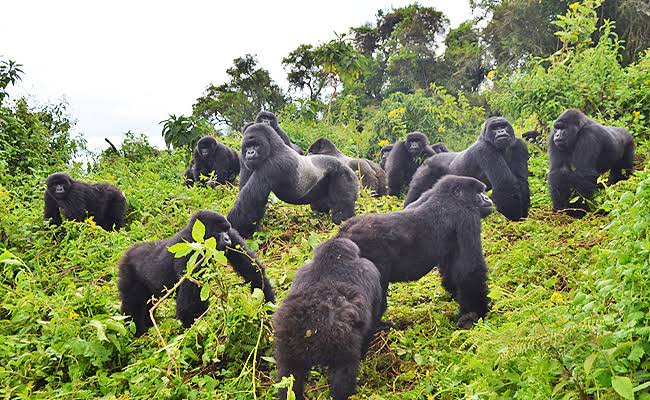
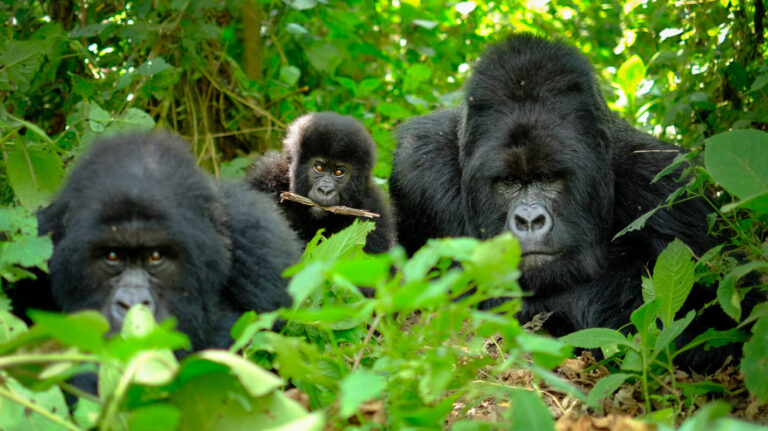
Uganda allows travelers to combine leopard searches with mountain gorillas particularly easily. A safari may include leopard viewing in Queen Elizabeth National Park followed by gorilla trekking in Bwindi. Rwanda offers a similar combination with Akagera and Volcanoes National Park.
This provides travelers with both big-cat viewing and primate trekking within one journey.
Why See a Leopard?
The leopard represents secrecy, power and adaptability. Unlike lions, which may be visible from a considerable distance, leopards often reveal themselves only briefly. That sense of discovery makes each encounter special.
A leopard crossing a road at dawn, resting in an acacia tree or emerging from tall grass can become one of the defining memories of a safari.
For travelers exploring Uganda and Rwanda, searching for leopards adds the excitement of one of Africa’s most elusive predators to an itinerary already rich in primates and other wildlife.