Eastern Gorilla: Uganda and Rwanda Wildlife Guide
The eastern gorilla is one of the two recognized gorilla species and includes some of Africa’s most famous great apes. It is represented by two subspecies: the mountain gorilla and the Grauer’s gorilla, also known as the eastern lowland gorilla.
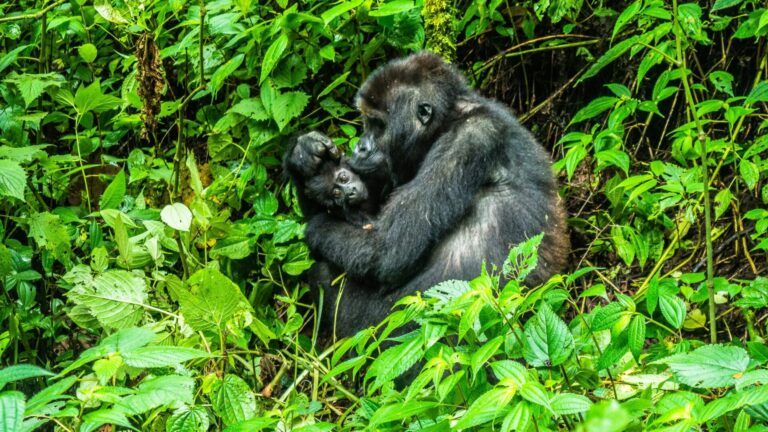
For travelers visiting Uganda and Rwanda, the mountain gorilla is the eastern gorilla most commonly encountered on safari. Mountain gorillas live in Bwindi Impenetrable National Park and the Virunga Massif, where carefully regulated tourism allows visitors to trek into the forest and observe habituated families.
Eastern gorillas are remarkable for their size, strength, intelligence and complex social relationships. They also face serious conservation challenges because their natural range is limited to parts of central and eastern Africa.
Understanding the eastern gorilla as a species helps travelers appreciate the broader conservation importance of the gorillas they encounter in Uganda and Rwanda.
What Is an Eastern Gorilla?
The eastern gorilla has the scientific name Gorilla beringei. It is distinct from the western gorilla species found farther west in Africa. The eastern gorilla includes two subspecies:
- Mountain gorilla - Grauer’s gorilla, or eastern lowland gorilla
The mountain gorilla is associated primarily with high-altitude forests in Uganda, Rwanda and the Democratic Republic of Congo. Grauer’s gorillas occur in eastern Democratic Republic of Congo. Both belong to the same species but differ in appearance, habitat and geographic distribution.
Eastern Gorilla Appearance
Eastern gorillas are large, heavily built primates. Adult males are much larger than females and develop the familiar silver coloration on their backs as they mature. These mature males are known as silverbacks.
They have broad chests, powerful shoulders and long muscular arms. Their hands are highly dexterous and can be used to manipulate food and vegetation. Mountain gorillas generally have thick fur that helps protect them against cool temperatures at higher elevations.
Grauer’s gorillas typically inhabit lower-elevation forests and differ slightly in body proportions and hair.
Where Do Eastern Gorillas Live?
The eastern gorilla has a relatively restricted distribution. Mountain gorillas occur in two main areas. One population lives in Bwindi Impenetrable National Park in Uganda.
The other inhabits the Virunga Massif, which crosses Uganda, Rwanda and the Democratic Republic of Congo. Grauer’s gorillas are found only in eastern Democratic Republic of Congo. This limited distribution makes habitat protection especially important.
Unlike animals that occupy vast areas across multiple countries, eastern gorillas depend on a comparatively small number of forest landscapes.
Eastern Gorilla Habitat
Eastern gorillas live in forests ranging from lower-elevation tropical forest to high-altitude montane and bamboo habitats. Mountain gorillas occupy some of the highest gorilla habitats. In the Virunga Mountains, they move through bamboo zones, montane forest and other vegetation on volcanic slopes.
Bwindi’s gorillas inhabit a more diverse rainforest environment containing steep valleys, ridges and dense vegetation. Grauer’s gorillas generally occupy lower and mid-elevation forests in eastern Congo. The availability of suitable forest habitat directly influences the future of the species.
What Do Eastern Gorillas Eat?
Eastern gorillas are mainly herbivorous. Their diet includes leaves, stems, shoots, roots, bark and fruit. The exact proportion of different foods depends on the habitat.
Mountain gorillas often consume large amounts of leafy vegetation because fruit is less consistently available in high-altitude environments. Grauer’s gorillas may have access to a wider variety of fruits in some areas.
Gorillas spend a large portion of their day feeding because plant material provides relatively limited energy compared with more calorie-dense foods.
Social Structure
Eastern gorillas live in social family groups. A typical group is organized around one or more adult males and includes females, juveniles and infants. The dominant silverback plays an important role in leadership and protection.
He may guide the group’s movement, intervene in disputes and respond to potential threats. Females usually maintain strong relationships with their offspring. Young gorillas spend significant time playing, wrestling and exploring their surroundings.
These complex social relationships are one of the reasons gorilla observation is so compelling.
Silverback Eastern Gorillas
Adult male eastern gorillas become silverbacks as they mature. The silver coloration develops across the back and signals adulthood. A silverback can be extremely powerful, yet most of his daily life is not spent fighting.
He feeds, rests, moves with the group and monitors social interactions. Physical displays may be used to communicate strength without direct conflict. Chest beating is perhaps the best-known example. A display can serve as a warning, social signal or expression of excitement.
Eastern Gorilla Reproduction
Eastern gorillas reproduce slowly. Females generally give birth to one infant at a time after a long gestation. The infant remains highly dependent on its mother during the early stages of life.
Young gorillas cling to their mothers and later ride on their backs as they become more mobile. The long period between births means gorilla populations recover slowly from losses. This is one reason poaching, disease and habitat destruction can have such serious consequences.
Every surviving infant can be significant for a small population.
Gorilla Communication
Eastern gorillas communicate through a combination of vocalizations, postures, facial expressions and physical movements. Soft grunts can help maintain contact within a group. More intense calls can communicate alarm or conflict.
Chest beating is highly visible but represents only one element of gorilla communication. Visitors on gorilla trekking experiences often notice how much interaction happens quietly. Grooming, body position and eye contact all contribute to group relationships.
Are Eastern Gorillas Aggressive?
Eastern gorillas are powerful wild animals but are not naturally interested in attacking humans without reason. Habituated mountain gorilla families have gradually become accustomed to the controlled presence of tourists and researchers. However, habituation does not mean domestication.
Visitors must follow ranger instructions carefully. They should avoid sudden movements, aggressive behavior, touching the animals or deliberately approaching too closely. Respectful behavior allows people to observe gorillas while minimizing disturbance.
Eastern Gorilla Conservation Status
Eastern gorillas face major conservation challenges. Threats have included habitat destruction, poaching, snares intended for other animals, disease, conflict and instability in parts of their range. The situation differs between mountain gorillas and Grauer’s gorillas.
Mountain gorillas have benefited from intensive monitoring, tourism revenue and coordinated conservation programs. Their continued survival nevertheless depends on sustained protection. Grauer’s gorillas have faced particularly severe pressures in parts of eastern Congo.
The eastern gorilla as a whole remains a conservation priority.
Why Tourism Matters
Responsible gorilla tourism can help create economic value around protected forests. Visitors purchase permits, hire guides and porters, stay in lodges and use local transport services. Tourism also generates employment in communities surrounding protected areas.
When people living near gorilla habitat receive tangible benefits from conservation, there is a stronger economic incentive to maintain protected forests. Tourism alone cannot solve every conservation problem, but when carefully managed it can be an important component of long-term protection.
Mountain Gorillas in Uganda
Uganda offers excellent opportunities to see eastern gorillas in the form of mountain gorillas. The main destination is Bwindi Impenetrable National Park. Bwindi has several trekking sectors, including Buhoma, Ruhija, Rushaga and Nkuringo.
Uganda also offers gorilla trekking in Mgahinga Gorilla National Park. The two parks provide very different landscapes. Bwindi is an ancient rainforest, while Mgahinga lies within the volcanic Virunga chain.
Eastern Gorillas in Rwanda
Rwanda’s mountain gorillas live in Volcanoes National Park. The park lies near Musanze in the country’s northwest. Visitors can combine gorilla trekking with golden monkey tracking and other Virunga activities.
The relatively straightforward road connection from Kigali makes Rwanda especially suitable for shorter gorilla trips. Luxury lodge options are also widely available around the park.
Grauer’s Gorillas
The second eastern gorilla subspecies is the Grauer’s gorilla. It is also called the eastern lowland gorilla. This subspecies is found in the Democratic Republic of Congo.
Grauer’s gorillas generally inhabit lower elevations than mountain gorillas and can differ in appearance and ecology. Although they are not the primary focus of Uganda and Rwanda gorilla safaris, understanding them is important because they form the other half of the eastern gorilla species.
Gorilla Trekking Experience
A mountain gorilla trek begins with an official briefing. Visitors are placed in groups and assigned guides and trackers. The trek proceeds through the forest in search of a habituated family.
Trekking can last from a relatively short period to several hours. The duration depends on where the gorillas have moved. Once located, visitors spend the permitted viewing period observing the group. The experience can reveal feeding, resting, grooming and play behavior.
What to Bring on an Eastern Gorilla Safari
For mountain gorilla trekking, useful equipment includes:
- Sturdy hiking boots - Long trousers - Long-sleeved shirt - Waterproof jacket - Gardening gloves - Daypack - Drinking water - Packed lunch - Camera protection
Hiring a porter is also recommended. The porter can carry equipment and assist visitors on difficult terrain.
Best Time to See Eastern Gorillas
Mountain gorilla trekking is available throughout the year in Uganda and Rwanda. Relatively drier months are popular because forest trails may be easier. However, rain can occur at any time in mountain environments.
Wetter periods may produce more mud but also lush vegetation and atmospheric forest conditions. The gorillas remain in their habitat throughout the year. Travelers should therefore focus on permit availability and their overall safari schedule.
Combining Eastern Gorillas with Other Wildlife
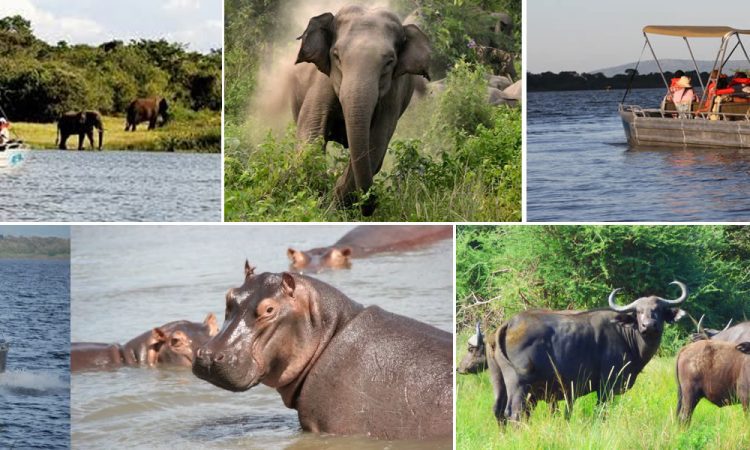
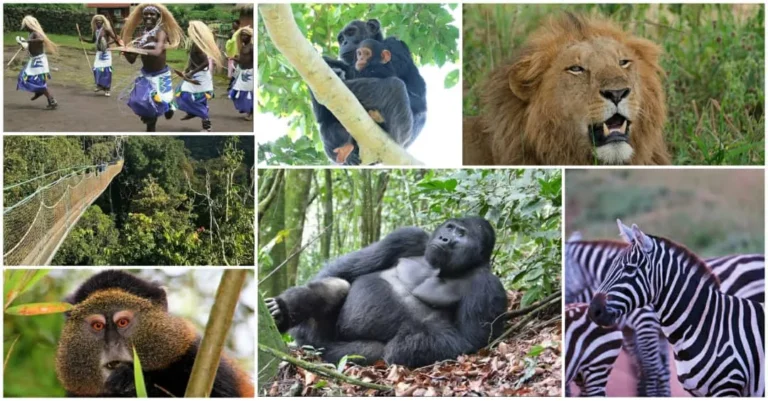
Gorilla trekking can be combined with many other East African wildlife experiences. In Uganda, visitors may add chimpanzee trekking in Kibale, game drives in Queen Elizabeth National Park or wildlife viewing in Murchison Falls.
In Rwanda, gorilla trekking can be combined with chimpanzees in Nyungwe and savannah wildlife in Akagera. Cross-border itineraries can also include both Uganda and Rwanda.
Why Eastern Gorillas Matter
The eastern gorilla is one of the most remarkable animals in Africa. Its survival depends on the protection of a relatively small number of forests and the success of long-term conservation partnerships. For safari travelers, encountering a mountain gorilla family is not simply an opportunity to see a rare animal.
It is a chance to witness the behavior of a highly intelligent great ape within the same forest landscapes where conservationists, researchers and local communities are working to secure its future.
The combination of biological rarity, complex social behavior and conservation significance makes the eastern gorilla one of the most meaningful wildlife species to encounter on a Uganda or Rwanda safari.