
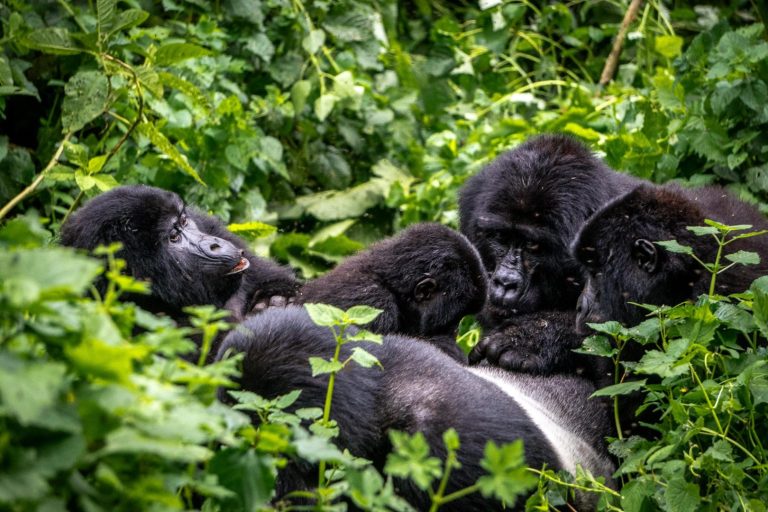
The Mubare Gorilla Family occupies a special place in the history of gorilla tourism in Uganda. Located in the Buhoma sector of Bwindi Impenetrable National Park, Mubare was the first mountain gorilla group in Bwindi to be habituated for tourism and became an important foundation for the regulated gorilla trekking experience visitors know today.
The group's history reflects many of the dynamics that make mountain gorilla society so fascinating. Over the years, Mubare has experienced changes in dominant silverbacks, losses of family members, arrivals of new individuals and periods when its size changed dramatically.
Introduction
Because gorilla families are living social groups rather than fixed tourism attractions, their membership can change at any time. Travelers should therefore focus on the group's history and character rather than treating an old list of individuals as permanently accurate.
Where Is the Mubare Gorilla Family?
Mubare is associated with the Buhoma Sector on the northern side of Bwindi Impenetrable National Park. Buhoma is one of Bwindi's four official gorilla trekking sectors, alongside Ruhija, Rushaga and Nkuringo.
This makes the Mubare trek particularly convenient for travelers staying in Buhoma and for itineraries arriving from Queen Elizabeth National Park.
Why Is Mubare Historically Important?
Mubare is widely recognised as Bwindi's oldest habituated gorilla group. The International Gorilla Conservation Programme identifies Mubare as the oldest habituated group in Bwindi, making it a particularly important part of Uganda's gorilla conservation and tourism history.
Its early habituation helped demonstrate how carefully controlled tourism could provide visitors with access to wild mountain gorillas while generating revenue and broader support for conservation.
Where Did the Name Mubare Come From?
The group was named after the Mubare area or hills where trackers originally encountered it. This reflects a common pattern in gorilla group naming. Families may be named after:
- locations
- vegetation
- individual gorillas
- or significant events associated with the group
For visitors, the name connects the family directly to the landscape in which it was first known.
The Early Mubare Group
Historically, the family was led by the silverback Ruhondeza. Older records describe a considerably larger group under his leadership. Over time, however, the family experienced substantial changes. Gorilla groups are vulnerable to natural social forces such as:
- competition between silverbacks
- death of individuals
- female transfers
- group splitting
- and encounters with neighbouring gorillas
Mubare's history includes many of these events.
Ruhondeza
Ruhondeza became one of the most recognised silverbacks associated with the early years of Bwindi gorilla tourism. He led Mubare during an important period when Uganda's regulated gorilla tourism was still developing. As Ruhondeza aged, the group's composition and stability changed.
The International Gorilla Conservation Programme reports that Ruhondeza died from old age in 2012, after which leadership passed to his surviving son Kanyonyi. This transition demonstrated the way gorilla families can change dramatically after the loss of a dominant male.
Kanyonyi and Later Leadership Changes
Kanyonyi later led Mubare. According to IGCP, his leadership ended after he was weakened by injuries from a fall and was later defeated by the solitary silverback Maraya in 2017. Maraya subsequently took control of the group. These events illustrate why current family composition should always be treated as dynamic.
The dominant silverback seen by a visitor today may not be the same individual described in an older guidebook.
How Many Gorillas Are in Mubare?
There is no permanently fixed number. IGCP listed seven members in its January 2024 update, while other websites and older sources show different totals from earlier periods. This variation does not mean one source must necessarily be wrong.
Gorilla family sizes change because of:
- births
- deaths
- transfers
- immigration
- dispersal
- and social conflict
For current composition, rely on park staff and recent ranger information at the time of travel.
Gorilla Trekking to Mubare
Visitors assigned to Mubare follow the standard Bwindi gorilla trekking procedure. The day begins early at the Buhoma visitor information area. After a briefing, trekkers enter the forest with guides and rangers.
The distance to the group changes daily. A family may feed relatively close to the park headquarters one day and travel farther into the forest the next. UWA advises that gorilla trekking can last approximately two to seven hours depending on gorilla location.
Is Mubare an Easy Gorilla Trek?
No group should be marketed as a guaranteed easy trek. Although Mubare is based in Buhoma, the gorillas remain wild and move freely. Trekking difficulty can be influenced by:
- recent family movement
- rainfall
- slope
- vegetation
- personal fitness
- and trail conditions
Visitors should prepare for a proper forest hike.
What to Expect During the Encounter
The group may be:
- feeding
- resting
- grooming
- moving
- caring for infants
- or interacting socially
Every encounter is different. A dominant silverback may remain relaxed while younger gorillas play nearby. Alternatively, the family may move steadily through dense vegetation, requiring visitors to reposition under ranger guidance.
This unpredictability is central to authentic gorilla trekking.
Photography
Mubare lives in dense rainforest, so photography can be challenging.
- low light
- dark gorilla fur
- vegetation between you and the subject
- changing exposure
- and moving animals
Flash should not be used. Visitors should know their camera settings before entering the forest.
Hire a Porter
Porters are strongly recommended even for fit trekkers. A porter can carry:
- water
- packed food
- camera equipment
- rainwear
- and your backpack
They can also assist on slippery slopes. Hiring a porter creates direct local employment linked to gorilla tourism.
Staying in Buhoma
Because Mubare is associated with Buhoma, visitors assigned to the group should normally stay in the Buhoma area. Accommodation ranges from:
- budget guesthouses
- mid-range lodges
- boutique properties
- to luxury forest lodges
Staying close to the briefing area avoids an unnecessary early-morning transfer.
Buhoma From Queen Elizabeth National Park
Buhoma fits particularly well with Queen Elizabeth National Park. A classic itinerary might follow: Kibale → Queen Elizabeth National Park → Ishasha → Buhoma This creates a strong transition from savannah wildlife to rainforest primates.
Fly-In Mubare Safari
Travelers can use Kihihi Airstrip as a northern Bwindi gateway and continue by road toward Buhoma. This is attractive for:
- honeymooners
- luxury travelers
- visitors with limited time
- and travelers focused mainly on gorillas
Best Time to Trek Mubare
Gorilla trekking operates throughout the year. Relatively drier periods may provide easier walking conditions. However, Bwindi is rainforest and rain can occur in any month.
- hiking boots
- rain jacket
- long trousers
- long sleeves
- gloves
- and waterproof camera protection
Health and Conservation Rules
Mountain gorillas are vulnerable to human disease. Visitors should follow all ranger instructions concerning:
- illness
- distance
- coughing or sneezing
- food
- photography
- and movement around the gorillas
Uganda's regulated gorilla trekking system limits visitor pressure and helps manage interactions between people and habituated groups.
Why Mubare Matters to Conservation
Mubare's significance extends beyond tourism. As Uganda's earliest habituated gorilla group, it represents an important chapter in the development of a conservation model where controlled tourism helps provide economic value to keeping gorillas and their habitat protected.
UWA shares part of park tourism revenue with communities bordering protected areas, and Bwindi additionally receives a specific revenue-sharing contribution from each gorilla permit sold. This links each trek to a wider conservation and community system.
Can You Specifically Request Mubare?
Travelers can express preferences, but they should not assume a specific family allocation is guaranteed. Park operations and visitor management ultimately determine the trekking arrangement. The most important factor is securing a valid Buhoma gorilla permit and arriving at the correct briefing point.
Frequently Asked Questions
Where is the Mubare Gorilla Family?
Mubare is associated with the Buhoma sector of Bwindi Impenetrable National Park.
Why is Mubare famous?
It is historically recognised as Bwindi's oldest habituated gorilla group.
Who historically led Mubare?
Ruhondeza was the group's famous early dominant silverback.
Is Ruhondeza still alive?
No. IGCP records that Ruhondeza died of old age in 2012.
How many members are in Mubare?
The number changes over time. Check current information during your safari.
Is Mubare easy to trek?
No trekking group can guarantee an easy hike because gorilla movements change every day.
Trekking the Mubare Gorilla Family
The Mubare Gorilla Family is particularly meaningful for travelers interested in the history of gorilla tourism in Uganda. Its story stretches back to the earliest years of Bwindi habituation and includes famous silverbacks, leadership transitions and dramatic changes in family composition.
Yet visitors should remember that Mubare is not a museum exhibit preserving one historical lineup forever. It is a living mountain gorilla family. That is what makes trekking it so interesting.
You may enter the same forest where Uganda's modern gorilla tourism began, but the individuals, relationships and behaviors you observe belong entirely to the present moment.