
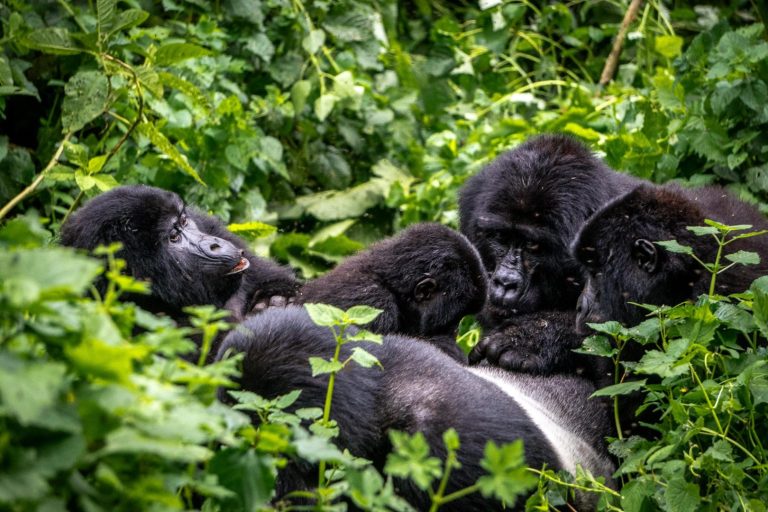
Gorilla Trekking in May
Gorilla trekking in May offers travelers a chance to experience mountain gorillas during the latter part of the region's principal rainy season, when forests are lush, green and often quieter than during peak travel months.
This makes May an interesting transitional month. Travelers should still prepare seriously for rain and mud, yet late May may sometimes provide improving conditions. As throughout the year, weather cannot be predicted with absolute certainty.
The central attraction remains unchanged: mountain gorillas continue living naturally within these protected forests, and trekking operates year-round under normal conditions.Is May a Good Time for Gorilla Trekking?
May works particularly well for travelers who appreciate green landscapes and are not discouraged by wet weather. The major advantages include: Lush forest scenery. Potentially lower visitor pressure than peak dry-season months. Excellent photographic environments. Possible flexibility with accommodation.
Gorilla Trekking in Uganda in May
Uganda provides mountain gorilla trekking in Bwindi Impenetrable National Park and Mgahinga Gorilla National Park. May gives travelers an opportunity to see these forests at their most vibrant. Bwindi's vegetation is dense throughout the year, but the rainy months accentuate its intensely green character.
Trails can be muddy. Some trekking routes involve steep slopes. Water can remain on vegetation even after rainfall ends. Trekkers should therefore be prepared to become dirty. This is part of the experience rather than something to avoid completely.
Gorilla Trekking in Rwanda in May
Rwanda's Volcanoes National Park can also be visited throughout May. The volcanic slopes remain wet and green. Mornings can be cool, especially at higher elevations.
May Weather
May generally remains within a rainy period. However, seasonal transitions mean weather can vary significantly from early to late May. A particular year may experience sustained rainfall.
Another year may show a gradual reduction in rain as June approaches. Travelers should avoid choosing exact dates solely according to assumptions about when the rain will stop. Instead, prepare for wet weather throughout the month. If conditions turn out drier than expected, consider it a bonus.
Rain and Trekking Conditions
Rain transforms the forest. Trails become softer and muddier. Slopes become slippery. Boots can collect mud. Vegetation may brush water onto clothing. Yet the forest also becomes extraordinarily alive.
Ferns, mosses and broadleaf vegetation appear saturated with color. Mist may drift between the hills. For travelers interested in rainforest atmosphere, May can be beautiful. Physical preparation and proper gear make the difference.
How Difficult Is May Gorilla Trekking?
Difficulty varies from one trek to another. The position of the gorilla family remains the largest unpredictable factor. A family might be located relatively close to the trailhead. Another may require hours of walking. Wet terrain increases the effort required. Mud can make climbs slower.
Descending slippery slopes may require particular care. Visitors should not judge fitness only according to the distance. Walking three kilometers through steep wet rainforest can feel much harder than walking three kilometers on a paved road.
Training Before Your May Trek
Regular walking is strongly recommended. Include hills and stairs where possible. You can also strengthen your legs using simple exercises.
The goal is endurance rather than speed. Trekkers may spend several hours in the forest, so being able to maintain a steady pace matters. If you have concerns about fitness or mobility, discuss them during safari planning. Do not assume wet-season trekking is impossible. Preparation can make a substantial difference.
Hire a Porter
Porters are particularly useful during May. They carry daypacks and assist visitors through challenging terrain. On a slippery slope, an experienced helping hand can be invaluable.
May Gorilla Permit Availability
May may experience lower demand than some peak months, but availability should still be checked. Every trekker needs an official permit. Larger groups require enough permits for everyone on the same date.
May Gorilla Safari Cost
The total safari price depends on much more than the month. Main expenses include: Private transport. Additional activities. Domestic flights where applicable. Lower-demand travel can sometimes provide accommodation value, but the overall trip should be judged according to inclusions and logistics.
A correctly located lodge can be more valuable than a cheaper property requiring unnecessary transfers.
Budget Gorilla Trekking in May
May can be appealing to budget travelers. Road-based itineraries and practical accommodation can keep costs manageable. Potentially greater lodge availability can also make planning easier.
However, budget travelers should spend appropriately on equipment. Good hiking boots, waterproof clothing and gaiters are worth the investment. A porter should also be included in the trekking budget. Saving a small amount while making the trek unnecessarily uncomfortable is false economy.
Mid-Range Gorilla Trekking in May
Mid-range safaris provide a strong balance. Comfortable forest lodges are particularly appealing after a wet trekking day. A hot shower, substantial dinner and warm room can make a major difference.
Private road transport gives flexibility. Travelers with limited time can add a domestic flight in Uganda. May can therefore provide excellent value for visitors who want comfort without paying premium lodge rates.
Luxury Gorilla Trekking in May
Luxury travelers can experience the rainforest at its most atmospheric. High-end lodges may provide exceptional forest views, private cottages, fireplaces and spa facilities. Rainy weather can make these properties feel particularly intimate.
What to Wear in May
Prepare exactly as you would for serious wet-season trekking. Waterproof hiking boots. Long-sleeved trekking shirts. Quality rain jacket. Gardening gloves. Small waterproof daypack or rain cover.
Quick-drying clothing is ideal. Avoid wearing expensive fashion clothing that is unsuitable for mud. This is a practical wilderness activity.
Waterproofing Camera Equipment
May photographers should be prepared for moisture. Use waterproof covers. Carry a dry bag or sealed internal bag. Keep lens cloths protected. Bring spare batteries. Avoid unnecessary lens changes during rainfall.
The forest may be dark, so understand higher ISO settings. Cloudy conditions can produce beautiful soft light. The green vegetation can create particularly attractive backgrounds for portraits of gorillas.
May Gorilla Trekking Rules
Rain does not alter conservation regulations. Visitors must continue to follow ranger instructions carefully. Do not touch gorillas. Do not feed wildlife. Avoid loud behavior. Remain with your group. Respect viewing guidance. Follow photography instructions. Do not leave rubbish.
Gorilla Trekking and Chimpanzees in May
May can be an excellent month for dedicated primate enthusiasts. Uganda allows travelers to combine Bwindi with Kibale National Park. Both experiences take place in forest environments, so wet-weather gear serves double duty.
Chimpanzees provide a contrasting encounter. They may move rapidly, climb trees and communicate loudly. Gorillas may be observed resting, feeding and interacting more quietly. A primate-focused journey can be highly rewarding even during rainy months.
May Gorillas and Queen Elizabeth National Park
Adding Queen Elizabeth National Park creates a more diverse safari. The landscape can be exceptionally green in May. Game drives and boat activities provide a break from forest trekking.
May Gorillas and Murchison Falls
Visitors with sufficient time can build a broad Uganda itinerary including Murchison Falls. May's wetter conditions mean road planning should be realistic. Avoid consecutive excessively long transfer days.
Road Travel in May
Rain can affect some unpaved roads and increase travel times. A reliable safari vehicle and experienced guide are important. Build reasonable flexibility into transfer days.
Fly-In Gorilla Trekking in May
Domestic flights can reduce road travel. This can be particularly attractive during wetter months. However, flight schedules and weather should be considered carefully.
The flight must correspond with the permit location and lodge. A ground transfer is still required after landing. Always arrive before the trekking day rather than attempting to connect directly into the morning activity.
May Gorilla Trekking for Honeymoons
May can provide a beautiful honeymoon setting for couples comfortable with rain. Forest lodges can feel peaceful and private. The scenery is lush.
The experience can combine adventure during the trek with relaxation at the lodge. Couples should avoid overscheduling. A good honeymoon might include two or three nights in the gorilla region rather than arriving one evening and immediately departing after the trek.
May Gorilla Trekking for Families
Families should confirm age requirements before planning gorilla trekking. Eligible teenagers may find the experience unforgettable. Younger children may require alternative arrangements while adults trek.
Wet terrain can also affect the suitability of the activity for individual family members. A private vehicle is helpful because the itinerary can be adjusted more easily to family needs. Accommodation should be selected for both location and room configuration.
May Gorilla Trekking for Senior Travelers
May's mud can make trekking more demanding for older visitors. This does not automatically make the month unsuitable. Fit senior travelers regularly participate in gorilla trekking. However, preparation is important. Train before travel. Use a slower safari itinerary.
Consider domestic flights to reduce road fatigue. Discuss mobility concerns in advance. A realistic approach is more useful than judging capability solely according to age.
How Many Days Do You Need?
Three or four days can cover a straightforward gorilla safari. Five days creates more time around the forest. Seven days can include Queen Elizabeth National Park.
Early May Versus Late May
Travelers sometimes ask whether late May is better because the drier June period is approaching. Late May may indeed experience changing seasonal conditions, but there is no guarantee. Weather varies from year to year.
A specific week cannot be promised as dry. Choose dates according to permit availability, international flights and your broader schedule. Then pack properly for wet conditions regardless of whether you travel on May 3 or May 28.
Advantages of Gorilla Trekking in May
Intensely green forests. Atmospheric mountain scenery. Potentially quieter travel. Possible lodge availability advantages. Excellent photography. Year-round access to mountain gorillas. Opportunities to combine primates and wildlife. The disadvantages include: Potentially difficult trails.
Slower road conditions. Greater need for waterproof equipment. For travelers who are comfortable with these realities, May can be extremely rewarding.
May Versus June
June is generally preferred by visitors seeking relatively drier trekking conditions. May may appeal more to travelers seeking greener scenery or potentially lower seasonal demand. Neither month changes the fundamental gorilla encounter.
A May trek could be short and comfortable. A June trek could involve several hours of climbing. Natural wildlife experiences remain unpredictable. Choose according to your priorities rather than expecting any month to guarantee an easy trek.
Plan Gorilla Trekking in May
Begin with permit availability. Confirm the trekking location. Choose the correct lodge. Arrange realistic transport. Pack waterproof clothing and good boots. Train before travel.
Consider adding chimpanzees or a wildlife park if you have enough days. Most importantly, arrive expecting rainforest conditions rather than treating rain as a problem.
Gorilla trekking in May combines lush scenery, potentially quieter travel and remarkable great-ape encounters for visitors prepared to embrace wet trails, mountain mist and the natural unpredictability of the forest.