
Introduction
Where Is Bwindi Forest?
Bwindi Forest lies in southwestern Uganda, near the borders with Rwanda and the Democratic Republic of Congo. The protected forest covers mountainous terrain and is accessed through several tourism sectors associated with Bwindi Impenetrable National Park:
- Buhoma
- Ruhija
- Rushaga; and - Nkuringo
Each sector provides a different perspective on the forest. Some areas lie at lower elevations and feel warmer, while others occupy cool highland environments with frequent mist and sweeping views over surrounding hills.
Travelers should choose their accommodation and activities according to the sector they intend to visit.
Why Is Bwindi Called Impenetrable?
The word “impenetrable” reflects the extraordinarily dense vegetation and difficult terrain found within sections of the forest. Bwindi is not a simple woodland with wide open trails. Visitors may encounter:
- thick undergrowth
- vines
- ferns
- steep slopes
- tangled vegetation
- streams
- exposed roots; and - muddy forest paths
An Ancient African Forest
Bwindi is often described as one of Africa’s ancient forests. Its long ecological history has allowed an extraordinary diversity of plant and animal species to develop. The forest’s survival through long periods of environmental change has made it especially important for conservation.
Massive trees, layered vegetation and deep valleys create a sense of an ecosystem that has evolved over an immense period of time.
Mountain Gorillas in Bwindi Forest
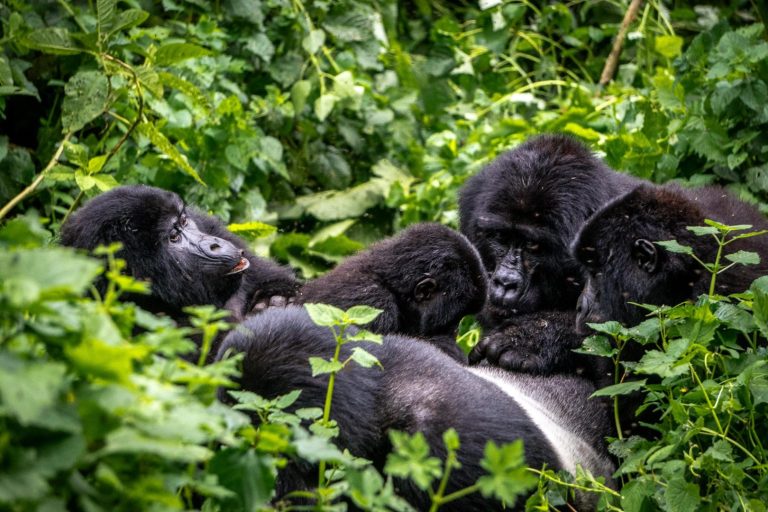
Mountain gorillas are the most famous inhabitants of Bwindi. They live in family groups and move through the forest according to food availability, social relationships and other natural factors.
You are seeing them in the environment that shapes their feeding patterns, movement and social behavior. Dense vegetation, bamboo, forest clearings and hillside vegetation all form part of the gorillas’ daily world.
Other Primates
Bwindi also supports a variety of other primates. Monkeys may be seen moving through the canopy, particularly during guided forest walks or birding excursions. Chimpanzees also occur within the broader ecosystem, although Bwindi is not Uganda’s principal destination for organised chimpanzee trekking.
Wildlife Beyond Primates
The forest supports a wide range of mammals and smaller wildlife. Forest elephants occur within the ecosystem, although they are difficult to observe compared with elephants in open savannah parks. Smaller mammals, antelopes, bats, rodents, reptiles and amphibians also contribute to the forest’s biodiversity.
Many species remain hidden from casual visitors. Signs such as tracks, dung, feeding marks and movement in vegetation may reveal animals that are rarely seen directly. A knowledgeable guide can interpret these signs and turn a forest walk into a detailed lesson in ecology.
Bwindi Forest Birds
Birdwatching is one of the most rewarding ways to explore Bwindi. The forest lies within the Albertine Rift region and provides habitat for numerous forest specialists and restricted-range species.
Important birding areas include both Buhoma and Ruhija, while specialist birders may dedicate significant time to high-elevation forest and swamp habitats. Visitors may search for:
- turacos
- sunbirds
- hornbills
- greenbuls
- flycatchers
- barbets
- robins
- warblers; and - numerous other forest species
Birding in dense rainforest requires patience and good listening skills. Many species are identified by call before they are seen.
Butterflies and Insects
Butterflies add another layer of color to Bwindi. They may gather along trails, forest openings, damp ground and flowering vegetation. Countless other insects also play essential roles in the ecosystem.
They pollinate plants, decompose organic matter and provide food for birds, amphibians and small mammals. For visitors interested in natural history, these smaller organisms make a slow forest walk particularly rewarding.
Forest Streams and Valleys
Water is one of the defining elements of Bwindi Forest. Rainfall feeds streams and maintains the moist conditions required by the rainforest ecosystem. Walking trails may follow valleys or cross small waterways.
Top Activities in Bwindi Forest
Gorilla Trekking
The most famous activity and the main reason many visitors come to Bwindi.
Guided Forest Walks
These allow travelers to focus on the forest itself rather than moving primarily in search of gorillas.
Birdwatching
Specialist bird guides can help visitors locate forest birds and understand their habitats.
Photography
Bwindi provides dramatic opportunities for photographing gorillas, forest landscapes, mist, streams, plants and birdlife.
Community Experiences
Communities living around the forest can be included in a broader visit, helping travelers understand the relationship between conservation and local livelihoods.
Forest Walking Conditions
Visitors should expect genuine rainforest terrain. Conditions may include:
- mud
- steep gradients
- slippery roots
- wet leaves
- uneven ground; and - thick vegetation
Good hiking boots are essential. A lightweight waterproof jacket should always be carried because rainfall can occur at any time. Long trousers and long-sleeved shirts provide protection from vegetation and insects.
Best Time to Visit Bwindi Forest
Bwindi can be visited throughout the year. The relatively drier periods around June to August and December to February are popular because trails may be easier to walk. Wetter periods, particularly around March to May and September to November, can produce more challenging conditions.
However, rainy months also provide some of the most dramatic forest scenery. Vegetation becomes intensely green, mist can be more frequent and streams may carry more water. There is therefore no single “bad” time to experience the forest.
Accommodation Near Bwindi Forest
A wide range of accommodation is available around the different sectors. Options include:
- budget guesthouses
- mid-range lodges
- luxury forest lodges; and - small boutique properties
Choose a lodge based on the correct trekking sector and planned activities. A property overlooking the forest can add considerably to the experience. Monkeys and birds may sometimes be seen from lodge gardens, balconies and surrounding paths.
How to Reach Bwindi Forest
Bwindi can be reached by private road safari or by domestic flight combined with a road transfer. Road travel allows visitors to combine Bwindi with other destinations such as:
Combining Bwindi Forest With Other Destinations
A popular Uganda itinerary might follow: Entebbe → Kibale → Queen Elizabeth National Park → Bwindi → Entebbe This creates a strong ecological progression from chimpanzee forest to savannah wildlife and finally mountain gorilla rainforest.
Conservation and the Forest
Bwindi Forest is valuable because the ecosystem is protected as a whole. Mountain gorilla conservation depends on maintaining intact forest habitat. The same protection also benefits birds, primates, forest mammals, insects, plants and water systems.
Frequently Asked Questions
Is Bwindi Forest the same as Bwindi Impenetrable National Park?
Bwindi Forest forms the ecological heart of Bwindi Impenetrable National Park. Visitors commonly use the terms together when describing the destination.
Is Bwindi Forest dangerous?
Visitors explore authorised areas with trained guides and rangers. Following professional instructions is essential.
Can you walk through Bwindi Forest?
Yes. Gorilla trekking and guided forest walks provide opportunities to explore the forest on foot.
Is Bwindi only about gorillas?
No. The forest supports exceptional primates, birds, mammals, butterflies, plants and other wildlife.
Is Bwindi Forest difficult to hike?
Some trails can be physically demanding due to steep terrain, mud and dense vegetation.
How long should I stay?
Two nights are enough for a basic gorilla trek, but three or more nights provide a much better opportunity to experience the forest.
Experiencing Bwindi Forest Properly
The mountain gorillas may bring you to Bwindi Forest, but the landscape itself is one of the reasons the experience is so powerful. Without the ancient trees, tangled vines, streams, valleys and mist-covered slopes, the gorillas would lose the environment that has shaped their existence.
Allow enough time to listen to the forest. Watch monkeys moving through the canopy. Notice butterflies beside the trail. Listen to unfamiliar bird calls and the sound of water below the hills. A visit approached this way becomes more than a gorilla trek.
It becomes an encounter with one of Africa’s great surviving rainforest ecosystems and a deeper appreciation of why conserving Bwindi matters far beyond tourism.