
Introduction
A successful family gorilla itinerary therefore needs to balance the interests and abilities of every traveler rather than simply adapting an adult safari at the last minute.
Why Choose Family Gorilla Safaris?
Seeing mountain gorillas together can become one of the defining memories of a family trip. For eligible teenagers and adults, the experience combines adventure, education and wildlife conservation in a way few other activities can match. A well-planned family safari can include:
Private travel is especially useful because the itinerary can be adjusted around the family's pace.
Gorilla Trekking Age Restrictions
Before planning family gorilla safaris, parents should confirm the current minimum age for mountain gorilla trekking in the relevant country and park. Age rules are enforced by wildlife authorities and can change.
Younger children who do not meet the official trekking requirement cannot normally participate simply because they are accompanied by parents. Families should therefore provide the ages of all children at the beginning of the planning process. This allows the itinerary to be designed correctly from the outset.
What Can Younger Children Do While Parents Trek?
Families traveling with younger children can still visit the gorilla region. Alternative activities can be arranged where appropriate. Depending on the lodge and location, options may include:
- Supervised lodge activities - Community experiences - Short nature walks - Cultural visits - Craft activities - Birdwatching - Relaxation at the lodge
Any childcare or supervision arrangements must be confirmed directly as part of the safari plan rather than assumed. For families where only one parent wishes to trek, the itinerary may also be designed so that parents participate on different days while one remains with younger children.
Uganda for Family Gorilla Safaris
Uganda is an excellent destination for families because gorilla trekking can be combined with a broad traditional safari. Bwindi Impenetrable National Park and Mgahinga Gorilla National Park provide mountain gorilla trekking. Other parks can add game drives, boat trips and easier wildlife experiences.
This variety helps prevent the holiday from becoming too trekking-focused for younger travelers.
Bwindi Impenetrable National Park
Bwindi is Uganda's main mountain gorilla destination. The forest is divided into several trekking sectors, and correct lodge selection is essential for families. Long pre-dawn transfers before trekking are especially inconvenient when traveling with children.
Mgahinga Gorilla National Park
Mgahinga lies within the Virunga Mountains and can be another excellent family destination. The dramatic volcanic landscape adds visual interest, and golden monkey tracking may be suitable for eligible family members depending on current activity rules.
What Is the Gorilla Trek Like?
On trekking morning, eligible participants transfer to the park briefing point. Rangers explain the rules and assign trekkers to habituated gorilla families. The group then enters the forest.
Physical Demands
Gorilla trekking can be physically challenging. The trek may involve: - Mud - Steep slopes - Dense vegetation - Uneven forest paths - Rain - Several hours of walking Families should assess each participant's fitness realistically. A teenager who is active and enjoys hiking may have no difficulty, while another traveler of the same age may find a long forest trek exhausting. Porters are strongly recommended.
Meeting the Gorilla Family
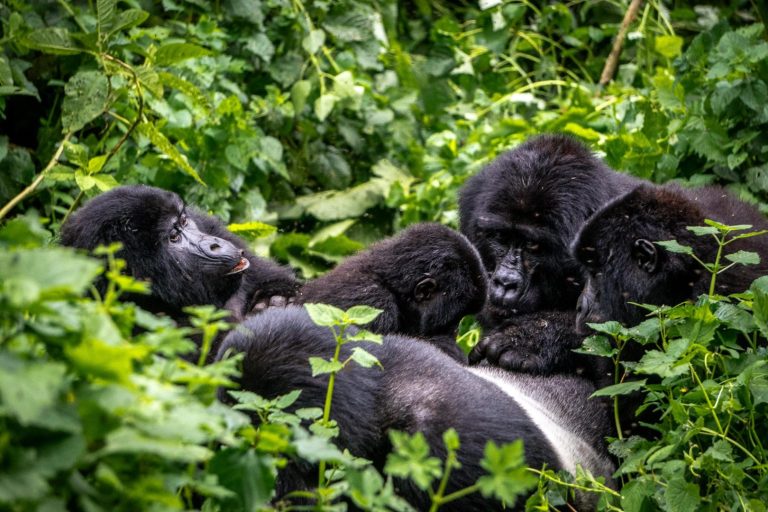
When trackers locate the gorillas, trekkers approach under ranger supervision. The encounter provides an extraordinary educational experience. Visitors may observe a dominant silverback, adult females, juveniles and infants.
Watching gorilla family relationships can be especially meaningful on a family safari because many behaviors are instantly recognizable—youngsters play, mothers supervise infants and dominant adults protect the group.
The regulated viewing period allows time for observation and photography before trekkers return through the forest.
Choose a Private Safari Vehicle
Private transportation is particularly valuable for families. Children may need more frequent rest stops. Parents may want to stop for snacks, photographs or bathrooms.
A private vehicle allows far more flexibility than a large scheduled group departure. It also provides additional space for day bags, camera equipment and family luggage.
Family-Friendly Accommodation
Choosing the right lodge is important. Parents should consider:
- Family rooms - Interconnecting rooms - Multiple-bedroom cottages - Child policies - Meal flexibility - Early breakfast arrangements - Laundry services - Safe outdoor areas - Wi-Fi where important - Swimming pools where available - Proximity to activities
The most luxurious property is not always the most practical family lodge. Layout and room configuration often matter more.
Combine Gorillas With Queen Elizabeth National Park
Queen Elizabeth National Park is a popular extension after gorilla trekking. Game drives allow the whole family to search for elephants, buffaloes, antelopes, warthogs and predators from the comfort of a safari vehicle.
A boat safari can be especially attractive to younger travelers because wildlife sightings often occur without long periods of driving. Hippos, crocodiles, waterbirds and mammals along the shoreline provide constant interest.
Add Chimpanzees
Families with eligible older children can also consider chimpanzee trekking. Chimpanzees are highly energetic and vocal, providing an experience very different from gorillas. For families with younger children, alternative forest walks or community experiences may be more suitable.
Again, current age regulations should be confirmed before booking.
Lake Bunyonyi for Families
Lake Bunyonyi can provide a useful relaxation stop before or after gorilla trekking. Its scenic islands and highland surroundings offer a slower pace than trekking or game drives. Families often appreciate a day with fewer scheduled activities after a demanding forest experience.
The suitability of water-based activities should always be assessed according to age, supervision and current local conditions.
How Long Should a Family Gorilla Safari Be?
Although short three-day trips are possible, families often benefit from longer itineraries. A five- to eight-day safari provides enough time to combine trekking with wildlife and relaxation. Longer itineraries also reduce the number of consecutive days dominated by road transfers.
For families flying long distances to East Africa, a more varied safari generally provides better overall value.
Sample Family Gorilla Safari Structure
A family itinerary might include: Day 1: Arrival and relaxation. Day 2: Transfer toward a wildlife park. Day 3: Game drive and boat safari. Day 4: Travel toward the gorilla region. Day 5: Gorilla trekking for eligible family members and alternative activity for younger children.
Day 6: Relaxed cultural or nature experience. Day 7: Return toward the departure point. The exact route should be customized according to family ages and interests.
Gorilla Permits for Families
Every eligible family member participating in the gorilla trek requires an individual permit. Permits are limited and linked to specific dates and trekking areas. Early booking becomes especially important for families because several permits are needed for the same date.
Finding five or six permits together at short notice can be much harder than finding one or two. Permit rules and current prices should always be confirmed when booking.
Best Time for Family Gorilla Safaris
Gorilla trekking is available throughout the year. Families often prefer relatively drier periods because trails may be less muddy and general safari logistics can be easier. However, these periods may coincide with school holidays and higher accommodation demand.
Early planning is therefore important. Rain remains possible throughout the year in Uganda's mountain forests.
Packing for a Family Gorilla Safari
Eligible trekkers should pack:
- - Waterproof hiking boots - Long trousers - Long-sleeved shirts - Rain jackets - Trekking gloves - Gaiters - Small daypacks - Refillable water bottles - Insect repellent - Warm layers - Sun protection - Cameras
- For younger children, bring familiar snacks, entertainment for longer drives and suitable clothing for changing temperatures. A compact medical and first-aid kit can also be useful for ordinary travel needs.
Food and Dietary Requirements
Families often have more varied food preferences than adult-only groups. Dietary requirements, allergies and strong dislikes should be communicated in advance. Many safari lodges can accommodate vegetarian meals and common dietary restrictions with notice.
Parents traveling with very selective eaters may wish to carry a few familiar snacks.
Family Safety
A professionally organized safari should use experienced guides, reliable vehicles and appropriately selected lodges. Parents should always follow park rules around wildlife. Children should not wander around unfenced safari properties without guidance, particularly after dark.
Wild animals may move through lodge grounds in or near national parks. Lodge staff instructions should always be taken seriously.
Family Gorilla Safaris From Kigali
Families can also use Kigali as an international gateway for southwestern Uganda. For selected gorilla sectors, this may reduce driving time compared with an Entebbe start. However, international border procedures add another logistical consideration.
Passport and visa requirements for every family member should be checked carefully before travel.
Who Are Family Gorilla Safaris Best For?
These trips work particularly well for:
- Families with teenagers - Multi-generational families - Parents with wildlife-loving older children - Families combining education and adventure - Private family groups - Families celebrating graduations or milestones - Parents seeking more meaningful alternatives to conventional beach holidays
Book Family Gorilla Safaris
Family Gorilla Safaris require careful planning, but they can become one of the most rewarding ways to experience Uganda together.