
Introduction
Families travelling with younger children can still enjoy an outstanding Uganda safari. Parents and eligible teenagers can trek gorillas while younger family members enjoy suitable activities with an accompanying adult or pre-arranged supervision. The key is to design the itinerary around the ages, fitness levels and interests of everyone travelling.
Can Families Go Gorilla Trekking in Uganda?
Yes. Families with children aged 15 years and above can participate in gorilla trekking, provided everyone is sufficiently fit and able to follow the regulations governing encounters with mountain gorillas. Uganda offers gorilla trekking in two protected areas:
What Is the Minimum Age for Gorilla Trekking?
The minimum age for standard gorilla trekking in Uganda is 15 years.
- walk through potentially difficult forest terrain
- remain calm around wild gorillas
- listen carefully to ranger instructions
- avoid sudden movements and excessive noise
- respect health precautions designed to protect gorillas; and - behave responsibly during a close encounter with powerful wild animals
Families with teenagers aged 15 and above should still consider individual maturity and physical ability. Reaching the minimum age does not necessarily mean every teenager will enjoy a demanding forest hike.
What Can Younger Children Do While Parents Trek?
Having a child below the trekking age does not mean the family needs to remove Bwindi from its itinerary. Instead, the family safari can be organised so that eligible members undertake the gorilla trek while younger children participate in another suitable experience.
Depending on where the family stays and what is locally available, alternatives may include guided community experiences, cultural activities, birdwatching, easy nature experiences or simply enjoying the lodge and surrounding scenery with a responsible accompanying adult.
Another option for two-parent families is to arrange gorilla permits on different days. One parent can trek while the other remains with younger children, and they can exchange roles the following day. This requires an additional night around Bwindi but can be an excellent solution when both parents consider gorilla trekking an essential part of their Uganda holiday. Families can also build a broader safari incorporating Queen Elizabeth National Park, where game drives and the Kazinga Channel boat experience provide wildlife viewing without the physical demands of a gorilla trek.Is Gorilla Trekking Difficult for Teenagers?
The difficulty varies considerably. Mountain gorillas live freely in the forest, so their position changes from day to day. On some trekking days a gorilla family may be reached relatively quickly. On others, visitors may walk for several hours.
The terrain can include steep hills, forest paths, exposed roots, mud, streams and thick vegetation. Rain can make trails slippery even during months normally regarded as relatively dry. A reasonably active teenager who enjoys hiking will usually be much better prepared than someone who rarely walks.
Before travelling, families can prepare by doing regular walks and gradually introducing hills and longer distances. Comfortable hiking boots should be worn before the safari rather than being used for the first time on trekking day.
Hiring a porter is also highly recommended. A porter can carry the trekker's daypack and provide practical assistance over difficult sections of the trail. Using local porters also allows tourism expenditure to benefit people living around the protected area.
Preparing Teenagers for the Gorilla Encounter
Preparation should involve more than physical fitness. Teenagers should understand that this is a wildlife encounter rather than an amusement attraction. Mountain gorillas are wild animals, and visitors enter their forest under tightly controlled conditions.
Discuss the experience before travelling. Explain why visitors need to follow the ranger's instructions, remain composed and avoid behaviour that could disturb the gorillas. This preparation can make the actual encounter much more meaningful.
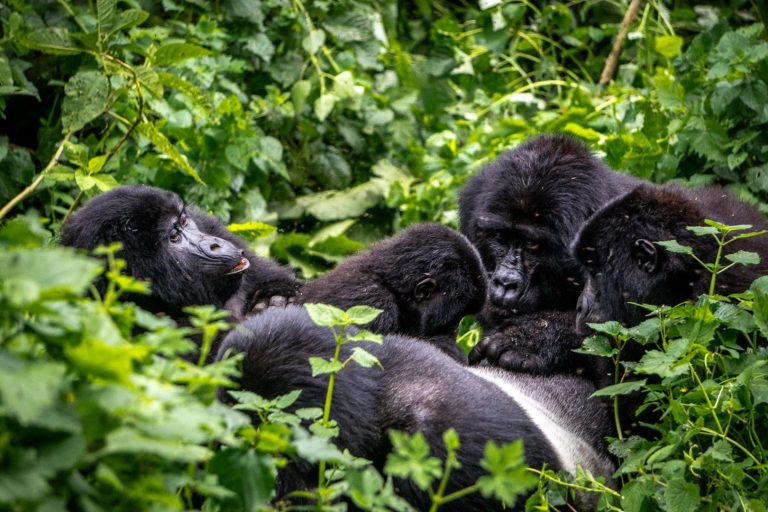
Parents can also introduce teenagers to mountain gorilla conservation before travelling. Learning about gorilla behaviour, family structure, forest ecology and conservation helps transform the trek from a photograph opportunity into an educational experience.When a teenager finally sees a silverback watching over his group, juveniles playing among vegetation or a mother caring for an infant, those earlier lessons suddenly become tangible.
What Should Families Pack for Gorilla Trekking?
Packing correctly can make a major difference to comfort. Each eligible family member should ideally have:
- - sturdy, comfortable hiking boots; - lightweight long trousers; - a long-sleeved trekking shirt; - waterproof rain protection; - gardening or trekking gloves; - a small backpack; - sufficient drinking water; - packed lunch or snacks where provided; - sunscreen; - insect repellent; - a hat; - camera or smartphone; and - spare batteries or a power bank where necessary.
- Long trousers and sleeves provide useful protection against vegetation and insects. Uganda's gorilla forests can receive rainfall throughout the year, so a lightweight waterproof jacket should remain in the daypack even when the morning begins with sunshine.
- Avoid packing unnecessarily heavy equipment. A long trek becomes significantly more tiring when carrying excessive camera gear, water and personal items.
Best Time for Family Gorilla Trekking
Gorilla trekking takes place throughout the year, making it possible to organise a family safari around school holidays.
Families should therefore select travel dates based on their overall safari plans rather than expecting completely dry trekking conditions.
School holiday periods can also coincide with strong demand for gorilla permits and family-friendly lodges. Booking well ahead is particularly important when travelling during popular holiday months.Gorilla Permits for Families
Every family member participating in the trek requires an individual gorilla permit. Permits are limited, and availability should be checked before committing to non-refundable international flights or finalising the entire safari.
Avoid choosing a lodge simply because it looks attractive online without considering the trekking location. A carefully planned family safari coordinates: permit availability + trekking sector + accommodation + road transfers + family activities.
This is especially important when some members of the family are trekking while others are not.
Combining Gorilla Trekking With a Family Wildlife Safari
Queen Elizabeth National Park
Queen Elizabeth National Park works particularly well for families because game drives can be combined with a boat safari on the Kazinga Channel. Children who cannot trek gorillas can still enjoy sightings of elephants, buffaloes, hippos, antelopes, crocodiles and numerous birds.
Lake Mburo National Park
Lake Mburo is conveniently positioned on the route between southwestern Uganda and Kampala or Entebbe. It can provide a relaxed introduction or conclusion to a family safari.
Kibale Forest Region
Families interested in primates can include Kibale in a longer itinerary. Age requirements apply to some primate activities, so the ages of children should always be checked before booking.
Entebbe
Spending a night in Entebbe at the beginning or end of the trip can reduce travel pressure, particularly after a long international flight.
For most families, travelling to Uganda solely for one gorilla trek misses many of the country's other attractions. A balanced itinerary can combine primates with classic African wildlife.
How Many Days Does a Family Gorilla Safari Need?
A very short gorilla trip may work for adults focused entirely on trekking, but families generally benefit from travelling at a slower pace. A 5–7 day safari can combine Bwindi with another destination, while 8–12 days provides much more flexibility for families wishing to include several national parks.
Is Gorilla Trekking Safe for Families?
Gorilla trekking is a highly regulated wildlife activity conducted with trained guides and rangers. Visitors receive a briefing before entering the forest and must follow instructions throughout the trek and gorilla encounter.
Families should be open about fitness limitations and medical considerations during planning. Anyone showing symptoms of contagious illness should also report them rather than risking the health of gorillas.
Mountain gorillas are habituated to controlled human visits, but they remain wild animals. Respecting the rules is therefore fundamental to both visitor safety and gorilla conservation.Why Choose Uganda for a Family Gorilla Safari?
Uganda offers something particularly valuable for families: variety. A teenager can experience mountain gorillas in Bwindi, the entire family can watch elephants during a game drive, younger children can observe hippos from a boat, and everyone can learn about Uganda's landscapes, communities and conservation work.
For families with teenagers aged 15 or older, the trek itself can become a defining shared experience. For families travelling with younger children, careful itinerary planning allows the adults to see gorillas without leaving younger travellers with an uninteresting safari.
Frequently Asked Questions About Gorilla Trekking for Families
Can a 14-year-old go gorilla trekking in Uganda?
The standard Uganda gorilla trekking minimum age is 15 years. Families should plan on this requirement rather than assuming an exception will be granted.
Can teenagers trek gorillas?
Yes. Teenagers who have reached the required age can participate, provided they are healthy enough for the hike and capable of following ranger instructions.
Should teenagers use porters?
It is highly recommended. A porter can carry the daypack and assist on difficult terrain, allowing the teenager to concentrate on walking and enjoying the forest.
Can younger children visit Bwindi?
Yes. Children can travel to the Bwindi region even when they are too young to participate in the actual gorilla trek. Suitable activities and supervision should be arranged for trekking day.
How long does gorilla trekking take?
There is no fixed trekking duration because gorillas move through their natural habitat. Families should prepare for anything from a relatively short search to several hours of forest walking.
Should we book gorilla permits before flights?
It is wise to establish permit availability early in the planning process, particularly for families whose travel dates are fixed by school holidays.
Plan Your Family Gorilla Trekking Safari
Successful gorilla trekking for families begins with matching the safari to the ages and abilities of everyone travelling.
The best family itineraries are not necessarily the fastest. Allow enough time to recover from international flights, minimise unnecessarily long road journeys, choose accommodation close to the appropriate trekking sector and include experiences that interest every member of the family.
With thoughtful planning, a Uganda family safari can combine mountain gorillas, savannah wildlife, boat trips, forests, communities and spectacular landscapes into a journey that parents and children will remember long after returning home.