
Introduction
Why Bwindi Needs Protection
Bwindi contains a relatively limited area of natural forest surrounded by densely populated agricultural landscapes. This creates significant conservation pressure. Major long-term challenges can include:
- habitat pressure
- illegal resource use
- human-wildlife conflict
- disease transmission
- climate change
- population growth
- poverty around protected areas; and - maintaining community support for conservation
Mountain Gorilla Conservation
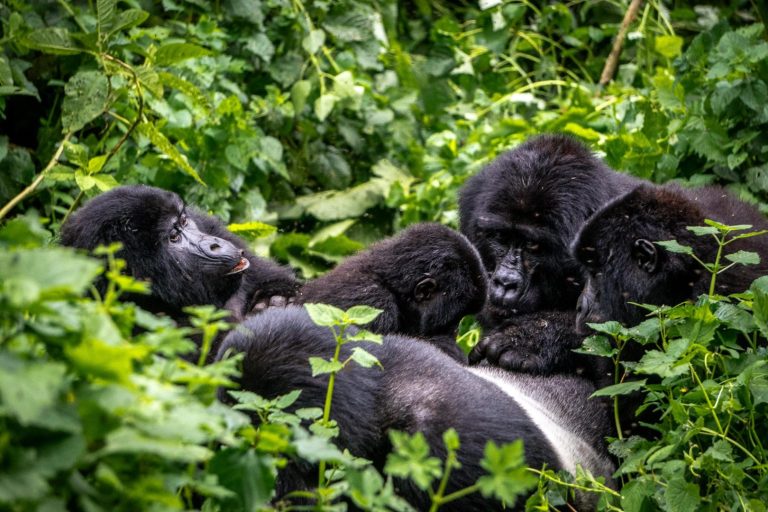
Mountain gorillas are Bwindi’s most famous conservation priority. Their survival depends on intensive protection. Habituated gorilla families are monitored regularly by trackers and park teams. Monitoring helps conservation managers understand:
- family composition
- births
- deaths
- movements
- injuries
- health concerns
- changes in behavior; and - habitat use
This constant presence also helps deter illegal activity.
Why Gorilla Numbers Matter
Mountain gorillas reproduce slowly. Females have relatively long intervals between births, and infants require years of care. This means populations cannot quickly recover from major losses.
Every individual is therefore important. Disease outbreaks, habitat destruction or poaching can have serious long-term consequences. Conservation must remain consistent even when the population trend appears positive.
Protecting Gorilla Habitat
Gorillas depend on the wider forest for food, shelter and movement. Habitat conservation includes protecting:
- trees
- understory vegetation
- bamboo
- streams
- forest corridors; and - surrounding ecological processes
Anti-Poaching and Ranger Work
Rangers play a central role in protecting the park. Their responsibilities can include:
- patrols
- monitoring illegal activity
- removing snares
- supporting wildlife tracking
- enforcing park regulations
- assisting visitors; and - responding to conservation incidents
Anti-poaching work protects many species, not only gorillas. Wire snares placed for other forest animals can accidentally injure primates. Removing such threats is therefore essential.
Gorilla Health and Disease
Mountain gorillas are genetically close to humans and can be vulnerable to some human diseases. This makes health management a critical part of gorilla tourism. Visitors must follow health-related instructions.
People who are sick should not hide symptoms simply because they have paid for an expensive safari. One irresponsible encounter can create risks for animals that conservation teams have spent decades protecting.
Veterinary Support
Veterinary specialists can play an important role where wild gorillas face life-threatening injuries or disease. Intervention decisions are complex because mountain gorillas are wild animals and conservationists generally avoid unnecessary interference.
However, in exceptional circumstances, veterinary care may help protect individuals from human-caused injuries or serious medical problems. Monitoring makes it possible to detect such issues quickly.
Gorilla Habituation and Conservation
Habituation allows selected gorilla families to become accustomed to controlled human presence. This process makes regulated tourism possible. Habituation must be handled carefully because excessive human contact could alter behavior or create health risks.
Only selected groups are used for tourism. The process can take a long time and involves experienced trackers, researchers and conservation staff.
Why Gorilla Tourism Supports Conservation
Tourism creates economic value around protecting gorillas and their habitat. Visitors pay for:
These activities generate employment and government revenue. When communities can see tangible benefits from conservation, there is a stronger incentive to support the protection of the forest.
Tourism Must Be Controlled
More tourists do not automatically mean better conservation. Too many visitors could create:
- disturbance
- disease risk
- trail degradation
- waste
- pressure on water and energy resources; and - uncontrolled lodge development
This is why gorilla tourism operates under strict permit and group-size controls. The objective is high-value, carefully managed tourism rather than unrestricted access.
Community Conservation Around Bwindi
Communities surrounding Bwindi are essential partners in conservation. If local people bear the costs of living beside wildlife but receive no benefits, support for the park becomes difficult to sustain. Community-oriented conservation can involve:
- tourism employment
- revenue-sharing initiatives
- local enterprise development
- conservation education
- healthcare projects
- agricultural support
- craft sales; and - community tourism
The details of programs evolve, but the principle remains important: conservation works better when local communities benefit.
Human-Wildlife Conflict
Living beside a protected forest can create challenges. Wild animals do not understand park boundaries. Animals may occasionally damage crops or move into community areas.
This can create financial losses for families living near the forest. Conservation authorities and partner organisations therefore need strategies to reduce conflict and improve coexistence. Long-term wildlife protection depends on recognising these local costs honestly.
Batwa Communities and Conservation
Batwa communities have a deep historical relationship with forests in the region. Changes in forest protection and access had major effects on their traditional livelihoods. Modern conservation discussions increasingly recognise that protected-area success must include social justice and respect for cultural history.
Tourism experiences involving Batwa culture should therefore be developed and visited responsibly. Travelers should seek experiences that provide genuine local benefit and avoid treating people as tourist attractions.
Research in Bwindi
Scientific research supports conservation management. Researchers study:
- gorilla ecology
- genetics
- disease
- reproductive patterns
- forest regeneration
- bird populations
- primate behavior
- climate; and - human-wildlife relationships
Long-term research helps managers understand whether conservation interventions are working. It also provides evidence for future decisions.
Conservation of Birds and Other Wildlife
Bwindi’s conservation value is not limited to gorillas. The park protects numerous forest birds, including species associated with the Albertine Rift. It also supports:
- monkeys
- chimpanzees
- forest elephants
- smaller mammals
- reptiles
- amphibians
- butterflies; and - enormous plant diversity
Protecting forest habitat for gorillas therefore produces benefits across the ecosystem.
Water and Forest Conservation
Climate Change
Climate change creates additional uncertainty for mountain ecosystems. Changes in temperature and rainfall may affect:
- plant communities
- water availability
- food resources
- species distributions; and - disease patterns
Long-term forest protection gives wildlife a better chance of adapting. Fragmented habitats provide fewer options when ecological conditions change.
Responsible Lodges and Tourism Businesses
Safari lodges around Bwindi also have a conservation responsibility. Good practices can include:
- reducing plastic waste
- treating wastewater responsibly
- managing energy use
- employing local staff
- purchasing local products
- minimising unnecessary lighting; and - respecting park boundaries
Travelers can support conservation by choosing businesses with credible responsible-tourism practices.
How Visitors Can Support Bwindi Conservation
Follow Gorilla Trekking Rules
Every rule exists for a conservation reason.
Do Not Trek When Seriously Ill
Protect gorillas from preventable disease risks.
Hire Local Porters
Porter income connects tourism directly with local livelihoods.
Buy Locally
Spend money with responsible local businesses and artisans.
Avoid Wildlife Products
Never purchase items made from threatened wildlife or illegally sourced forest materials.
Minimise Waste
Carry reusable bottles where appropriate and avoid leaving litter.
Stay Longer
Additional nights can distribute tourism income beyond the permit alone.
Travelers have a direct role.
Conservation-Focused Activities
Visitors interested in conservation can combine gorilla trekking with:
- guided forest walks
- community tourism
- birdwatching
- educational talks
- cultural experiences; and - visits to conservation-related projects where appropriate
These activities help place the gorilla trek within a broader ecological and social context.
Bwindi and Transboundary Gorilla Conservation
Mountain gorillas occur within a wider regional landscape spanning Uganda, Rwanda and the Democratic Republic of Congo. Their conservation therefore has an international dimension. Regional cooperation is important for:
- research
- disease monitoring
- population surveys
- law enforcement
- tourism management; and - habitat protection
Wildlife does not recognise national borders.
Why Gorilla Permits Are Expensive
Travelers sometimes question the cost of gorilla trekking permits. The experience is expensive partly because tourism must remain limited while supporting intensive management and conservation. Permit revenue is connected to a much larger system involving:
- protected-area operations
- ranger programs
- monitoring
- visitor management
- conservation administration; and - community relationships
The permit should therefore be understood as more than the price of an hour with gorillas.
Challenges for the Future
The long-term success of Bwindi conservation will depend on managing several pressures simultaneously.
Success in one area cannot compensate permanently for failure in another. For example, gorilla numbers cannot continue improving if surrounding forest is progressively degraded.
Frequently Asked Questions
Why is Bwindi important for conservation?
It protects mountain gorillas, ancient forest, Albertine Rift birds, primates and exceptional biodiversity.
Does gorilla trekking help conservation?
Properly regulated gorilla tourism generates revenue and economic incentives linked to keeping gorillas and forests protected.
Why are visitor numbers limited?
Limited numbers reduce disturbance and disease risk around habituated gorilla families.
How do communities benefit?
Benefits can include employment, tourism businesses, porter income, local purchasing, community programs and revenue-sharing initiatives.
Can tourists harm gorillas?
Yes, irresponsible behavior can create disturbance or health risks, which is why trekking rules must be followed carefully.
What can I do personally?
Follow park regulations, use local services responsibly, minimise waste and support legitimate conservation and community initiatives.
The Future of Bwindi Conservation
The success of Bwindi conservation shows that wildlife tourism can play an important role in protecting threatened species, but it also demonstrates how much ongoing effort conservation requires. Mountain gorillas need rangers. Rangers need funding.
Communities need meaningful economic opportunities. Researchers need long-term data. The forest itself needs protection from fragmentation, unsustainable use and environmental change.
When travelers trek gorillas responsibly, stay in locally connected lodges, hire porters and respect conservation rules, they become part of this wider system. The goal is not simply for tourists to keep seeing gorillas.
It is for mountain gorillas, other wildlife, surrounding communities and Bwindi’s ancient forest to continue existing together for generations to come.