
Introduction
Why Bwindi Is Important for Wildlife
Bwindi Impenetrable National Park lies in southwestern Uganda and forms part of the wider Albertine Rift region, one of Africa’s most important centers of biodiversity. The park’s steep terrain, varied elevation and dense forest create many different habitats.
- mature rainforest
- secondary forest
- bamboo areas
- riverine vegetation
- forest edges
- valleys
- ridges; and - surrounding highland environments
This habitat diversity supports an impressive variety of animals. The park is especially significant because it protects species that depend on forest environments and cannot easily survive in heavily modified landscapes.
Mountain Gorillas
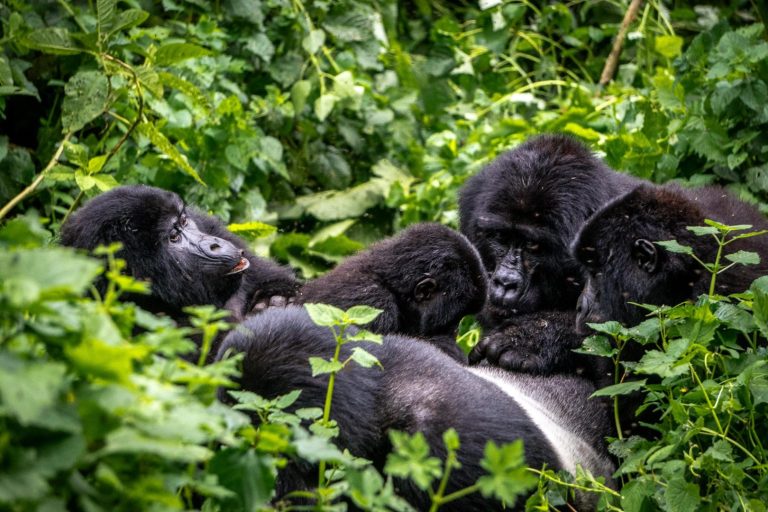
Mountain gorillas are unquestionably Bwindi’s best-known residents. They are the main reason thousands of travelers visit the park each year. During a gorilla trek, visitors may encounter a family group containing:
- a dominant silverback
- adult females
- blackbacks
- juveniles; and - infants
Chimpanzees in Bwindi
Chimpanzees also occur in the wider Bwindi ecosystem, although Bwindi is not Uganda’s principal destination for organised chimpanzee trekking. Travelers whose main objective is to see chimpanzees generally include Kibale National Park in their itinerary.
Monkeys of Bwindi
Several monkey species inhabit Bwindi’s forests. Depending on location, season and luck, visitors may encounter monkeys moving through the canopy or along forest edges. Forest monkeys can be much harder to photograph than savannah mammals.
They move rapidly, disappear behind leaves and often remain high above the ground. Binoculars can therefore be extremely useful even for travelers who are not dedicated birdwatchers. Listening is equally important. Guides may detect monkeys by vocalisations or movement long before visitors see them.
Forest Elephants
Bwindi also supports forest elephants. These animals are much more elusive than elephants encountered in open parks such as Queen Elizabeth National Park or Murchison Falls National Park. Dense forest vegetation means that visitors are unlikely to obtain the same uninterrupted views available on savannah game drives.
Forest Antelopes and Other Mammals
Bwindi supports several smaller forest mammals and antelope species. These animals often remain concealed within thick vegetation and are less predictable than wildlife encountered on a game drive. Possible forest inhabitants include various duikers and other small mammals adapted to dense cover.
Bush Pigs and Other Forest Residents
Bush pigs and other secretive mammals inhabit forest environments around Bwindi. They tend to avoid areas of heavy human activity and can be difficult to observe. Travelers may see signs of their presence without actually seeing the animals themselves.
A knowledgeable guide can explain tracks, feeding signs and other evidence encountered during forest walks. This transforms the forest from what might initially appear to be dense vegetation into a landscape filled with wildlife activity.
Small Mammals
Small mammals are an important but often overlooked part of the Bwindi ecosystem. Rodents, bats and other species contribute to seed dispersal, pollination and food chains. Most safari visitors do not travel specifically to observe them, but their presence is essential to forest health.
Reptiles and Amphibians
A wet tropical forest provides excellent habitat for reptiles and amphibians. Frogs can be particularly important indicators of ecosystem health. Visitors walking through the forest may encounter or hear frogs around damp areas and streams.
Reptiles are generally less prominent than the park’s mammals and birds, but they form an important part of the ecosystem. Because many species are small and well camouflaged, specialist guides can greatly improve the chances of identifying them.
Butterflies and Insects
Bwindi is exceptionally rich in butterflies. For nature enthusiasts, the diversity of butterflies can be one of the most surprising aspects of a visit. Brightly colored species may be seen around sunny forest openings, trails and flowering plants.
Countless other insects support the wider ecosystem through:
- pollination
- decomposition
- nutrient recycling; and - providing food for birds and other animals
Travelers who slow down and pay attention to smaller wildlife often gain a much richer understanding of the forest.
Wildlife Around Forest Edges
Forest edges can sometimes provide easier wildlife viewing than the dense interior. Animals may move between forest and surrounding vegetation, while birds and monkeys can be easier to detect where the canopy opens.
Best Ways to See Bwindi Wildlife
Gorilla Trekking
Gorilla trekking is the primary wildlife experience. Although the focus is mountain gorillas, trekkers may encounter other wildlife, birds and signs of forest animals along the route.
Guided Forest Walks
Guided walks allow visitors to explore the ecosystem at a slower pace. These experiences can reveal smaller mammals, monkeys, birds, butterflies, plants and forest ecology that are easily overlooked during a gorilla-focused trek.
Birdwatching
Birding guides are highly skilled at detecting movement and calls in dense vegetation. A birding excursion often produces additional sightings of monkeys and other wildlife.
Lodge-Based Observation
Some travelers see monkeys, birds and smaller forest wildlife around lodge grounds without undertaking a formal excursion.
Why Wildlife Viewing in Bwindi Is Different From Savannah Safaris
A game drive in Queen Elizabeth National Park may produce repeated sightings of buffaloes, elephants, antelopes and other animals across open terrain. Bwindi is different. Visibility is limited by vegetation. Wildlife density may be high, but observation is harder.
- patience
- good listening skills
- binoculars
- an experienced guide; and - realistic expectations
The reward is a more intimate understanding of rainforest ecology.
Best Time to See Bwindi Wildlife
Bwindi can be visited throughout the year. Rainfall influences trail conditions and vegetation but does not remove wildlife from the forest. Relatively drier periods can make walking easier. Wetter periods may bring:
- lush vegetation
- more active amphibians
- dramatic forest atmosphere; and - abundant insect life
Birding interests can also influence the best travel period. For general wildlife visitors, the best time is usually the period that fits the broader Uganda safari.
Wildlife Photography in Bwindi
Photography can be challenging because the forest is dark and dense. Photographers should prepare for:
- high ISO settings
- low contrast
- moving animals
- vegetation blocking subjects
- rain; and - rapidly changing light
A moderate zoom lens can often be more practical than extremely heavy equipment. For gorilla photography, the ability to work in low light is particularly valuable. For birds and monkeys, faster autofocus becomes more important.
Combining Bwindi With Queen Elizabeth National Park
Travelers wanting both rainforest and classic wildlife should combine Bwindi with Queen Elizabeth National Park. This creates an excellent contrast. In Bwindi, you may track gorillas and search for primates in dense forest.
Combining Bwindi With Kibale
How Many Days Should Wildlife Enthusiasts Spend in Bwindi?
Travelers focused only on gorilla trekking may spend two or three nights. Wildlife enthusiasts should consider three or four nights. Additional time allows for:
Spending more time also increases your opportunity to notice wildlife beyond the headline species.
Responsible Wildlife Viewing
Bwindi’s wildlife depends on responsible tourism. Visitors should:
- follow guide instructions
- remain on designated routes
- avoid feeding animals
- keep noise low
- never attempt to touch wildlife
- take all litter out of the forest; and - respect park health rules
The conservation value of tourism depends on wildlife remaining protected rather than disturbed.
Frequently Asked Questions
What wildlife is Bwindi famous for?
Mountain gorillas are the park’s most famous animals, but Bwindi also supports monkeys, chimpanzees, forest elephants, small mammals, birds, reptiles, amphibians and butterflies.
Can you see elephants in Bwindi?
Forest elephants occur in the ecosystem, but sightings are much less predictable than in Uganda’s savannah parks.
Are there chimpanzees in Bwindi?
Chimpanzees occur in the wider forest ecosystem, though Kibale is the better destination for organised chimpanzee trekking.
Are there lions in Bwindi?
Bwindi is a rainforest ecosystem rather than an open savannah lion destination. Travelers seeking lions should include parks such as Queen Elizabeth or Murchison Falls.
Is Bwindi good for general wildlife viewing?
Yes, especially for travelers interested in forest ecology, primates, birds and smaller wildlife.
Should I bring binoculars?
Yes. Binoculars are useful for monkeys, birds and wildlife moving high in the forest canopy.
Discovering the Full Diversity of Bwindi Wildlife
The greatest mistake a visitor can make is to treat Bwindi as a place where the forest exists only as a backdrop for mountain gorillas. The gorillas are extraordinary, but the wider Bwindi wildlife community is what makes the park such an important ecosystem.